
1
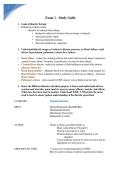
Exam 2 – Study Guide
1. Goals of diuretic therapy:
• Reduction of fluid volume
o Benefits of reduced fluid volume:
▪ Reduced workload of the heart (blood volume is reduced)
▪ Increased cardiac output
▪ Decreased peripheral edema
▪ Decreased pulmonary congestion
2. Understand diuretic usage as it relates to disease processes, ie: Heart failure, renal
disease hypertension, pulmonary edema, liver failure…
• Heart failure - reduce the swelling (edema) and water build up in the lungs (congestion)
caused by heart failure. Normally, loop diuretics are used for heart failure.
• Cirrhosis/liver disease - reduce the amount of fluid buildup associated with cirrhosis
(disease of the liver).
• Renal disease/failure – Maintain blood flow through kidneys, kidneys help regulate K+
• Hypertension (1 class of diuretics used as a primary tx; other are secondary) – Decrease
blood volume.
• Pulmonary edema – often caused by CHF, remove excess fluids from the body.
3. Know the different diuretics and their purpose, 4. Know and understand adverse
reaction and what they nurse needs to assess to ensure efficacy, toxicity, side effects.
What does the nurse need to monitor. Understand WHY, 5. What does the nurse
need to teach to ensure patient understanding of the diuretic prescribed.
CATEGORY: Thiazide Diuretics
DRUG: Hydrochlothiazide (HydrDIURIL)
Chlothiazide (Diuril)
Metolazone (Zaroxolyn)
Indapamide (Lozide)
ACTION: Works in distal convoluted tubule to:
Block reabsorbtion of Na and Cl
Prevent reabsorption of water
Promote dieresis when renal function is not
impaired.
Cause moderate increase in water excretion and are
appropriate for long-term use.
THERAPEUTIC USES: 1st choice for essential hypertension (HTN)
May be used for edema of mild to moderate heart failure
,2
(HF) and liver and kidney disease
ADMINISTERED: Oral or IV
CONTRAINDICATIONS: Pregnancy category B
Use with caution in view of impaired renal function as it
just may not work!
ADVERSE/SIDE EFFECTS: Electrolyte imbalance – give too much electrolytes will be
off Excessive loss of Na, K, and Cl
Hyperglycemia – Monitor for increase BS levels
Photosensitivity of skin
Hypotension
GI upset
Hypokalemia – monitor cardiac status
and K levels – teach
recognizing signs and sx (N/V, general weakness).
Dehydration assess for (dry mouth, increased thirst,
minimal urine output, weight loss), monitor
electrolytes and weight, report urine output
< 30ml/hr, stop medication and notify physician.
DDI: Digoxin - dysrhythmias secondary to loss of K
(hypokalemia). Monitor cardiac status, K and
digoxin levels.
Antihypertensive – monitor BP
Lithium – secondary to hyponatremia (causes lithium
excretion which can lead to toxicity).
NSAIDs – reduce diuretic effect (watch for reduced urinary
output).
NOTES: Stop antihypertensive temporally when giving
diuretics to those who have heart issues.
EFFECTIVENESS OF MED:
Low BP
Decreases edema
Increases urine output
TEACHING: Take in AM, eat rich K foods (spinach and tomatoes), wear
sun block, may need to take with food.
, 3
CATEGORY: “High ceiling” Loop Diuretics
DRUG: Furosemide (Lasix) *Protein bound*
Ethacrynic acid (Edecrin)
Bumetanide (Bumex)
Torsemide (Demadex)
ACTION: Works in the ascending limb of loop of Henle to:
Block reabsorption of Na and Cl
Prevents reabsorption of water
Causes extensive dieresis even w/ severe renal
Impairment b/c it increases renal blood flow
Used for edema, and acute/chronic HF
THERAPEUTIC USES: Used when there is an emergent need for rapid mobilization
of fluid such as: Pulmonary edema caused by HF,
conditions not responsive to other diuretics such as
edema caused by liver, cardiac, or kidney disease;
hypertension.
May used to treat hypercalcemia r/t kidney stone formation.
ADMINISTERED: Oral, IV, IM
CONTRAINDICATIONS: Pregnancy category C
Avoid using during pregnancy
Increases BS – caution w/ diabetics
May result in hyperuricemia – gout
Electrolyte imbalance (Dumps potassium)
ADVERSE/SIDE EFFECTS: Hypotension – Monitor BP, teach signs/sx of postural
hypotension (lightheadness, dizziness – If occurs
tell to sit or lie down.
Electrolyte imbalances
Hypokalemia – monitor cardiac status, K levels –
report if K levels < 3.5 mEq/L, Teach to eat high K
foods such as bananas and potatoes, teach signs/sx
(N/V, general weakness).
Hyponatremia
Hypochloremia
Hypocalcemia – monitor calcium levels
Hypomagnesemia – monitor magnesemia levels
Hyperglycemia – monitor BS
Ototoxicity = transient deafness (w/ Lasix and irreversible
Exam 2 – Study Guide
1. Goals of diuretic therapy:
• Reduction of fluid volume
o Benefits of reduced fluid volume:
▪ Reduced workload of the heart (blood volume is reduced)
▪ Increased cardiac output
▪ Decreased peripheral edema
▪ Decreased pulmonary congestion
2. Understand diuretic usage as it relates to disease processes, ie: Heart failure, renal
disease hypertension, pulmonary edema, liver failure…
• Heart failure - reduce the swelling (edema) and water build up in the lungs (congestion)
caused by heart failure. Normally, loop diuretics are used for heart failure.
• Cirrhosis/liver disease - reduce the amount of fluid buildup associated with cirrhosis
(disease of the liver).
• Renal disease/failure – Maintain blood flow through kidneys, kidneys help regulate K+
• Hypertension (1 class of diuretics used as a primary tx; other are secondary) – Decrease
blood volume.
• Pulmonary edema – often caused by CHF, remove excess fluids from the body.
3. Know the different diuretics and their purpose, 4. Know and understand adverse
reaction and what they nurse needs to assess to ensure efficacy, toxicity, side effects.
What does the nurse need to monitor. Understand WHY, 5. What does the nurse
need to teach to ensure patient understanding of the diuretic prescribed.
CATEGORY: Thiazide Diuretics
DRUG: Hydrochlothiazide (HydrDIURIL)
Chlothiazide (Diuril)
Metolazone (Zaroxolyn)
Indapamide (Lozide)
ACTION: Works in distal convoluted tubule to:
Block reabsorbtion of Na and Cl
Prevent reabsorption of water
Promote dieresis when renal function is not
impaired.
Cause moderate increase in water excretion and are
appropriate for long-term use.
THERAPEUTIC USES: 1st choice for essential hypertension (HTN)
May be used for edema of mild to moderate heart failure
,2
(HF) and liver and kidney disease
ADMINISTERED: Oral or IV
CONTRAINDICATIONS: Pregnancy category B
Use with caution in view of impaired renal function as it
just may not work!
ADVERSE/SIDE EFFECTS: Electrolyte imbalance – give too much electrolytes will be
off Excessive loss of Na, K, and Cl
Hyperglycemia – Monitor for increase BS levels
Photosensitivity of skin
Hypotension
GI upset
Hypokalemia – monitor cardiac status
and K levels – teach
recognizing signs and sx (N/V, general weakness).
Dehydration assess for (dry mouth, increased thirst,
minimal urine output, weight loss), monitor
electrolytes and weight, report urine output
< 30ml/hr, stop medication and notify physician.
DDI: Digoxin - dysrhythmias secondary to loss of K
(hypokalemia). Monitor cardiac status, K and
digoxin levels.
Antihypertensive – monitor BP
Lithium – secondary to hyponatremia (causes lithium
excretion which can lead to toxicity).
NSAIDs – reduce diuretic effect (watch for reduced urinary
output).
NOTES: Stop antihypertensive temporally when giving
diuretics to those who have heart issues.
EFFECTIVENESS OF MED:
Low BP
Decreases edema
Increases urine output
TEACHING: Take in AM, eat rich K foods (spinach and tomatoes), wear
sun block, may need to take with food.
, 3
CATEGORY: “High ceiling” Loop Diuretics
DRUG: Furosemide (Lasix) *Protein bound*
Ethacrynic acid (Edecrin)
Bumetanide (Bumex)
Torsemide (Demadex)
ACTION: Works in the ascending limb of loop of Henle to:
Block reabsorption of Na and Cl
Prevents reabsorption of water
Causes extensive dieresis even w/ severe renal
Impairment b/c it increases renal blood flow
Used for edema, and acute/chronic HF
THERAPEUTIC USES: Used when there is an emergent need for rapid mobilization
of fluid such as: Pulmonary edema caused by HF,
conditions not responsive to other diuretics such as
edema caused by liver, cardiac, or kidney disease;
hypertension.
May used to treat hypercalcemia r/t kidney stone formation.
ADMINISTERED: Oral, IV, IM
CONTRAINDICATIONS: Pregnancy category C
Avoid using during pregnancy
Increases BS – caution w/ diabetics
May result in hyperuricemia – gout
Electrolyte imbalance (Dumps potassium)
ADVERSE/SIDE EFFECTS: Hypotension – Monitor BP, teach signs/sx of postural
hypotension (lightheadness, dizziness – If occurs
tell to sit or lie down.
Electrolyte imbalances
Hypokalemia – monitor cardiac status, K levels –
report if K levels < 3.5 mEq/L, Teach to eat high K
foods such as bananas and potatoes, teach signs/sx
(N/V, general weakness).
Hyponatremia
Hypochloremia
Hypocalcemia – monitor calcium levels
Hypomagnesemia – monitor magnesemia levels
Hyperglycemia – monitor BS
Ototoxicity = transient deafness (w/ Lasix and irreversible


