Page 1 of 66
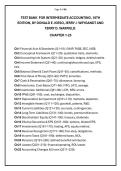
TEST BANK FOR INTERMEDIATE ACCOUNTING, 18TH
EDITION, BY DONALD E. KIESO, JERRY J. WEYGANDT AND
TERRY D. WARFIELD.
CHAPTER 1-23
Ch1 Financial Acct & Standards (Q1–10): GAAP, FASB, SEC, IASB.
Ch2 Conceptual Framework (Q11–20): qualitative traits, elements.
Ch3 Accounting Info System (Q21–30): journals, ledgers, debits/credits.
Ch4 Income Statement (Q31–40): continuing/discontinued ops, EPS,
OCI.
Ch5 Balance Sheet & Cash Flows (Q41–50): classifications, methods.
Ch6 Time Value of Money (Q51–60): PV/FV, annuities.
Ch7 Cash & Receivables (Q61–70): allowance, factoring.
Ch8 Inventories: Cost-Basis (Q71–80): FIFO, LIFO, average.
Ch9 Inventories: Additional (Q81–90): LCM, NRV, errors.
Ch10 PP&E (Q91–100): cost, exchanges, disposition.
Ch11 Depreciation & Impairment (Q101–110): methods, depletion.
Ch12 Intangible Assets (Q111–120): goodwill, patents, R&D.
Ch13 Current Liabilities (Q121–130): accruals, contingencies.
Ch14 Long-Term Liabilities (Q131–140): bonds, premium/discount.
Ch15 Stockholders' Equity (Q141–150): treasury, dividends.
Ch16 Dilutive Securities & EPS (Q151–160): options, diluted EPS.
Ch17 Investments (Q161–170): trading, AFS, equity method.
Ch18 Revenue Recognition (Q171–180): five-step, obligations.
Ch19 Income Taxes (Q181–190): deferred taxes, NOL.
Ch20 Pensions (Q191–200): defined benefit/contribution.
Ch21 Leases (Q201–210): finance/operating, ROU asset.
Ch22 Accounting Changes & Errors (Q211–220):
, Page 2 of 66
retrospective/prospective.
Ch23 Cash Flows Revisited (Q221–230): operating/investing/financing.
CHAPTER 1: Financial Accounting and Accounting Standards
(Q1–10)
1. The primary objective of financial accounting is to:
A. Provide information for tax purposes
B. Provide financial information about a company to external
users
C. Prepare budgets for internal management
D. Determine employee compensation
Answer: B
Rationale: Financial accounting provides information to
external users (investors, creditors) for decision-making.
2. Which organization is responsible for establishing GAAP in
the United States?
A. SEC
B. FASB
C. IASB
D. AICPA
Answer: B
Rationale: The FASB (Financial Accounting Standards Board)
establishes GAAP in the U.S.
3. The SEC has the authority to:
A. Enforce GAAP only
B. Establish and enforce accounting standards for public
companies
C. Audit all public companies
, Page 3 of 66
D. Set tax rates
Answer: B
Rationale: The SEC has statutory authority to establish and
enforce accounting standards for public companies.
4. Which of the following is a major challenge facing
financial accounting?
A. Political environment
B. Ethics
C. Nonfinancial measurements
D. All of the above
Answer: D
Rationale: Challenges include political environment, ethics,
nonfinancial measurements, and globalization.
5. The IASB is responsible for:
A. U.S. GAAP
B. International Financial Reporting Standards (IFRS)
C. Tax law
D. Auditing standards
Answer: B
Rationale: The IASB issues IFRS, used in many countries
worldwide.
6. GAAP stands for:
A. Generally Accepted Accounting Principles
B. Generally Applied Accounting Procedures
C. General Accounting and Auditing Practices
D. Government Approved Accounting Principles
Answer: A
Rationale: GAAP = Generally Accepted Accounting Principles.
, Page 4 of 66
7. Which of the following is a source of GAAP?
A. FASB Standards
B. APB Opinions
C. AICPA Research Bulletins
D. All of the above
Answer: D
Rationale: GAAP includes FASB Standards, APB Opinions, and
AICPA Research Bulletins.
8. The Financial Accounting Foundation (FAF) is responsible
for:
A. Selecting FASB members
B. Funding FASB
C. Overseeing FASB
D. All of the above
Answer: D
Rationale: The FAF selects, funds, and oversees the FASB.
9. Which of the following is NOT a financial statement?
A. Balance Sheet
B. Income Statement
C. Statement of Cash Flows
D. Tax Return
Answer: D
Rationale: Tax returns are not financial statements prepared
under GAAP.
10. The concept of "decision-usefulness" means:
A. Information is useful for making economic decisions
B. Information is only for internal use
C. Information is only for tax purposes
D. Information is only for regulators
TEST BANK FOR INTERMEDIATE ACCOUNTING, 18TH
EDITION, BY DONALD E. KIESO, JERRY J. WEYGANDT AND
TERRY D. WARFIELD.
CHAPTER 1-23
Ch1 Financial Acct & Standards (Q1–10): GAAP, FASB, SEC, IASB.
Ch2 Conceptual Framework (Q11–20): qualitative traits, elements.
Ch3 Accounting Info System (Q21–30): journals, ledgers, debits/credits.
Ch4 Income Statement (Q31–40): continuing/discontinued ops, EPS,
OCI.
Ch5 Balance Sheet & Cash Flows (Q41–50): classifications, methods.
Ch6 Time Value of Money (Q51–60): PV/FV, annuities.
Ch7 Cash & Receivables (Q61–70): allowance, factoring.
Ch8 Inventories: Cost-Basis (Q71–80): FIFO, LIFO, average.
Ch9 Inventories: Additional (Q81–90): LCM, NRV, errors.
Ch10 PP&E (Q91–100): cost, exchanges, disposition.
Ch11 Depreciation & Impairment (Q101–110): methods, depletion.
Ch12 Intangible Assets (Q111–120): goodwill, patents, R&D.
Ch13 Current Liabilities (Q121–130): accruals, contingencies.
Ch14 Long-Term Liabilities (Q131–140): bonds, premium/discount.
Ch15 Stockholders' Equity (Q141–150): treasury, dividends.
Ch16 Dilutive Securities & EPS (Q151–160): options, diluted EPS.
Ch17 Investments (Q161–170): trading, AFS, equity method.
Ch18 Revenue Recognition (Q171–180): five-step, obligations.
Ch19 Income Taxes (Q181–190): deferred taxes, NOL.
Ch20 Pensions (Q191–200): defined benefit/contribution.
Ch21 Leases (Q201–210): finance/operating, ROU asset.
Ch22 Accounting Changes & Errors (Q211–220):
, Page 2 of 66
retrospective/prospective.
Ch23 Cash Flows Revisited (Q221–230): operating/investing/financing.
CHAPTER 1: Financial Accounting and Accounting Standards
(Q1–10)
1. The primary objective of financial accounting is to:
A. Provide information for tax purposes
B. Provide financial information about a company to external
users
C. Prepare budgets for internal management
D. Determine employee compensation
Answer: B
Rationale: Financial accounting provides information to
external users (investors, creditors) for decision-making.
2. Which organization is responsible for establishing GAAP in
the United States?
A. SEC
B. FASB
C. IASB
D. AICPA
Answer: B
Rationale: The FASB (Financial Accounting Standards Board)
establishes GAAP in the U.S.
3. The SEC has the authority to:
A. Enforce GAAP only
B. Establish and enforce accounting standards for public
companies
C. Audit all public companies
, Page 3 of 66
D. Set tax rates
Answer: B
Rationale: The SEC has statutory authority to establish and
enforce accounting standards for public companies.
4. Which of the following is a major challenge facing
financial accounting?
A. Political environment
B. Ethics
C. Nonfinancial measurements
D. All of the above
Answer: D
Rationale: Challenges include political environment, ethics,
nonfinancial measurements, and globalization.
5. The IASB is responsible for:
A. U.S. GAAP
B. International Financial Reporting Standards (IFRS)
C. Tax law
D. Auditing standards
Answer: B
Rationale: The IASB issues IFRS, used in many countries
worldwide.
6. GAAP stands for:
A. Generally Accepted Accounting Principles
B. Generally Applied Accounting Procedures
C. General Accounting and Auditing Practices
D. Government Approved Accounting Principles
Answer: A
Rationale: GAAP = Generally Accepted Accounting Principles.
, Page 4 of 66
7. Which of the following is a source of GAAP?
A. FASB Standards
B. APB Opinions
C. AICPA Research Bulletins
D. All of the above
Answer: D
Rationale: GAAP includes FASB Standards, APB Opinions, and
AICPA Research Bulletins.
8. The Financial Accounting Foundation (FAF) is responsible
for:
A. Selecting FASB members
B. Funding FASB
C. Overseeing FASB
D. All of the above
Answer: D
Rationale: The FAF selects, funds, and oversees the FASB.
9. Which of the following is NOT a financial statement?
A. Balance Sheet
B. Income Statement
C. Statement of Cash Flows
D. Tax Return
Answer: D
Rationale: Tax returns are not financial statements prepared
under GAAP.
10. The concept of "decision-usefulness" means:
A. Information is useful for making economic decisions
B. Information is only for internal use
C. Information is only for tax purposes
D. Information is only for regulators