
i-Human Case Study Week 4: Comprehensive Assessment of a
3-Day-Old Infant Routine Evaluation at Outpatient Clinic
250 high-yield original exam-style practice questions. These are newly composed study questions based on the case topic and current newborn-care
guidance; they are not leaked or proprietary examination questions.
1. The most appropriate reason for the 3-day-old infant's outpatient visit is:
Acute illness treatment
Routine newborn wellness evaluation
School physical examination
Adolescent preventive visit
Rationale: A newborn well visit is preventive and should establish gestational age, birth course, feeding, elimination, and current
concerns.
2. During a 3-day-old newborn well visit, the clinician is reviewing the following issue. Which statement is
most accurate? The most appropriate reason for the 3-day-old infant's outpatient visit is:
Acute illness treatment
Routine newborn wellness evaluation
School physical examination
Adolescent preventive visit
Rationale: A newborn well visit is preventive and should establish gestational age, birth course, feeding, elimination, and current
concerns.
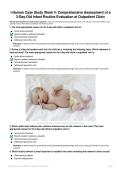
Real newborn photograph — Evan-Amos; public domain (Wikimedia Commons).
3. Which option best reflects safe, evidence-informed care for the newborn in this case? The most
appropriate reason for the 3-day-old infant's outpatient visit is:
Acute illness treatment
Routine newborn wellness evaluation
School physical examination
Adolescent preventive visit
Rationale: A newborn well visit is preventive and should establish gestational age, birth course, feeding, elimination, and current
concerns.
4. Which history element is most important to establish first when reviewing the newborn's birth course?
Older sibling's hobbies
Favorite sleep position
i-Human Week 4 • 3-Day-Old Infant • Original exam-style practice Page 1
, Daycare preference
Gestational age and delivery history
Rationale: A newborn well visit is preventive and should establish gestational age, birth course, feeding, elimination, and current
concerns.
5. During a 3-day-old newborn well visit, the clinician is reviewing the following issue. Which statement is
most accurate? Which history element is most important to establish first when reviewing the newborn's
birth course?
Older sibling's hobbies
Favorite sleep position
Daycare preference
Gestational age and delivery history
Rationale: A newborn well visit is preventive and should establish gestational age, birth course, feeding, elimination, and current
concerns.
6. Which option best reflects safe, evidence-informed care for the newborn in this case? Which history
element is most important to establish first when reviewing the newborn's birth course?
Older sibling's hobbies
Favorite sleep position
Daycare preference
Gestational age and delivery history
Rationale: A newborn well visit is preventive and should establish gestational age, birth course, feeding, elimination, and current
concerns.
7. A term newborn is generally considered to be born at:
28 through 32 weeks
42 through 45 weeks
37 through 41 completed weeks
33 through 36 weeks
Rationale: A newborn well visit is preventive and should establish gestational age, birth course, feeding, elimination, and current
concerns.
8. During a 3-day-old newborn well visit, the clinician is reviewing the following issue. Which statement is
most accurate? A term newborn is generally considered to be born at:
28 through 32 weeks
42 through 45 weeks
37 through 41 completed weeks
33 through 36 weeks
Rationale: A newborn well visit is preventive and should establish gestational age, birth course, feeding, elimination, and current
concerns.
i-Human Week 4 • 3-Day-Old Infant • Original exam-style practice Page 2
, Real newborn photograph — Bathanka; CC BY-SA 4.0 (Wikimedia Commons).
9. Which option best reflects safe, evidence-informed care for the newborn in this case? A term newborn
is generally considered to be born at:
28 through 32 weeks
42 through 45 weeks
37 through 41 completed weeks
33 through 36 weeks
Rationale: A newborn well visit is preventive and should establish gestational age, birth course, feeding, elimination, and current
concerns.
10. Which maternal history item can increase concern for neonatal infection?
Prenatal vitamin brand
Maternal fever during labor
Maternal shoe size
Maternal eye color
Rationale: A newborn well visit is preventive and should establish gestational age, birth course, feeding, elimination, and current
concerns.
11. During a 3-day-old newborn well visit, the clinician is reviewing the following issue. Which statement is
most accurate? Which maternal history item can increase concern for neonatal infection?
Prenatal vitamin brand
Maternal fever during labor
Maternal shoe size
Maternal eye color
Rationale: A newborn well visit is preventive and should establish gestational age, birth course, feeding, elimination, and current
concerns.
12. Which option best reflects safe, evidence-informed care for the newborn in this case? Which maternal
history item can increase concern for neonatal infection?
Prenatal vitamin brand
Maternal fever during labor
Maternal shoe size
i-Human Week 4 • 3-Day-Old Infant • Original exam-style practice Page 3
, Maternal eye color
Rationale: A newborn well visit is preventive and should establish gestational age, birth course, feeding, elimination, and current
concerns.
13. Which finding in the history most directly assesses feeding adequacy?
Frequency and effectiveness of feeds
Parent's preferred stroller
Room decoration
Number of blankets
Rationale: A newborn well visit is preventive and should establish gestational age, birth course, feeding, elimination, and current
concerns.
14. During a 3-day-old newborn well visit, the clinician is reviewing the following issue. Which statement is
most accurate? Which finding in the history most directly assesses feeding adequacy?
Frequency and effectiveness of feeds
Parent's preferred stroller
Room decoration
Number of blankets
Rationale: A newborn well visit is preventive and should establish gestational age, birth course, feeding, elimination, and current
concerns.
15. Which option best reflects safe, evidence-informed care for the newborn in this case? Which finding in
the history most directly assesses feeding adequacy?
Frequency and effectiveness of feeds
Parent's preferred stroller
Room decoration
Number of blankets
Rationale: A newborn well visit is preventive and should establish gestational age, birth course, feeding, elimination, and current
concerns.
16. During the first week, a healthy breastfed newborn commonly feeds approximately:
3–4 times in 24 hours
1–2 times in 24 hours
20–24 scheduled times regardless of cues
8–12 times in 24 hours
Rationale: Feeding effectiveness and output are central indicators of intake and hydration during the first days of life.
17. During a 3-day-old newborn well visit, the clinician is reviewing the following issue. Which statement is
most accurate? During the first week, a healthy breastfed newborn commonly feeds approximately:
3–4 times in 24 hours
1–2 times in 24 hours
20–24 scheduled times regardless of cues
8–12 times in 24 hours
Rationale: Feeding effectiveness and output are central indicators of intake and hydration during the first days of life.
18. Which option best reflects safe, evidence-informed care for the newborn in this case? During the first
week, a healthy breastfed newborn commonly feeds approximately:
3–4 times in 24 hours
1–2 times in 24 hours
20–24 scheduled times regardless of cues
8–12 times in 24 hours
Rationale: Feeding effectiveness and output are central indicators of intake and hydration during the first days of life.
19. Which finding best supports an effective breastfeeding session?
i-Human Week 4 • 3-Day-Old Infant • Original exam-style practice Page 4
3-Day-Old Infant Routine Evaluation at Outpatient Clinic
250 high-yield original exam-style practice questions. These are newly composed study questions based on the case topic and current newborn-care
guidance; they are not leaked or proprietary examination questions.
1. The most appropriate reason for the 3-day-old infant's outpatient visit is:
Acute illness treatment
Routine newborn wellness evaluation
School physical examination
Adolescent preventive visit
Rationale: A newborn well visit is preventive and should establish gestational age, birth course, feeding, elimination, and current
concerns.
2. During a 3-day-old newborn well visit, the clinician is reviewing the following issue. Which statement is
most accurate? The most appropriate reason for the 3-day-old infant's outpatient visit is:
Acute illness treatment
Routine newborn wellness evaluation
School physical examination
Adolescent preventive visit
Rationale: A newborn well visit is preventive and should establish gestational age, birth course, feeding, elimination, and current
concerns.
Real newborn photograph — Evan-Amos; public domain (Wikimedia Commons).
3. Which option best reflects safe, evidence-informed care for the newborn in this case? The most
appropriate reason for the 3-day-old infant's outpatient visit is:
Acute illness treatment
Routine newborn wellness evaluation
School physical examination
Adolescent preventive visit
Rationale: A newborn well visit is preventive and should establish gestational age, birth course, feeding, elimination, and current
concerns.
4. Which history element is most important to establish first when reviewing the newborn's birth course?
Older sibling's hobbies
Favorite sleep position
i-Human Week 4 • 3-Day-Old Infant • Original exam-style practice Page 1
, Daycare preference
Gestational age and delivery history
Rationale: A newborn well visit is preventive and should establish gestational age, birth course, feeding, elimination, and current
concerns.
5. During a 3-day-old newborn well visit, the clinician is reviewing the following issue. Which statement is
most accurate? Which history element is most important to establish first when reviewing the newborn's
birth course?
Older sibling's hobbies
Favorite sleep position
Daycare preference
Gestational age and delivery history
Rationale: A newborn well visit is preventive and should establish gestational age, birth course, feeding, elimination, and current
concerns.
6. Which option best reflects safe, evidence-informed care for the newborn in this case? Which history
element is most important to establish first when reviewing the newborn's birth course?
Older sibling's hobbies
Favorite sleep position
Daycare preference
Gestational age and delivery history
Rationale: A newborn well visit is preventive and should establish gestational age, birth course, feeding, elimination, and current
concerns.
7. A term newborn is generally considered to be born at:
28 through 32 weeks
42 through 45 weeks
37 through 41 completed weeks
33 through 36 weeks
Rationale: A newborn well visit is preventive and should establish gestational age, birth course, feeding, elimination, and current
concerns.
8. During a 3-day-old newborn well visit, the clinician is reviewing the following issue. Which statement is
most accurate? A term newborn is generally considered to be born at:
28 through 32 weeks
42 through 45 weeks
37 through 41 completed weeks
33 through 36 weeks
Rationale: A newborn well visit is preventive and should establish gestational age, birth course, feeding, elimination, and current
concerns.
i-Human Week 4 • 3-Day-Old Infant • Original exam-style practice Page 2
, Real newborn photograph — Bathanka; CC BY-SA 4.0 (Wikimedia Commons).
9. Which option best reflects safe, evidence-informed care for the newborn in this case? A term newborn
is generally considered to be born at:
28 through 32 weeks
42 through 45 weeks
37 through 41 completed weeks
33 through 36 weeks
Rationale: A newborn well visit is preventive and should establish gestational age, birth course, feeding, elimination, and current
concerns.
10. Which maternal history item can increase concern for neonatal infection?
Prenatal vitamin brand
Maternal fever during labor
Maternal shoe size
Maternal eye color
Rationale: A newborn well visit is preventive and should establish gestational age, birth course, feeding, elimination, and current
concerns.
11. During a 3-day-old newborn well visit, the clinician is reviewing the following issue. Which statement is
most accurate? Which maternal history item can increase concern for neonatal infection?
Prenatal vitamin brand
Maternal fever during labor
Maternal shoe size
Maternal eye color
Rationale: A newborn well visit is preventive and should establish gestational age, birth course, feeding, elimination, and current
concerns.
12. Which option best reflects safe, evidence-informed care for the newborn in this case? Which maternal
history item can increase concern for neonatal infection?
Prenatal vitamin brand
Maternal fever during labor
Maternal shoe size
i-Human Week 4 • 3-Day-Old Infant • Original exam-style practice Page 3
, Maternal eye color
Rationale: A newborn well visit is preventive and should establish gestational age, birth course, feeding, elimination, and current
concerns.
13. Which finding in the history most directly assesses feeding adequacy?
Frequency and effectiveness of feeds
Parent's preferred stroller
Room decoration
Number of blankets
Rationale: A newborn well visit is preventive and should establish gestational age, birth course, feeding, elimination, and current
concerns.
14. During a 3-day-old newborn well visit, the clinician is reviewing the following issue. Which statement is
most accurate? Which finding in the history most directly assesses feeding adequacy?
Frequency and effectiveness of feeds
Parent's preferred stroller
Room decoration
Number of blankets
Rationale: A newborn well visit is preventive and should establish gestational age, birth course, feeding, elimination, and current
concerns.
15. Which option best reflects safe, evidence-informed care for the newborn in this case? Which finding in
the history most directly assesses feeding adequacy?
Frequency and effectiveness of feeds
Parent's preferred stroller
Room decoration
Number of blankets
Rationale: A newborn well visit is preventive and should establish gestational age, birth course, feeding, elimination, and current
concerns.
16. During the first week, a healthy breastfed newborn commonly feeds approximately:
3–4 times in 24 hours
1–2 times in 24 hours
20–24 scheduled times regardless of cues
8–12 times in 24 hours
Rationale: Feeding effectiveness and output are central indicators of intake and hydration during the first days of life.
17. During a 3-day-old newborn well visit, the clinician is reviewing the following issue. Which statement is
most accurate? During the first week, a healthy breastfed newborn commonly feeds approximately:
3–4 times in 24 hours
1–2 times in 24 hours
20–24 scheduled times regardless of cues
8–12 times in 24 hours
Rationale: Feeding effectiveness and output are central indicators of intake and hydration during the first days of life.
18. Which option best reflects safe, evidence-informed care for the newborn in this case? During the first
week, a healthy breastfed newborn commonly feeds approximately:
3–4 times in 24 hours
1–2 times in 24 hours
20–24 scheduled times regardless of cues
8–12 times in 24 hours
Rationale: Feeding effectiveness and output are central indicators of intake and hydration during the first days of life.
19. Which finding best supports an effective breastfeeding session?
i-Human Week 4 • 3-Day-Old Infant • Original exam-style practice Page 4


