@ StudentsSupports @
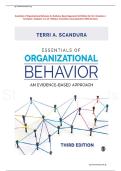
Essentials of Organizational Behavior An Evidence-Based Approach 3rd Edition By Terri Scandura |
Test Bank | Chapters 1 to 15 | MCQ,S, True/False, Essay Questions With Answers
Test Bank
StudentsSupports
@ StudentsSupports @
, @ StudentsSupports @
Chapter 01 Test Bank
Scandura - Essentials of Organizational Behavior, 3e
Multiple Choice Questions
1. Modern organizational behavior studies started with ______.
A. a 2008 to 2010 Gallup study
B. Frederick Taylor in the 1900s
C. Elton Mayo's Hawthorne Studies
D. Chester Barnard
Correct Answer: C. Elton Mayo's Hawthorne Studies
2. Organizational behavior is the study of ______.
A. strategic management processes
B. information technology
C. employee motivation
D. individuals and their behaviors at work
Correct Answer: D. individuals and their behaviors at work
Test Bank
3. Research in the area of ______ helps organizational behavior researchers understand organizational
culture and leading change.
A. industrial psychology
B. sociology
C. information technology
D. applied psychology
StudentsSupports
Correct Answer: B. sociology
4. The goals of science are ______.
A. description, analysis, explanation, and control
B. description, prediction, explanation, and control
C. analysis, prediction, explanation, and control
D. explanation, control, evidence, and description
Correct Answer: B. description, prediction, explanation, and control
5. Evidence-based management (EBM) can be defined as the ability to translate ______.
A. research to practice
B. practice to research
C. theory to research
D. research to theory
Correct Answer: A. research to practice
6. Evidence-based management is originally from the field of ______.
A. management
B. psychology
C. medicine
D. sociology
Correct Answer: C. medicine
@ StudentsSupports @
Chapter 1 - Page 1
, @ StudentsSupports @
7. Which of the following is an example of the best available experiential evidence?
A. A manager surveys employees before making changes to their social media policy.
B. A manager analyzes peer-reviewed journal articles on the effects of company culture on tardiness.
C. A manager asks other managers how they respond to an employee disciplinary issue.
D. A manager reviews the transcripts of exit interviews conducted with employees who have quit recently.
Correct Answer: C. A manager asks other managers how they respond to an employee disciplinary issue.
8. Which is true about critical thinking?
A. It is a relatively young field.
B. It has been developed over thousands of years.
C. It began with the Hawthorne studies.
D. It relies on collective brilliance.
Correct Answer: B. It has been developed over thousands of years.
9. Which of the following is a critical thinking skill?
A. self-denial
B. strictness
C. lack of precision
D. attention to detail
Test Bank
Correct Answer: D. attention to detail
10. Critical thinking is a(n)______ way to think about a problem we face.
A. group-directed
B. self-directed
C. ideological
StudentsSupports
D. team-based
Correct Answer: B. self-directed
11. Which of the following describes how logic is used in critical thinking?
A. examining assumptions
B. looking at reasons or evidence
C. researching many sources
D. making tentative decisions
Correct Answer: B. looking at reasons or evidence
12. Reflection skills used during critical thinking should include ______.
A. recognizing biases
B. relying on reason
C. being comprehensive
D. considering different points of view
Correct Answer: A. recognizing biases
13. Which question does Mitroff saya manager should ask to solve the right problem in an organization?
A. "What country are we in?"
B. "How can we make more money?"
C. "Are our products and services customizable?"
D. "How will the outside world perceive our actions?"
Correct Answer: D. "How will the outside world perceive our actions?"
@ StudentsSupports @
Chapter 1 - Page 2
, @ StudentsSupports @
14. Which of the following is a type of outcome variable that organizational behavior researchers have
studied?
A. performance
B. teamwork
C. employee investment
D. EBM
Correct Answer: A. performance
15. Performance or job productivity can be defined as determining how ______.
A. well someone gets along with their coworkers
B. much someone knows about the organization they work for
C. much someone comes into work on time each day
D. well someone does at his or her required work tasks
Correct Answer: D. well someone does at his or her required work tasks
16. Organizational citizenship behavior (OCB) is when an employee ______.
A. goes above and beyond their job requirements to help others at work
B. meets the minimum requirements for his or her job
C. exemplifies very high levels of job proficiency
Test Bank
D. reports high levels of loyalty to the organization
Correct Answer: A. goes above and beyond their job requirements to help others at work
17. A commonly studied organizational behavior outcome that measures loyalty to a company is ______.
A. employee engagement
B. organizational commitment
StudentsSupports
C. job performance
D. organizational citizenship behavior
Correct Answer: B. organizational commitment
18. Which of the following is a form of motivation?
A. extrinsic
B. superficial
C. managerial
D. organizational
Correct Answer: A. extrinsic
19. Turnover intentions and turnover are forms of ______.
A. motivation
B. employee withdrawal
C. performance
D. work-related attitudes
Correct Answer: B. employee withdrawal
@ StudentsSupports @
Chapter 1 - Page 3
Essentials of Organizational Behavior An Evidence-Based Approach 3rd Edition By Terri Scandura |
Test Bank | Chapters 1 to 15 | MCQ,S, True/False, Essay Questions With Answers
Test Bank
StudentsSupports
@ StudentsSupports @
, @ StudentsSupports @
Chapter 01 Test Bank
Scandura - Essentials of Organizational Behavior, 3e
Multiple Choice Questions
1. Modern organizational behavior studies started with ______.
A. a 2008 to 2010 Gallup study
B. Frederick Taylor in the 1900s
C. Elton Mayo's Hawthorne Studies
D. Chester Barnard
Correct Answer: C. Elton Mayo's Hawthorne Studies
2. Organizational behavior is the study of ______.
A. strategic management processes
B. information technology
C. employee motivation
D. individuals and their behaviors at work
Correct Answer: D. individuals and their behaviors at work
Test Bank
3. Research in the area of ______ helps organizational behavior researchers understand organizational
culture and leading change.
A. industrial psychology
B. sociology
C. information technology
D. applied psychology
StudentsSupports
Correct Answer: B. sociology
4. The goals of science are ______.
A. description, analysis, explanation, and control
B. description, prediction, explanation, and control
C. analysis, prediction, explanation, and control
D. explanation, control, evidence, and description
Correct Answer: B. description, prediction, explanation, and control
5. Evidence-based management (EBM) can be defined as the ability to translate ______.
A. research to practice
B. practice to research
C. theory to research
D. research to theory
Correct Answer: A. research to practice
6. Evidence-based management is originally from the field of ______.
A. management
B. psychology
C. medicine
D. sociology
Correct Answer: C. medicine
@ StudentsSupports @
Chapter 1 - Page 1
, @ StudentsSupports @
7. Which of the following is an example of the best available experiential evidence?
A. A manager surveys employees before making changes to their social media policy.
B. A manager analyzes peer-reviewed journal articles on the effects of company culture on tardiness.
C. A manager asks other managers how they respond to an employee disciplinary issue.
D. A manager reviews the transcripts of exit interviews conducted with employees who have quit recently.
Correct Answer: C. A manager asks other managers how they respond to an employee disciplinary issue.
8. Which is true about critical thinking?
A. It is a relatively young field.
B. It has been developed over thousands of years.
C. It began with the Hawthorne studies.
D. It relies on collective brilliance.
Correct Answer: B. It has been developed over thousands of years.
9. Which of the following is a critical thinking skill?
A. self-denial
B. strictness
C. lack of precision
D. attention to detail
Test Bank
Correct Answer: D. attention to detail
10. Critical thinking is a(n)______ way to think about a problem we face.
A. group-directed
B. self-directed
C. ideological
StudentsSupports
D. team-based
Correct Answer: B. self-directed
11. Which of the following describes how logic is used in critical thinking?
A. examining assumptions
B. looking at reasons or evidence
C. researching many sources
D. making tentative decisions
Correct Answer: B. looking at reasons or evidence
12. Reflection skills used during critical thinking should include ______.
A. recognizing biases
B. relying on reason
C. being comprehensive
D. considering different points of view
Correct Answer: A. recognizing biases
13. Which question does Mitroff saya manager should ask to solve the right problem in an organization?
A. "What country are we in?"
B. "How can we make more money?"
C. "Are our products and services customizable?"
D. "How will the outside world perceive our actions?"
Correct Answer: D. "How will the outside world perceive our actions?"
@ StudentsSupports @
Chapter 1 - Page 2
, @ StudentsSupports @
14. Which of the following is a type of outcome variable that organizational behavior researchers have
studied?
A. performance
B. teamwork
C. employee investment
D. EBM
Correct Answer: A. performance
15. Performance or job productivity can be defined as determining how ______.
A. well someone gets along with their coworkers
B. much someone knows about the organization they work for
C. much someone comes into work on time each day
D. well someone does at his or her required work tasks
Correct Answer: D. well someone does at his or her required work tasks
16. Organizational citizenship behavior (OCB) is when an employee ______.
A. goes above and beyond their job requirements to help others at work
B. meets the minimum requirements for his or her job
C. exemplifies very high levels of job proficiency
Test Bank
D. reports high levels of loyalty to the organization
Correct Answer: A. goes above and beyond their job requirements to help others at work
17. A commonly studied organizational behavior outcome that measures loyalty to a company is ______.
A. employee engagement
B. organizational commitment
StudentsSupports
C. job performance
D. organizational citizenship behavior
Correct Answer: B. organizational commitment
18. Which of the following is a form of motivation?
A. extrinsic
B. superficial
C. managerial
D. organizational
Correct Answer: A. extrinsic
19. Turnover intentions and turnover are forms of ______.
A. motivation
B. employee withdrawal
C. performance
D. work-related attitudes
Correct Answer: B. employee withdrawal
@ StudentsSupports @
Chapter 1 - Page 3