
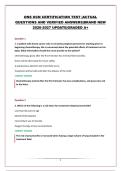
ONS OCN CERTIFICATION TEST |ACTUAL
QUESTIONS AND VERIFIED ANSWERS|BRAND NEW
2026-2027 UPDATE|GRADED A+
Question 1
1. A patient with breast cancer who is 14-weeks pregnant presents for teaching prior to
beginning chemotherapy. She is concerned about the potential effects of treatment on her
baby. What information should the nurse provide to the patient?
Chemotherapy given after the first trimester has minimal fetal toxicities.
Doses will be decreased to ensure safety.
A spontaneous abortion will most likely occur.
Treatment will be held until after the delivery of the child.
CORRECT ANSWER
Chemotherapy started after the first trimester has less complications, and poses less risk
to the fetus.
Question 2
2. Which of the following is a risk factor for treatment-related pneumonitis?
Less than 60 years of age
Mantle field radiation
Concomitant use of steroids
Oxygen therapy at low concentrations
CORRECT ANSWER
The risk of pneumonitis is increased when having a large volume of lung included in the
treatment field.
1
,Question 3
3. A patient receiving chemotherapy continues to have nausea and vomiting before each
treatment, despite the use of antiemetics. The patient is crying and wishes to stop
treatment. What is an appropriate nursing intervention?
Explain that everyone experiences nausea and vomiting.
Recommend that the healthcare provider reduce the dosage.
Suggest the healthcare provider stop treatment.
Discuss integrative therapy options.
CORRECT ANSWER
Complementary or integrative therapy, such as massage, music therapy, or acupuncture
can help with anticipatory nausea.
Question 4
4. A patient with intractable dyspnea at the end of life has not experienced any relief with
traditional interventions. Which of the following should the nurse next consider?
Calling anesthesia to intubate the patient
Informing the patient that there is nothing else left to give them
Discussing the initiating of palliative sedation with the team
Asking the physician to increase the doses of all medications
CORRECT ANSWER
When therapies such as IV opioids, oxygen, diuretics, and benzodiazepines fail to
improve intractable dyspnea, palliative sedation is considered in end-of-life care.
Question 5
5. The nurse suggests which of the following interventions to a patient experiencing dry
desquamation?
A wet-to-dry dressing
2
, A moisturizing skin cream
Cornstarch
A hydrogel dressing
CORRECT ANSWER
General guidelines suggest that hydration of the skin with an emollient, such as aloe
vera, is helpful in promoting comfort and reducing pruritus.
Question 6
6. A patient with an astrocytoma reports headaches, a loss of balance, fatigue, and
elevated blood pressure for four days and has not refilled a prescription for high-dose
steriods. What is the patient most likely experiencing?
Withdrawal
Hypertensive crisis
Increased intracranial pressure
Subdural hematoma
CORRECT ANSWER
Drowsiness, fatigue, headache, and changes in blood pressure are symptoms of
worsening increased intracranial pressure. Corticosteroids are used to decrease
surrounding edema from the tumor.
Question 7
7. A patient had experienced a mild hypersensitivity reaction to the first dose of paclitaxel
and now arrives for the second treatment. Which of the following interventions should the
nurse perform?
Withhold the medication.
Slow the infusion rate of the medication.
Administer prophylactic meperidine.
Dilute the medication in additional fluid.
3
QUESTIONS AND VERIFIED ANSWERS|BRAND NEW
2026-2027 UPDATE|GRADED A+
Question 1
1. A patient with breast cancer who is 14-weeks pregnant presents for teaching prior to
beginning chemotherapy. She is concerned about the potential effects of treatment on her
baby. What information should the nurse provide to the patient?
Chemotherapy given after the first trimester has minimal fetal toxicities.
Doses will be decreased to ensure safety.
A spontaneous abortion will most likely occur.
Treatment will be held until after the delivery of the child.
CORRECT ANSWER
Chemotherapy started after the first trimester has less complications, and poses less risk
to the fetus.
Question 2
2. Which of the following is a risk factor for treatment-related pneumonitis?
Less than 60 years of age
Mantle field radiation
Concomitant use of steroids
Oxygen therapy at low concentrations
CORRECT ANSWER
The risk of pneumonitis is increased when having a large volume of lung included in the
treatment field.
1
,Question 3
3. A patient receiving chemotherapy continues to have nausea and vomiting before each
treatment, despite the use of antiemetics. The patient is crying and wishes to stop
treatment. What is an appropriate nursing intervention?
Explain that everyone experiences nausea and vomiting.
Recommend that the healthcare provider reduce the dosage.
Suggest the healthcare provider stop treatment.
Discuss integrative therapy options.
CORRECT ANSWER
Complementary or integrative therapy, such as massage, music therapy, or acupuncture
can help with anticipatory nausea.
Question 4
4. A patient with intractable dyspnea at the end of life has not experienced any relief with
traditional interventions. Which of the following should the nurse next consider?
Calling anesthesia to intubate the patient
Informing the patient that there is nothing else left to give them
Discussing the initiating of palliative sedation with the team
Asking the physician to increase the doses of all medications
CORRECT ANSWER
When therapies such as IV opioids, oxygen, diuretics, and benzodiazepines fail to
improve intractable dyspnea, palliative sedation is considered in end-of-life care.
Question 5
5. The nurse suggests which of the following interventions to a patient experiencing dry
desquamation?
A wet-to-dry dressing
2
, A moisturizing skin cream
Cornstarch
A hydrogel dressing
CORRECT ANSWER
General guidelines suggest that hydration of the skin with an emollient, such as aloe
vera, is helpful in promoting comfort and reducing pruritus.
Question 6
6. A patient with an astrocytoma reports headaches, a loss of balance, fatigue, and
elevated blood pressure for four days and has not refilled a prescription for high-dose
steriods. What is the patient most likely experiencing?
Withdrawal
Hypertensive crisis
Increased intracranial pressure
Subdural hematoma
CORRECT ANSWER
Drowsiness, fatigue, headache, and changes in blood pressure are symptoms of
worsening increased intracranial pressure. Corticosteroids are used to decrease
surrounding edema from the tumor.
Question 7
7. A patient had experienced a mild hypersensitivity reaction to the first dose of paclitaxel
and now arrives for the second treatment. Which of the following interventions should the
nurse perform?
Withhold the medication.
Slow the infusion rate of the medication.
Administer prophylactic meperidine.
Dilute the medication in additional fluid.
3


