
NRA BASIC RANGE SAFETY OFFICER (RSO) TEST KEY
2025–2026
250 Original Practice Questions with Correct Answers
Important: This is an original study/practice bank aligned to publicly described NRA RSO training themes. It is not a leaked, copied, or reproduced
NRA examination. The NRA's official materials include RSO lesson plans and a student packet. See the official NRA training-materials catalog for
those resources.
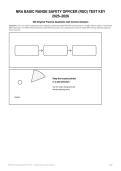
RANGE COMMAND SEQUENCE — ORIGINAL STUDY DIAGRAM
CEASE FIRE MAKE SAFE RESUME FIRE
Follow the range's established command protocol and do not resume until authorized.
MUZZLE-DIRECTION CONCEPT — ORIGINAL DIAGRAM
Keep the muzzle pointed
in a safe direction.
Use the range's designated safe
direction/backstop policy.
firearm
NRA Basic Range Safety Officer (RSO) — Original Practice Study Questions Page 1
, Emergency and Range-Control Concepts
EMERGENCY RESPONSE FLOW — ORIGINAL DIAGRAM
STOP / CEASE FIRE
MAKE FIREARMS SAFE
PROTECT THE SCENE
NOTIFY / GET HELP
BASIC RANGE LAYOUT — ORIGINAL STUDY DIAGRAM BACKSTOP / BERM
FIRING LINE
target target target target
Exact range geometry, target placement, and safe directions are controlled by local range rules.
Answer format: incorrect choices use a large dot; the correct choice uses a green checked box in place of the dot.
NRA Basic Range Safety Officer (RSO) — Original Practice Study Questions Page 2
, 1. What is the primary responsibility of a Range Safety Officer?
• Ask an unqualified person to improvise a solution
• Handle the situation casually without stopping the hazard
• Use a personal preference instead of the range procedure
■ To supervise safe range operations and enforce established safety rules
2. When should an RSO intervene?
• Allow the activity to continue if it is convenient
• Continue the activity until the problem becomes obvious
■ Whenever an unsafe act or condition is observed
• Permit the person to decide whether the rule applies
3. What should an RSO do if a shooter ignores a safety command?
• Ignore it if the person appears experienced
■ Stop the activity and take appropriate corrective action under range policy
• Proceed without verification if the area looks clear
• Use a personal preference instead of the range procedure
4. Why must an RSO know the range's written rules?
■ To apply the range's procedures consistently
• Allow the activity to continue if it is convenient
• Wait until the end of the session to address it
• Assume the condition is safe because no one has complained
5. Who has responsibility for maintaining safe conduct on a range?
■ Everyone on the range, with the RSO responsible for safety supervision
• Handle the situation casually without stopping the hazard
• Proceed without verification if the area looks clear
• Ask an unqualified person to improvise a solution
6. What is the safest approach to an uncertain range condition?
• Wait until the end of the session to address it
• Permit the person to decide whether the rule applies
• Continue the activity until the problem becomes obvious
■ Pause the activity until the condition is clarified and safe
7. Why should an RSO avoid distractions while supervising?
• Ignore it if the person appears experienced
• Use a personal preference instead of the range procedure
■ Because continuous observation is essential for detecting hazards
• Ask an unqualified person to improvise a solution
NRA Basic Range Safety Officer (RSO) — Original Practice Study Questions Page 3
, 8. What should an RSO do before opening a range?
• Permit the person to decide whether the rule applies
• Allow the activity to continue if it is convenient
• Assume the condition is safe because no one has complained
■ Verify that the range is configured and ready according to its procedures
9. What is a key RSO communication skill?
• Handle the situation casually without stopping the hazard
• Ignore it if the person appears experienced
■ Using clear, concise, standardized commands
• Proceed without verification if the area looks clear
10. What is the RSO's role during an emergency?
• Assume the condition is safe because no one has complained
• Continue the activity until the problem becomes obvious
• Wait until the end of the session to address it
■ Control the range, protect people, and initiate the established emergency plan
11. What is the fundamental rule concerning muzzle direction?
• Use a personal preference instead of the range procedure
■ Keep the muzzle pointed in a safe direction
• Handle the situation casually without stopping the hazard
• Ask an unqualified person to improvise a solution
12. What should be treated as loaded?
• Permit the person to decide whether the rule applies
• Continue the activity until the problem becomes obvious
• Allow the activity to continue if it is convenient
■ Every firearm unless its unloaded condition has been verified
13. Where should the trigger finger remain until firing is intended?
• Proceed without verification if the area looks clear
■ Outside the trigger guard
• Ignore it if the person appears experienced
• Use a personal preference instead of the range procedure
14. What must be identified before a shot is fired?
■ The target and what is beyond it
• Wait until the end of the session to address it
• Assume the condition is safe because no one has complained
• Allow the activity to continue if it is convenient
NRA Basic Range Safety Officer (RSO) — Original Practice Study Questions Page 4
2025–2026
250 Original Practice Questions with Correct Answers
Important: This is an original study/practice bank aligned to publicly described NRA RSO training themes. It is not a leaked, copied, or reproduced
NRA examination. The NRA's official materials include RSO lesson plans and a student packet. See the official NRA training-materials catalog for
those resources.
RANGE COMMAND SEQUENCE — ORIGINAL STUDY DIAGRAM
CEASE FIRE MAKE SAFE RESUME FIRE
Follow the range's established command protocol and do not resume until authorized.
MUZZLE-DIRECTION CONCEPT — ORIGINAL DIAGRAM
Keep the muzzle pointed
in a safe direction.
Use the range's designated safe
direction/backstop policy.
firearm
NRA Basic Range Safety Officer (RSO) — Original Practice Study Questions Page 1
, Emergency and Range-Control Concepts
EMERGENCY RESPONSE FLOW — ORIGINAL DIAGRAM
STOP / CEASE FIRE
MAKE FIREARMS SAFE
PROTECT THE SCENE
NOTIFY / GET HELP
BASIC RANGE LAYOUT — ORIGINAL STUDY DIAGRAM BACKSTOP / BERM
FIRING LINE
target target target target
Exact range geometry, target placement, and safe directions are controlled by local range rules.
Answer format: incorrect choices use a large dot; the correct choice uses a green checked box in place of the dot.
NRA Basic Range Safety Officer (RSO) — Original Practice Study Questions Page 2
, 1. What is the primary responsibility of a Range Safety Officer?
• Ask an unqualified person to improvise a solution
• Handle the situation casually without stopping the hazard
• Use a personal preference instead of the range procedure
■ To supervise safe range operations and enforce established safety rules
2. When should an RSO intervene?
• Allow the activity to continue if it is convenient
• Continue the activity until the problem becomes obvious
■ Whenever an unsafe act or condition is observed
• Permit the person to decide whether the rule applies
3. What should an RSO do if a shooter ignores a safety command?
• Ignore it if the person appears experienced
■ Stop the activity and take appropriate corrective action under range policy
• Proceed without verification if the area looks clear
• Use a personal preference instead of the range procedure
4. Why must an RSO know the range's written rules?
■ To apply the range's procedures consistently
• Allow the activity to continue if it is convenient
• Wait until the end of the session to address it
• Assume the condition is safe because no one has complained
5. Who has responsibility for maintaining safe conduct on a range?
■ Everyone on the range, with the RSO responsible for safety supervision
• Handle the situation casually without stopping the hazard
• Proceed without verification if the area looks clear
• Ask an unqualified person to improvise a solution
6. What is the safest approach to an uncertain range condition?
• Wait until the end of the session to address it
• Permit the person to decide whether the rule applies
• Continue the activity until the problem becomes obvious
■ Pause the activity until the condition is clarified and safe
7. Why should an RSO avoid distractions while supervising?
• Ignore it if the person appears experienced
• Use a personal preference instead of the range procedure
■ Because continuous observation is essential for detecting hazards
• Ask an unqualified person to improvise a solution
NRA Basic Range Safety Officer (RSO) — Original Practice Study Questions Page 3
, 8. What should an RSO do before opening a range?
• Permit the person to decide whether the rule applies
• Allow the activity to continue if it is convenient
• Assume the condition is safe because no one has complained
■ Verify that the range is configured and ready according to its procedures
9. What is a key RSO communication skill?
• Handle the situation casually without stopping the hazard
• Ignore it if the person appears experienced
■ Using clear, concise, standardized commands
• Proceed without verification if the area looks clear
10. What is the RSO's role during an emergency?
• Assume the condition is safe because no one has complained
• Continue the activity until the problem becomes obvious
• Wait until the end of the session to address it
■ Control the range, protect people, and initiate the established emergency plan
11. What is the fundamental rule concerning muzzle direction?
• Use a personal preference instead of the range procedure
■ Keep the muzzle pointed in a safe direction
• Handle the situation casually without stopping the hazard
• Ask an unqualified person to improvise a solution
12. What should be treated as loaded?
• Permit the person to decide whether the rule applies
• Continue the activity until the problem becomes obvious
• Allow the activity to continue if it is convenient
■ Every firearm unless its unloaded condition has been verified
13. Where should the trigger finger remain until firing is intended?
• Proceed without verification if the area looks clear
■ Outside the trigger guard
• Ignore it if the person appears experienced
• Use a personal preference instead of the range procedure
14. What must be identified before a shot is fired?
■ The target and what is beyond it
• Wait until the end of the session to address it
• Assume the condition is safe because no one has complained
• Allow the activity to continue if it is convenient
NRA Basic Range Safety Officer (RSO) — Original Practice Study Questions Page 4


