
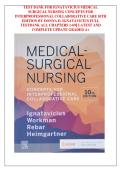
TEST BANK FOR IGNATAVICIUS MEDICAL
SURGICAL NURSING CONCEPTS FOR
INTERPROFESSIONAL COLLABORATIVE CARE 10TH
EDITION BY DONNA D. IGNATAVICIUS FULL
TESTBANK ALL CHAPTERS 1-69|| LATEST AND
COMPLETE UPDATE GRADED A+
,1|P a ge
lv lv lv lv lv lv
TEST BANK FOR IGNATAVICIUS MEDICAL SURGICA lv lv lv lv lv
L NURSING CONCEPTS FOR INTERPROFESSIONAL C
lv lv lv lv lv
OLLABORATIVE CARE 10TH EDITION BY DONNA D. IG lv lv lv lv lv lv lv
NATAVICIUS FULL TESTBANK ALL CHAPTERS 1- lv lv lv lv lv
69|| LATEST AND COMPLETE UPDATE GRADED A+
lv lv lv lv lv lv
Chapter 01: Overview of Professional Nursing Concepts for Medical-
lv lv lv lv lv lv lv lv
Surgical Nursing lv
MULTIPLE CHOICE lv
1. A new nurse is working with a preceptor on a medical-
lv lv lv lv lv lv lv lv lv lv
surgical unit. The preceptor advises the new nurse that which is the priority when workin
lv lv lv lv lv lv lv lv lv lv lv lv lv lv
g as a professional nurse?
lv lv lv lv
a. Attending to holistic client needs lv lv lv lv
b. Ensuring client safety lv lv
c. Not making medication errors
lv lv lv
d. Providing client-focused care lv lv
- ANSWER- B
lv lv
All actions are appropriate for the professional nurse. However, ensuring client safety is the prio
lv lv lv lv lv lv lv lv lv lv lv lv lv lv
rity. Health care errors have been widely reported for 25 years, many of which result in client inju
lv lv lv lv lv lv lv lv lv lv lv lv lv lv lv lv lv
ry, death, and increased health care costs. There are several national and international organizati
lv lv lv lv lv lv lv lv lv lv lv lv lv
ons that have either recommended or mandated safety initiatives.
lv lv lv lv lv lv lv lv
Every nurse has the responsibility to guard the client9s safety. The other actions are important
lv lv lv lv lv lv lv lv lv lv lv lv lv lv l
for quality nursing, but they are not as vital as providing safety. Not making medication errors
v lv lv lv lv lv lv lv lv lv lv lv lv lv lv lv
does provide safety, but is too narrow in scope to be the best answer.
lv lv lv lv lv lv lv lv lv lv lv lv lv lv
DIF:
UnderstandingTOP: Integrated Process: Nursing Process: Intervention KEY: Client lv lv lv lv lv lv lv lv lv
safety
MSC: Client Needs Category: Safe and Effective Care Environment: Safety and Infection C
lv lv lv lv lv lv lv lv lv lv lv lv
ontrol
2. A nurse is orienting a new client and family to the medical-
lv lv lv lv lv lv lv lv lv lv lv
surgical unit. What information does the nurse provide to best help the client promote his
lv lv lv lv lv lv lv lv lv lv lv lv lv lv
or her own safety?
lv lv lv lv
a. Encourage the client and family to be active partners. lv lv lv lv lv lv lv lv
,2|P a ge
lv lv lv lv lv lv
b. Have the client monitor hand hygiene in caregivers.
lv lv lv lv lv lv lv
c. Offer the family the opportunity to stay with the client.
lv lv lv lv lv lv lv lv lv
d. Tell the client to always wear his or her armband.
lv lv lv lv lv lv lv lv lv
- ANSWER- A
lv lv
Each action could be important for the client or family to perform. However, encouraging the cli
lv lv lv lv lv lv lv lv lv lv lv lv lv lv lv
ent to be active in his or her health care as a safety partner is the most critical. The other actions
lv lv lv lv lv lv lv lv lv lv lv lv lv lv lv lv lv lv lv lv lv
are very limited in scope and do not provide the broad protection that being active and involved d
lv lv lv lv lv lv lv lv lv lv lv lv lv lv lv lv lv
oes.
DIF: UnderstandingTOP: Integrated Process: Teaching/Learning KEY: Client safety lv lv lv lv lv lv lv
MSC: Client Needs Category: Safe and Effective Care Environment: Safety and Infection C
lv lv lv lv lv lv lv lv lv lv lv lv
ontrol
3. A nurse is caring for a postoperative client on the surgical unit. The client9s blood pre
lv lv lv lv lv lv lv lv lv lv lv lv lv lv lv
ssure was 142/76 mm Hg 30 minutes ago, and now is 88/50 mm Hg. What action would the nur
lv lv lv lv lv lv lv lv lv lv lv lv lv lv lv lv lv lv
se take first?
lv lv
a. Call the Rapid Response Team.
lv lv lv lv
b. Document and continue to monitor. lv lv lv lv
c. Notify the primary health care provider.
lv lv lv lv lv
d. Repeat the blood pressure in 15 minutes.
lv lv lv lv lv lv
- ANSWER- A
lv lv
The purpose of the Rapid Response Team (RRT) is to intervene when clients are deteriorating b
lv lv lv lv lv lv lv lv lv lv lv lv lv lv lv
efore they suffer either respiratory or cardiac arrest. Since the client has manifested a significant c
lv lv lv lv lv lv lv lv lv lv lv lv lv lv lv
hange, the nurse would call the RRT. Changes in blood pressure, mental status, heart rate, tempe
lv lv lv lv lv lv lv lv lv lv lv lv lv lv lv
rature, oxygen saturation, and last 2 hours9 urine output are particularly significant and are part o
lv lv lv lv lv lv lv lv lv lv lv lv lv lv lv
f the Modified Early Warning System guide. Documentation is vital, but the nurse must do more
lv lv lv lv lv lv lv lv lv lv lv lv lv lv lv l
vthan document. The primary health care provider would be notified, but this is not more import
lv lv lv lv lv lv lv lv lv lv lv lv lv lv lv
ant than calling the RRT. The client9s blood pressure would be reassessed frequently, but the pr
lv lv lv lv lv lv lv lv lv lv lv lv lv lv lv
iority is getting the rapid care to the client.
lv lv lv lv lv lv lv lv
DIF: Applying
TOP: Integrated Process: Communication and Documentation KEY: Rapid Respons
lv lv lv lv lv lv lv lv
e Team (RRT), Clinical judgment
lv lv lv lv
MSC: Client Needs Category: Physiological Integrity: Physiological Adaptation
lv lv lv lv lv lv lv
, 3
lv lvlv | lvlv P l v l v a
4. A nurse wishes to provide client- lv lv lv lv lv
centered care in all interactions. Which action by the nurse
lv lv lv lv lv lv lv lv lv
best demonstrates this concept?
lv lv lv
a. Assesses for cultural influences affecting health care. lv lv lv lv lv lv
b. Ensures that all the client9s basic needs are met. lv lv lv lv lv lv lv lv
c. Tells the client and family about all upcoming tests.
lv lv lv lv lv lv lv lv
d. Thoroughly orients the client and family to the room. lv lv lv lv lv lv lv lv
- ANSWER- A
lv lv
Showing respect for the client and family9s preferences and needs is essential to ensure a holistic
lv lv lv lv lv lv lv lv lv lv lv lv lv lv lv lv
or <whole-lv
person= approach to care. By assessing the effect of the client9s culture on health care, this nurs
lv lv lv lv lv lv lv lv lv lv lv lv lv lv lv lv
e is practicing client-
lv lv lv
focused care. Providing for basic needs does not demonstrate this competence. Simply telling th
lv lv lv lv lv lv lv lv lv lv lv lv lv
e client about all upcoming tests is not providing empowering education. Orienting the client an
lv lv lv lv lv lv lv lv lv lv lv lv lv lv
d family to the room is an important safety measure, but not directly related to demonstrating cli
lv lv lv lv lv lv lv lv lv lv lv lv lv lv lv lv
ent-centered care. lv
DIF: UnderstandingTOP: Integrated Process: Culture and Spirituality KEY: Client- lv lv lv lv lv lv lv lv
centered care, Culture MSC: Client Needs Category: Psychosocial Integrity
lv lv lv lv lv lv lv
5. A client is going to be admitted for a scheduled surgical procedure. Which action does
lv lv lv lv lv lv lv lv lv lv lv lv lv lv lv
the nurse explain is the most important thing the client can do to protect against errors?
lv lv lv lv lv lv lv lv lv lv lv lv lv lv lv
a. Bring a list of all medications and what they are for.
lv lv lv lv lv lv lv lv lv lv
b. Keep the provider9s phone number by the telephone.
lv lv lv lv lv lv lv
c. Make sure that all providers wash hands before entering the room.
lv lv lv lv lv lv lv lv lv lv
d. Write down the name of each caregiver who comes in the room.
lv lv lv lv lv lv lv lv lv lv lv
- ANSWER- A
lv lv
Medication reconciliation is a formal process in which the client9s actual current medications are
lv lv lv lv lv lv lv lv lv lv lv lv lv lv
compared to the prescribed medications at the time of admission, transfer, or discharge. This Na
lv lv lv lv lv lv lv lv lv lv lv lv lv lv
tional client Safety Goal is important to reduce medication errors. The client would not have to
lv lv lv lv lv lv lv lv lv lv lv lv lv lv lv lv
be responsible for providers washing their hands, and even if the client does so, this is too narro
lv lv lv lv lv lv lv lv lv lv lv lv lv lv lv lv lv
w to be the most important action to prevent errors. Keeping the provider9s phone number nearb
lv lv lv lv lv lv lv lv lv lv lv lv lv lv lv
y and documenting everyone who enters the room also do not guarantee safety.
lv lv lv lv lv lv lv lv lv lv lv lv
DIF: Applying
TOP: Integrated Process: Teaching/Learning KEY: Client safety, Informatics
lv lv lv lv lv lv lv
MSC: Client Needs Category: Safe and Effective Care Environment: Safety and Infection C
lv lv lv lv lv lv lv lv lv lv lv lv
ontrol
SURGICAL NURSING CONCEPTS FOR
INTERPROFESSIONAL COLLABORATIVE CARE 10TH
EDITION BY DONNA D. IGNATAVICIUS FULL
TESTBANK ALL CHAPTERS 1-69|| LATEST AND
COMPLETE UPDATE GRADED A+
,1|P a ge
lv lv lv lv lv lv
TEST BANK FOR IGNATAVICIUS MEDICAL SURGICA lv lv lv lv lv
L NURSING CONCEPTS FOR INTERPROFESSIONAL C
lv lv lv lv lv
OLLABORATIVE CARE 10TH EDITION BY DONNA D. IG lv lv lv lv lv lv lv
NATAVICIUS FULL TESTBANK ALL CHAPTERS 1- lv lv lv lv lv
69|| LATEST AND COMPLETE UPDATE GRADED A+
lv lv lv lv lv lv
Chapter 01: Overview of Professional Nursing Concepts for Medical-
lv lv lv lv lv lv lv lv
Surgical Nursing lv
MULTIPLE CHOICE lv
1. A new nurse is working with a preceptor on a medical-
lv lv lv lv lv lv lv lv lv lv
surgical unit. The preceptor advises the new nurse that which is the priority when workin
lv lv lv lv lv lv lv lv lv lv lv lv lv lv
g as a professional nurse?
lv lv lv lv
a. Attending to holistic client needs lv lv lv lv
b. Ensuring client safety lv lv
c. Not making medication errors
lv lv lv
d. Providing client-focused care lv lv
- ANSWER- B
lv lv
All actions are appropriate for the professional nurse. However, ensuring client safety is the prio
lv lv lv lv lv lv lv lv lv lv lv lv lv lv
rity. Health care errors have been widely reported for 25 years, many of which result in client inju
lv lv lv lv lv lv lv lv lv lv lv lv lv lv lv lv lv
ry, death, and increased health care costs. There are several national and international organizati
lv lv lv lv lv lv lv lv lv lv lv lv lv
ons that have either recommended or mandated safety initiatives.
lv lv lv lv lv lv lv lv
Every nurse has the responsibility to guard the client9s safety. The other actions are important
lv lv lv lv lv lv lv lv lv lv lv lv lv lv l
for quality nursing, but they are not as vital as providing safety. Not making medication errors
v lv lv lv lv lv lv lv lv lv lv lv lv lv lv lv
does provide safety, but is too narrow in scope to be the best answer.
lv lv lv lv lv lv lv lv lv lv lv lv lv lv
DIF:
UnderstandingTOP: Integrated Process: Nursing Process: Intervention KEY: Client lv lv lv lv lv lv lv lv lv
safety
MSC: Client Needs Category: Safe and Effective Care Environment: Safety and Infection C
lv lv lv lv lv lv lv lv lv lv lv lv
ontrol
2. A nurse is orienting a new client and family to the medical-
lv lv lv lv lv lv lv lv lv lv lv
surgical unit. What information does the nurse provide to best help the client promote his
lv lv lv lv lv lv lv lv lv lv lv lv lv lv
or her own safety?
lv lv lv lv
a. Encourage the client and family to be active partners. lv lv lv lv lv lv lv lv
,2|P a ge
lv lv lv lv lv lv
b. Have the client monitor hand hygiene in caregivers.
lv lv lv lv lv lv lv
c. Offer the family the opportunity to stay with the client.
lv lv lv lv lv lv lv lv lv
d. Tell the client to always wear his or her armband.
lv lv lv lv lv lv lv lv lv
- ANSWER- A
lv lv
Each action could be important for the client or family to perform. However, encouraging the cli
lv lv lv lv lv lv lv lv lv lv lv lv lv lv lv
ent to be active in his or her health care as a safety partner is the most critical. The other actions
lv lv lv lv lv lv lv lv lv lv lv lv lv lv lv lv lv lv lv lv lv
are very limited in scope and do not provide the broad protection that being active and involved d
lv lv lv lv lv lv lv lv lv lv lv lv lv lv lv lv lv
oes.
DIF: UnderstandingTOP: Integrated Process: Teaching/Learning KEY: Client safety lv lv lv lv lv lv lv
MSC: Client Needs Category: Safe and Effective Care Environment: Safety and Infection C
lv lv lv lv lv lv lv lv lv lv lv lv
ontrol
3. A nurse is caring for a postoperative client on the surgical unit. The client9s blood pre
lv lv lv lv lv lv lv lv lv lv lv lv lv lv lv
ssure was 142/76 mm Hg 30 minutes ago, and now is 88/50 mm Hg. What action would the nur
lv lv lv lv lv lv lv lv lv lv lv lv lv lv lv lv lv lv
se take first?
lv lv
a. Call the Rapid Response Team.
lv lv lv lv
b. Document and continue to monitor. lv lv lv lv
c. Notify the primary health care provider.
lv lv lv lv lv
d. Repeat the blood pressure in 15 minutes.
lv lv lv lv lv lv
- ANSWER- A
lv lv
The purpose of the Rapid Response Team (RRT) is to intervene when clients are deteriorating b
lv lv lv lv lv lv lv lv lv lv lv lv lv lv lv
efore they suffer either respiratory or cardiac arrest. Since the client has manifested a significant c
lv lv lv lv lv lv lv lv lv lv lv lv lv lv lv
hange, the nurse would call the RRT. Changes in blood pressure, mental status, heart rate, tempe
lv lv lv lv lv lv lv lv lv lv lv lv lv lv lv
rature, oxygen saturation, and last 2 hours9 urine output are particularly significant and are part o
lv lv lv lv lv lv lv lv lv lv lv lv lv lv lv
f the Modified Early Warning System guide. Documentation is vital, but the nurse must do more
lv lv lv lv lv lv lv lv lv lv lv lv lv lv lv l
vthan document. The primary health care provider would be notified, but this is not more import
lv lv lv lv lv lv lv lv lv lv lv lv lv lv lv
ant than calling the RRT. The client9s blood pressure would be reassessed frequently, but the pr
lv lv lv lv lv lv lv lv lv lv lv lv lv lv lv
iority is getting the rapid care to the client.
lv lv lv lv lv lv lv lv
DIF: Applying
TOP: Integrated Process: Communication and Documentation KEY: Rapid Respons
lv lv lv lv lv lv lv lv
e Team (RRT), Clinical judgment
lv lv lv lv
MSC: Client Needs Category: Physiological Integrity: Physiological Adaptation
lv lv lv lv lv lv lv
, 3
lv lvlv | lvlv P l v l v a
4. A nurse wishes to provide client- lv lv lv lv lv
centered care in all interactions. Which action by the nurse
lv lv lv lv lv lv lv lv lv
best demonstrates this concept?
lv lv lv
a. Assesses for cultural influences affecting health care. lv lv lv lv lv lv
b. Ensures that all the client9s basic needs are met. lv lv lv lv lv lv lv lv
c. Tells the client and family about all upcoming tests.
lv lv lv lv lv lv lv lv
d. Thoroughly orients the client and family to the room. lv lv lv lv lv lv lv lv
- ANSWER- A
lv lv
Showing respect for the client and family9s preferences and needs is essential to ensure a holistic
lv lv lv lv lv lv lv lv lv lv lv lv lv lv lv lv
or <whole-lv
person= approach to care. By assessing the effect of the client9s culture on health care, this nurs
lv lv lv lv lv lv lv lv lv lv lv lv lv lv lv lv
e is practicing client-
lv lv lv
focused care. Providing for basic needs does not demonstrate this competence. Simply telling th
lv lv lv lv lv lv lv lv lv lv lv lv lv
e client about all upcoming tests is not providing empowering education. Orienting the client an
lv lv lv lv lv lv lv lv lv lv lv lv lv lv
d family to the room is an important safety measure, but not directly related to demonstrating cli
lv lv lv lv lv lv lv lv lv lv lv lv lv lv lv lv
ent-centered care. lv
DIF: UnderstandingTOP: Integrated Process: Culture and Spirituality KEY: Client- lv lv lv lv lv lv lv lv
centered care, Culture MSC: Client Needs Category: Psychosocial Integrity
lv lv lv lv lv lv lv
5. A client is going to be admitted for a scheduled surgical procedure. Which action does
lv lv lv lv lv lv lv lv lv lv lv lv lv lv lv
the nurse explain is the most important thing the client can do to protect against errors?
lv lv lv lv lv lv lv lv lv lv lv lv lv lv lv
a. Bring a list of all medications and what they are for.
lv lv lv lv lv lv lv lv lv lv
b. Keep the provider9s phone number by the telephone.
lv lv lv lv lv lv lv
c. Make sure that all providers wash hands before entering the room.
lv lv lv lv lv lv lv lv lv lv
d. Write down the name of each caregiver who comes in the room.
lv lv lv lv lv lv lv lv lv lv lv
- ANSWER- A
lv lv
Medication reconciliation is a formal process in which the client9s actual current medications are
lv lv lv lv lv lv lv lv lv lv lv lv lv lv
compared to the prescribed medications at the time of admission, transfer, or discharge. This Na
lv lv lv lv lv lv lv lv lv lv lv lv lv lv
tional client Safety Goal is important to reduce medication errors. The client would not have to
lv lv lv lv lv lv lv lv lv lv lv lv lv lv lv lv
be responsible for providers washing their hands, and even if the client does so, this is too narro
lv lv lv lv lv lv lv lv lv lv lv lv lv lv lv lv lv
w to be the most important action to prevent errors. Keeping the provider9s phone number nearb
lv lv lv lv lv lv lv lv lv lv lv lv lv lv lv
y and documenting everyone who enters the room also do not guarantee safety.
lv lv lv lv lv lv lv lv lv lv lv lv
DIF: Applying
TOP: Integrated Process: Teaching/Learning KEY: Client safety, Informatics
lv lv lv lv lv lv lv
MSC: Client Needs Category: Safe and Effective Care Environment: Safety and Infection C
lv lv lv lv lv lv lv lv lv lv lv lv
ontrol


