
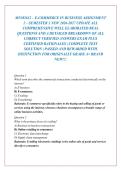
MNM2612 – E-COMMERCE IN BUSINESS ASSIGNMENT
2 – SEMESTER 2 NEW 2026-2027 UPDATE ALL
COMPREHENSIVE WELL ELABORATED REAL
QUESTIONS AND A DETAILED BREAKDOWN OF ALL
CORRECT VERIFIED ANSWERS EXAM PLUS
CERTIFIED RATIONALES | COMPLETE TEST
SOLUTION | PASSED AND REWARDED WITH
DISTINCTION FOR ORIGINALLY GRADE A+ BRAND
NEW!!!
Question 1
Which term describes the commercial transactions conducted electronically on the
internet?
A) E-business
B) E-commerce
C) E-tailing
D) E-marketing
Rationale: E-commerce specifically refers to the buying and selling of goods or
services using the internet, whereas e-business encompasses a broader range of
online business activities.
Question 2
What is the primary focus of e-tailing?
A) Business-to-business transactions
B) Online retailing to consumers
C) Electronic data interchange
D) Supply chain management
Rationale: E-tailing (electronic retailing) is the online sale of goods and services
directly to consumers.
,Question 3
Which of the following is NOT a key component of e-commerce infrastructure?
A) Web servers
B) Payment gateways
C) Physical storefronts
D) Security protocols
Rationale: Physical storefronts are part of traditional commerce, not e-
commerce infrastructure. E-commerce relies on digital components like web
servers, payment gateways and security protocols.
Question 4
The term "online tipping point" in e-commerce refers to:
A) The moment a website crashes due to high traffic
B) The critical mass of internet users that makes online business viable
C) The point at which a product becomes obsolete
D) The maximum number of items that can be sold online
Rationale: The online tipping point is the threshold of internet adoption after
which e-commerce becomes a mainstream and profitable channel.
Question 5
Which of the following best defines e-business?
A) Selling products only through physical stores
B) The digital enablement of transactions and processes within a firm,
involving information systems under the firm's control
C) Conducting business exclusively via email
D) Using social media for brand awareness only
Rationale: E-business is broader than e-commerce; it includes internal
processes, supply chain management, customer relationship management and
electronic transactions.
Question 6
In the context of e-commerce, what does B2C stand for?
A) Business-to-Consumer
B) Business-to-Consumer
C) Business-to-Company
D) Buyer-to-Consumer
, Rationale: B2C (Business-to-Consumer) refers to transactions where businesses
sell directly to end consumers.
Question 7
Which e-commerce model involves transactions between two businesses?
A) B2C
B) B2B
C) C2C
D) C2B
Rationale: B2B (Business-to-Business) e-commerce involves commercial
transactions between two businesses, such as a manufacturer selling to a
wholesaler.
Question 8
Which of the following is an example of C2C e-commerce?
A) A company selling software to another company
B) An individual selling a used bicycle on an online marketplace
C) A retailer selling clothes to a consumer
D) A consumer submitting a bid for a government contract
Rationale: C2C (Consumer-to-Consumer) involves individuals selling to other
individuals, often through platforms like eBay or Facebook Marketplace.
Question 9
What is the primary purpose of a payment gateway in e-commerce?
A) To host the website
B) To securely authorise and process online payments
C) To manage inventory
D) To design the website layout
Rationale: A payment gateway encrypts payment data and facilitates the transfer
of funds between the customer and the merchant.
Question 10
Which protocol is commonly used to secure online transactions?
A) HTTP
B) HTTPS
C) FTP
D) SMTP
2 – SEMESTER 2 NEW 2026-2027 UPDATE ALL
COMPREHENSIVE WELL ELABORATED REAL
QUESTIONS AND A DETAILED BREAKDOWN OF ALL
CORRECT VERIFIED ANSWERS EXAM PLUS
CERTIFIED RATIONALES | COMPLETE TEST
SOLUTION | PASSED AND REWARDED WITH
DISTINCTION FOR ORIGINALLY GRADE A+ BRAND
NEW!!!
Question 1
Which term describes the commercial transactions conducted electronically on the
internet?
A) E-business
B) E-commerce
C) E-tailing
D) E-marketing
Rationale: E-commerce specifically refers to the buying and selling of goods or
services using the internet, whereas e-business encompasses a broader range of
online business activities.
Question 2
What is the primary focus of e-tailing?
A) Business-to-business transactions
B) Online retailing to consumers
C) Electronic data interchange
D) Supply chain management
Rationale: E-tailing (electronic retailing) is the online sale of goods and services
directly to consumers.
,Question 3
Which of the following is NOT a key component of e-commerce infrastructure?
A) Web servers
B) Payment gateways
C) Physical storefronts
D) Security protocols
Rationale: Physical storefronts are part of traditional commerce, not e-
commerce infrastructure. E-commerce relies on digital components like web
servers, payment gateways and security protocols.
Question 4
The term "online tipping point" in e-commerce refers to:
A) The moment a website crashes due to high traffic
B) The critical mass of internet users that makes online business viable
C) The point at which a product becomes obsolete
D) The maximum number of items that can be sold online
Rationale: The online tipping point is the threshold of internet adoption after
which e-commerce becomes a mainstream and profitable channel.
Question 5
Which of the following best defines e-business?
A) Selling products only through physical stores
B) The digital enablement of transactions and processes within a firm,
involving information systems under the firm's control
C) Conducting business exclusively via email
D) Using social media for brand awareness only
Rationale: E-business is broader than e-commerce; it includes internal
processes, supply chain management, customer relationship management and
electronic transactions.
Question 6
In the context of e-commerce, what does B2C stand for?
A) Business-to-Consumer
B) Business-to-Consumer
C) Business-to-Company
D) Buyer-to-Consumer
, Rationale: B2C (Business-to-Consumer) refers to transactions where businesses
sell directly to end consumers.
Question 7
Which e-commerce model involves transactions between two businesses?
A) B2C
B) B2B
C) C2C
D) C2B
Rationale: B2B (Business-to-Business) e-commerce involves commercial
transactions between two businesses, such as a manufacturer selling to a
wholesaler.
Question 8
Which of the following is an example of C2C e-commerce?
A) A company selling software to another company
B) An individual selling a used bicycle on an online marketplace
C) A retailer selling clothes to a consumer
D) A consumer submitting a bid for a government contract
Rationale: C2C (Consumer-to-Consumer) involves individuals selling to other
individuals, often through platforms like eBay or Facebook Marketplace.
Question 9
What is the primary purpose of a payment gateway in e-commerce?
A) To host the website
B) To securely authorise and process online payments
C) To manage inventory
D) To design the website layout
Rationale: A payment gateway encrypts payment data and facilitates the transfer
of funds between the customer and the merchant.
Question 10
Which protocol is commonly used to secure online transactions?
A) HTTP
B) HTTPS
C) FTP
D) SMTP


