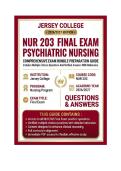
,NUR 203 Final Exam Psychiatric Nursing Questions And Answers
2026/2027 Jersey College
Q1. During an interview, a client says, “I don't know why I keep
making the same mistakes.” Which response best promotes self-
exploration?
A) “You need to think more carefully before making decisions.”
B) “What do you notice happening just before you make those decisions?”
C) “Everyone makes mistakes, so don't worry about it.”
D) “Your behavior probably comes from unresolved childhood conflict.”
Correct Answer: B) “What do you notice happening just before you make
those decisions?”
Rationale: Exploratory questions encourage the client to identify patterns,
triggers, and consequences without imposing judgment or interpretation.
Q2. A psychiatric client asks the nurse to become a social-media
friend after discharge. What is the best response?
A) Accept the request after the therapeutic relationship ends
B) Accept only if no clinical information is discussed
C) Ask the client to create a private account first
D) Explain that professional boundaries continue to apply outside the clinical
setting
Correct Answer: D) Explain that professional boundaries continue to apply
outside the clinical setting
Rationale: Professional boundaries protect the therapeutic nature of the
nurse-client relationship and should not be converted into personal or social
relationships.
Q3. Which observation belongs in the appearance and behavior
portion of a mental status examination?
A) Clothing is soiled, eye contact is minimal, and motor activity is slowed
B) The client reports feeling hopeless for three weeks
C) The client believes neighbors are monitoring the home
D) The client cannot recall three words after five minutes
Correct Answer: A) Clothing is soiled, eye contact is minimal, and motor
activity is slowed
,Rationale: Appearance and behavior include grooming, dress, posture, eye
contact, facial expression, motor activity, and observable interactions.
Q4. During assessment, a client states, “I feel fine,” while crying
and looking downward. What should the nurse recognize?
A) The client is demonstrating echolalia
B) The client's memory is impaired
C) The verbal statement and observed affect are incongruent
D) The client is experiencing a delusion
Correct Answer: C) The verbal statement and observed affect are
incongruent
Rationale: Affect is incongruent when the observed emotional expression
does not match the stated mood or content of the conversation.
Q5. A client says, “Nobody here understands what I'm going
through.” Which response best demonstrates empathy?
A) “I know exactly how you feel.”
B) “It sounds as though you feel very alone in this experience.”
C) “Other clients have problems that are just as difficult.”
D) “You shouldn't assume that nobody understands.”
Correct Answer: B) “It sounds as though you feel very alone in this
experience.”
Rationale: Empathy communicates understanding of the client's emotional
experience without claiming identical personal experience or minimizing
distress.
Q6. Which action best demonstrates fidelity in psychiatric nursing?
A) Keeping a reasonable promise to return and speak with the client at the
agreed time
B) Allowing the client to choose among treatment options
C) Preventing foreseeable harm during medication administration
D) Providing equal treatment opportunities to all clients
Correct Answer: A) Keeping a reasonable promise to return and speak with
the client at the agreed time
Rationale: Fidelity involves faithfulness to commitments and maintaining
trust through dependable professional behavior.
, Q7. A client asks, “Will you keep everything I tell you secret?” What
is the nurse's best response?
A) “Yes. Nothing you say can ever be shared.”
B) “Only your family can decide what remains private.”
C) “I can protect your privacy, but information related to serious safety
concerns may need to be shared with the treatment team or as required by
law.”
D) “Everything discussed on a psychiatric unit is automatically public
information.”
Correct Answer: C) “I can protect your privacy, but information related to
serious safety concerns may need to be shared with the treatment team or
as required by law.”
Rationale: Confidentiality is fundamental but not absolute. Safety,
treatment, and legal obligations can require limited disclosure of relevant
information.
Q8. A client who understands the risks and benefits of treatment
refuses a recommended procedure. Which ethical principle most
strongly supports respecting this decision?
A) Beneficence
B) Justice
C) Veracity
D) Autonomy
Correct Answer: D) Autonomy
Rationale: Autonomy protects a capable person's right to make informed
healthcare decisions, including refusal of treatment.
Q9. During a psychiatric interview, the client suddenly becomes
silent after discussing a painful memory. What is the nurse's most
therapeutic action?
A) Allow the silence and remain attentively present
B) Immediately change the topic
C) Ask several questions to prevent discomfort
D) End the interview because the client is no longer participating
Correct Answer: A) Allow the silence and remain attentively present
2026/2027 Jersey College
Q1. During an interview, a client says, “I don't know why I keep
making the same mistakes.” Which response best promotes self-
exploration?
A) “You need to think more carefully before making decisions.”
B) “What do you notice happening just before you make those decisions?”
C) “Everyone makes mistakes, so don't worry about it.”
D) “Your behavior probably comes from unresolved childhood conflict.”
Correct Answer: B) “What do you notice happening just before you make
those decisions?”
Rationale: Exploratory questions encourage the client to identify patterns,
triggers, and consequences without imposing judgment or interpretation.
Q2. A psychiatric client asks the nurse to become a social-media
friend after discharge. What is the best response?
A) Accept the request after the therapeutic relationship ends
B) Accept only if no clinical information is discussed
C) Ask the client to create a private account first
D) Explain that professional boundaries continue to apply outside the clinical
setting
Correct Answer: D) Explain that professional boundaries continue to apply
outside the clinical setting
Rationale: Professional boundaries protect the therapeutic nature of the
nurse-client relationship and should not be converted into personal or social
relationships.
Q3. Which observation belongs in the appearance and behavior
portion of a mental status examination?
A) Clothing is soiled, eye contact is minimal, and motor activity is slowed
B) The client reports feeling hopeless for three weeks
C) The client believes neighbors are monitoring the home
D) The client cannot recall three words after five minutes
Correct Answer: A) Clothing is soiled, eye contact is minimal, and motor
activity is slowed
,Rationale: Appearance and behavior include grooming, dress, posture, eye
contact, facial expression, motor activity, and observable interactions.
Q4. During assessment, a client states, “I feel fine,” while crying
and looking downward. What should the nurse recognize?
A) The client is demonstrating echolalia
B) The client's memory is impaired
C) The verbal statement and observed affect are incongruent
D) The client is experiencing a delusion
Correct Answer: C) The verbal statement and observed affect are
incongruent
Rationale: Affect is incongruent when the observed emotional expression
does not match the stated mood or content of the conversation.
Q5. A client says, “Nobody here understands what I'm going
through.” Which response best demonstrates empathy?
A) “I know exactly how you feel.”
B) “It sounds as though you feel very alone in this experience.”
C) “Other clients have problems that are just as difficult.”
D) “You shouldn't assume that nobody understands.”
Correct Answer: B) “It sounds as though you feel very alone in this
experience.”
Rationale: Empathy communicates understanding of the client's emotional
experience without claiming identical personal experience or minimizing
distress.
Q6. Which action best demonstrates fidelity in psychiatric nursing?
A) Keeping a reasonable promise to return and speak with the client at the
agreed time
B) Allowing the client to choose among treatment options
C) Preventing foreseeable harm during medication administration
D) Providing equal treatment opportunities to all clients
Correct Answer: A) Keeping a reasonable promise to return and speak with
the client at the agreed time
Rationale: Fidelity involves faithfulness to commitments and maintaining
trust through dependable professional behavior.
, Q7. A client asks, “Will you keep everything I tell you secret?” What
is the nurse's best response?
A) “Yes. Nothing you say can ever be shared.”
B) “Only your family can decide what remains private.”
C) “I can protect your privacy, but information related to serious safety
concerns may need to be shared with the treatment team or as required by
law.”
D) “Everything discussed on a psychiatric unit is automatically public
information.”
Correct Answer: C) “I can protect your privacy, but information related to
serious safety concerns may need to be shared with the treatment team or
as required by law.”
Rationale: Confidentiality is fundamental but not absolute. Safety,
treatment, and legal obligations can require limited disclosure of relevant
information.
Q8. A client who understands the risks and benefits of treatment
refuses a recommended procedure. Which ethical principle most
strongly supports respecting this decision?
A) Beneficence
B) Justice
C) Veracity
D) Autonomy
Correct Answer: D) Autonomy
Rationale: Autonomy protects a capable person's right to make informed
healthcare decisions, including refusal of treatment.
Q9. During a psychiatric interview, the client suddenly becomes
silent after discussing a painful memory. What is the nurse's most
therapeutic action?
A) Allow the silence and remain attentively present
B) Immediately change the topic
C) Ask several questions to prevent discomfort
D) End the interview because the client is no longer participating
Correct Answer: A) Allow the silence and remain attentively present