
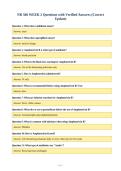
NR 566 WEEK 2 Questions with Verified Answers (Correct
Update)
Question 1: What does candidiasis mean?
Answer: yeast
Question 2: What does aspergillosis mean?
Answer: mold or fungus
Question 3: Amphotericin B is what type of antibiotic?
Answer: broad spectrum
Question 4: What is the black box warning for Amphotericin B?
Answer: Use in life threatening infections only
Question 5: How is Amphotericin administered?
Answer: IV only
Question 6: What is recommended before using Amphotericin B? Test
Answer: dose
Question 7: What are infusion reactions for Amphotericin B?
Answer: Fever, chills, nausea
Question 8: What do we use to premedicate before the use of Amphotericin B?
Answer: Acetaminophen plus diphenhydramine
Question 9: What is common with infusions when using Amphotericin B?
Answer: Phlebitis
Question 10: How is Amphotericin B used?
Answer: Life threatening situations daily or every other day for 6-8 weeks
Question 11: What type of antibiotics are "Azoles"?
Answer: Broad spectrum anifungals
Page 1
Update)
Question 1: What does candidiasis mean?
Answer: yeast
Question 2: What does aspergillosis mean?
Answer: mold or fungus
Question 3: Amphotericin B is what type of antibiotic?
Answer: broad spectrum
Question 4: What is the black box warning for Amphotericin B?
Answer: Use in life threatening infections only
Question 5: How is Amphotericin administered?
Answer: IV only
Question 6: What is recommended before using Amphotericin B? Test
Answer: dose
Question 7: What are infusion reactions for Amphotericin B?
Answer: Fever, chills, nausea
Question 8: What do we use to premedicate before the use of Amphotericin B?
Answer: Acetaminophen plus diphenhydramine
Question 9: What is common with infusions when using Amphotericin B?
Answer: Phlebitis
Question 10: How is Amphotericin B used?
Answer: Life threatening situations daily or every other day for 6-8 weeks
Question 11: What type of antibiotics are "Azoles"?
Answer: Broad spectrum anifungals
Page 1


