
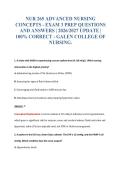
NUR 265 ADVANCED NURSING
CONCEPTS - EXAM 3 PREP QUESTIONS
AND ANSWERS | 2026/2027 UPDATE |
100% CORRECT - GALEN COLLEGE OF
NURSING.
1. A client with SIADH is experiencing a serum sodium level of 116 mEq/L. Which nursing
intervention is the highest priority?
A. Administering a bolus of 5% Dextrose in Water (D5W)
B. Assessing for signs of fluid volume deficit
C. Encouraging oral fluid intake to 2000 mL per day
D. Initiating seizure precautions and preparing hypertonic saline
Answer: D
Conceptual Explanation: A serum sodium of 116 mEq/L indicates severe hyponatremia,
which poses a significant risk for seizures, coma, and cerebral edema. Fluid restriction and
hypertonic saline (3%) are typically used, not D5W or fluid encouragement.
2. A patient in the ICU has a Swan-Ganz catheter. The CVP is 12 mmHg, and the PAWP is 18
mmHg. Which condition does the nurse suspect?
A. Hypovolemic shock
,B. Hypervolemic state or Left heart failure
C. Septic shock in the early stage
D. Dehydration
Answer: B
Conceptual Explanation: Elevated CVP (Normal 2-8 mmHg) and PAWP (Normal 6-12
mmHg) indicate fluid volume overload or cardiac congestion, often associated with left-
sided heart failure.
3. A client with a T6 spinal cord injury reports a sudden, throbbing headache and has a blood
pressure of 190/110 mmHg. What is the nurse’s first action?
A. Administer PRN antihypertensives
B. Lower the head of the bed to a flat position
C. Notify the rapid response team immediately
D. Check for bladder distention or fecal impaction
Answer: D
Conceptual Explanation: These are classic signs of autonomic dysreflexia. The priority is
to identify and remove the noxious stimulus, which is most commonly a distended bladder
or impacted bowel.
, 4. A patient with ARDS is on a ventilator with high PEEP settings. The nurse notes a sudden
drop in SpO2 and absent breath sounds on the right side. What is the likely complication?
A. Pulmonary embolism
B. Ventilator-associated pneumonia
C. Tension pneumothorax
D. Oxygen toxicity
Answer: C
Conceptual Explanation: High PEEP increases the risk of barotrauma, leading to a
pneumothorax. Absent breath sounds and sudden desaturation are hallmark signs.
5. Which assessment finding in a patient with a traumatic brain injury (TBI) indicates
Cushing’s Triad?
A. Tachycardia, hypotension, and tachypnea
B. Bradycardia, widening pulse pressure, and irregular respirations
C. Miosis, hypertension, and Cheyne-Stokes breathing
D. Narrowing pulse pressure, tachycardia, and fever
Answer: B
Conceptual Explanation: Cushing’s Triad is a late sign of increased ICP consisting of
bradycardia, hypertension with a wide pulse pressure, and respiratory irregularity.
CONCEPTS - EXAM 3 PREP QUESTIONS
AND ANSWERS | 2026/2027 UPDATE |
100% CORRECT - GALEN COLLEGE OF
NURSING.
1. A client with SIADH is experiencing a serum sodium level of 116 mEq/L. Which nursing
intervention is the highest priority?
A. Administering a bolus of 5% Dextrose in Water (D5W)
B. Assessing for signs of fluid volume deficit
C. Encouraging oral fluid intake to 2000 mL per day
D. Initiating seizure precautions and preparing hypertonic saline
Answer: D
Conceptual Explanation: A serum sodium of 116 mEq/L indicates severe hyponatremia,
which poses a significant risk for seizures, coma, and cerebral edema. Fluid restriction and
hypertonic saline (3%) are typically used, not D5W or fluid encouragement.
2. A patient in the ICU has a Swan-Ganz catheter. The CVP is 12 mmHg, and the PAWP is 18
mmHg. Which condition does the nurse suspect?
A. Hypovolemic shock
,B. Hypervolemic state or Left heart failure
C. Septic shock in the early stage
D. Dehydration
Answer: B
Conceptual Explanation: Elevated CVP (Normal 2-8 mmHg) and PAWP (Normal 6-12
mmHg) indicate fluid volume overload or cardiac congestion, often associated with left-
sided heart failure.
3. A client with a T6 spinal cord injury reports a sudden, throbbing headache and has a blood
pressure of 190/110 mmHg. What is the nurse’s first action?
A. Administer PRN antihypertensives
B. Lower the head of the bed to a flat position
C. Notify the rapid response team immediately
D. Check for bladder distention or fecal impaction
Answer: D
Conceptual Explanation: These are classic signs of autonomic dysreflexia. The priority is
to identify and remove the noxious stimulus, which is most commonly a distended bladder
or impacted bowel.
, 4. A patient with ARDS is on a ventilator with high PEEP settings. The nurse notes a sudden
drop in SpO2 and absent breath sounds on the right side. What is the likely complication?
A. Pulmonary embolism
B. Ventilator-associated pneumonia
C. Tension pneumothorax
D. Oxygen toxicity
Answer: C
Conceptual Explanation: High PEEP increases the risk of barotrauma, leading to a
pneumothorax. Absent breath sounds and sudden desaturation are hallmark signs.
5. Which assessment finding in a patient with a traumatic brain injury (TBI) indicates
Cushing’s Triad?
A. Tachycardia, hypotension, and tachypnea
B. Bradycardia, widening pulse pressure, and irregular respirations
C. Miosis, hypertension, and Cheyne-Stokes breathing
D. Narrowing pulse pressure, tachycardia, and fever
Answer: B
Conceptual Explanation: Cushing’s Triad is a late sign of increased ICP consisting of
bradycardia, hypertension with a wide pulse pressure, and respiratory irregularity.


