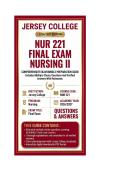
,NUR 221 Final Exam Nursing II Questions And Answers 2026/2027
Jersey College
Q1. A postoperative patient using patient-controlled analgesia
becomes increasingly sleepy but awakens to voice. Respiratory rate
is 9/min and oxygen saturation is declining. Which finding should
drive the nurse's immediate decision-making?
A) The patient's surgical diagnosis
B) The amount of pain reported before surgery
C) The combination of increasing sedation and impaired ventilation
D) The number of PCA doses requested earlier
Correct Answer: C) The combination of increasing sedation and impaired
ventilation
Rationale: Increasing sedation can precede severe opioid-related
respiratory depression. Declining respiratory rate and oxygenation require
immediate assessment and intervention.
Q2. Which postoperative finding most strongly suggests that an
abdominal incision is beginning to dehisce?
A) Mild incisional pain with movement
B) Small amount of old dried drainage
C) Localized bruising around intact staples
D) Sudden increase in serosanguineous drainage with separation of wound
edges
Correct Answer: D) Sudden increase in serosanguineous drainage with
separation of wound edges
Rationale: Separation of wound layers may be preceded or accompanied by
a sudden increase in pink or serosanguineous drainage.
Q3. Persistent profuse diarrhea places a patient at greatest risk for
which acid-base disorder?
A) Metabolic acidosis
B) Respiratory alkalosis
C) Metabolic alkalosis
D) Respiratory acidosis
Correct Answer: A) Metabolic acidosis
,Rationale: Lower gastrointestinal secretions contain bicarbonate. Large
bicarbonate losses through diarrhea can produce metabolic acidosis.
Q4. A patient with pneumonia develops increasing respiratory
distress despite supplemental oxygen. Which finding most strongly
suggests impending ventilatory failure?
A) Productive cough
B) Increasing drowsiness with rising PaCO₂
C) Temperature of 38.1°C
D) Inspiratory crackles
Correct Answer: B) Increasing drowsiness with rising PaCO₂
Rationale: Worsening hypercapnia with altered consciousness indicates
inadequate ventilation and can signal respiratory muscle fatigue and
impending failure.
Q5. A patient with COPD is receiving supplemental oxygen. Which
approach is most appropriate?
A) Withhold oxygen because COPD patients should never receive it
B) Maintain oxygen saturation at 100% regardless of clinical response
C) Titrate oxygen to the prescribed target while monitoring respiratory and
mental status
D) Discontinue oxygen whenever carbon dioxide is elevated
Correct Answer: C) Titrate oxygen to the prescribed target while monitoring
respiratory and mental status
Rationale: Hypoxemia should be treated while oxygen is carefully titrated
and the patient's ventilation, oxygenation, and clinical response are
monitored.
Q6. A patient with a chest tube develops sudden dyspnea. The
drainage tubing is found compressed beneath the patient's body.
What should the nurse do first?
A) Clamp the chest tube
B) Remove the drainage system
C) Relieve the obstruction and reassess breathing immediately
D) Increase suction to maximum pressure
Correct Answer: C) Relieve the obstruction and reassess breathing
immediately
, Rationale: Obstructed tubing can prevent removal of pleural air or fluid and
may allow dangerous pressure to accumulate.
Q7. Which assessment finding during a severe asthma attack
indicates the greatest deterioration?
A) Minimal breath sounds despite marked respiratory effort
B) Expiratory wheezing that becomes louder after treatment
C) Respiratory rate of 22/min
D) Productive cough with clear sputum
Correct Answer: A) Minimal breath sounds despite marked respiratory effort
Rationale: Markedly reduced air movement can indicate extreme airway
obstruction and impending respiratory failure.
Q8. A postoperative patient suddenly reports pleuritic chest pain
and severe shortness of breath. Which additional finding would
most strongly support pulmonary embolism?
A) Unexplained tachycardia and acute hypoxemia
B) Bilateral dependent edema developing over several months
C) Bradycardia with hypertension
D) Productive cough lasting six weeks
Correct Answer: A) Unexplained tachycardia and acute hypoxemia
Rationale: Pulmonary embolism commonly presents with abrupt dyspnea,
pleuritic pain, tachycardia, and impaired oxygenation.
Q9. Which patient statement before surgery requires immediate
clarification?
A) “I removed my contact lenses.”
B) “I have arranged transportation home.”
C) “I understand that I may have discomfort afterward.”
D) “I took my usual anticoagulant this morning even though I was told to
hold it.”
Correct Answer: D) “I took my usual anticoagulant this morning even though
I was told to hold it.”
Rationale: Unexpected anticoagulant use can significantly increase
perioperative bleeding risk and must be reported before proceeding.
Jersey College
Q1. A postoperative patient using patient-controlled analgesia
becomes increasingly sleepy but awakens to voice. Respiratory rate
is 9/min and oxygen saturation is declining. Which finding should
drive the nurse's immediate decision-making?
A) The patient's surgical diagnosis
B) The amount of pain reported before surgery
C) The combination of increasing sedation and impaired ventilation
D) The number of PCA doses requested earlier
Correct Answer: C) The combination of increasing sedation and impaired
ventilation
Rationale: Increasing sedation can precede severe opioid-related
respiratory depression. Declining respiratory rate and oxygenation require
immediate assessment and intervention.
Q2. Which postoperative finding most strongly suggests that an
abdominal incision is beginning to dehisce?
A) Mild incisional pain with movement
B) Small amount of old dried drainage
C) Localized bruising around intact staples
D) Sudden increase in serosanguineous drainage with separation of wound
edges
Correct Answer: D) Sudden increase in serosanguineous drainage with
separation of wound edges
Rationale: Separation of wound layers may be preceded or accompanied by
a sudden increase in pink or serosanguineous drainage.
Q3. Persistent profuse diarrhea places a patient at greatest risk for
which acid-base disorder?
A) Metabolic acidosis
B) Respiratory alkalosis
C) Metabolic alkalosis
D) Respiratory acidosis
Correct Answer: A) Metabolic acidosis
,Rationale: Lower gastrointestinal secretions contain bicarbonate. Large
bicarbonate losses through diarrhea can produce metabolic acidosis.
Q4. A patient with pneumonia develops increasing respiratory
distress despite supplemental oxygen. Which finding most strongly
suggests impending ventilatory failure?
A) Productive cough
B) Increasing drowsiness with rising PaCO₂
C) Temperature of 38.1°C
D) Inspiratory crackles
Correct Answer: B) Increasing drowsiness with rising PaCO₂
Rationale: Worsening hypercapnia with altered consciousness indicates
inadequate ventilation and can signal respiratory muscle fatigue and
impending failure.
Q5. A patient with COPD is receiving supplemental oxygen. Which
approach is most appropriate?
A) Withhold oxygen because COPD patients should never receive it
B) Maintain oxygen saturation at 100% regardless of clinical response
C) Titrate oxygen to the prescribed target while monitoring respiratory and
mental status
D) Discontinue oxygen whenever carbon dioxide is elevated
Correct Answer: C) Titrate oxygen to the prescribed target while monitoring
respiratory and mental status
Rationale: Hypoxemia should be treated while oxygen is carefully titrated
and the patient's ventilation, oxygenation, and clinical response are
monitored.
Q6. A patient with a chest tube develops sudden dyspnea. The
drainage tubing is found compressed beneath the patient's body.
What should the nurse do first?
A) Clamp the chest tube
B) Remove the drainage system
C) Relieve the obstruction and reassess breathing immediately
D) Increase suction to maximum pressure
Correct Answer: C) Relieve the obstruction and reassess breathing
immediately
, Rationale: Obstructed tubing can prevent removal of pleural air or fluid and
may allow dangerous pressure to accumulate.
Q7. Which assessment finding during a severe asthma attack
indicates the greatest deterioration?
A) Minimal breath sounds despite marked respiratory effort
B) Expiratory wheezing that becomes louder after treatment
C) Respiratory rate of 22/min
D) Productive cough with clear sputum
Correct Answer: A) Minimal breath sounds despite marked respiratory effort
Rationale: Markedly reduced air movement can indicate extreme airway
obstruction and impending respiratory failure.
Q8. A postoperative patient suddenly reports pleuritic chest pain
and severe shortness of breath. Which additional finding would
most strongly support pulmonary embolism?
A) Unexplained tachycardia and acute hypoxemia
B) Bilateral dependent edema developing over several months
C) Bradycardia with hypertension
D) Productive cough lasting six weeks
Correct Answer: A) Unexplained tachycardia and acute hypoxemia
Rationale: Pulmonary embolism commonly presents with abrupt dyspnea,
pleuritic pain, tachycardia, and impaired oxygenation.
Q9. Which patient statement before surgery requires immediate
clarification?
A) “I removed my contact lenses.”
B) “I have arranged transportation home.”
C) “I understand that I may have discomfort afterward.”
D) “I took my usual anticoagulant this morning even though I was told to
hold it.”
Correct Answer: D) “I took my usual anticoagulant this morning even though
I was told to hold it.”
Rationale: Unexpected anticoagulant use can significantly increase
perioperative bleeding risk and must be reported before proceeding.