
TEST BANK FOR PRINCIPLES OF PEDIATRIC NURSING CARING FOR
CHILDREN 7TH EDITION ALL CHAPTERS INCLUDED
Pediatric assessment and family-centered care
Original educational illustration
Use clinical findings + developmental context
ORIGINAL EXAM-STYLE PRACTICE — HIGH-YIELD PEDIATRIC NURSING
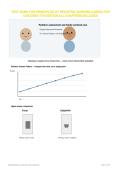
Pediatric Growth Pattern — interpret the trend, not a single point
Weight
Age →
Upper-airway comparison
Croup Epiglottitis
Barking cough / stridor Drooling / tripod / dysphagia
Original pediatric nursing exam-style study bank Page 1 of 46
, 1. A nurse is planning care for a hospitalized 6-year-old. Which action best demonstrates family-centered
care?
• Ask the parents to leave during all procedures.
■ ✓ Invite the parents to participate in care and decision-making.
• Allow only the nurse to make treatment decisions.
• Limit family visits to reduce the child's anxiety.
Rationale: Family-centered care recognizes the family as an essential partner in planning and delivering care.
2. Which nursing action is most appropriate when caring for a child in the community?
• Focus only on acute illness.
■ ✓ Include prevention, health promotion, and family education.
• Avoid discussing environmental risks.
• Provide care without assessing family resources.
Rationale: Pediatric community nursing emphasizes prevention, health promotion, education, and environmental safety.
3. A pediatric nurse advocates for a child whose parents do not understand the treatment plan. What is the
priority action?
• Document that the parents refused care.
■ ✓ Clarify the plan using developmentally and culturally appropriate communication.
• Ask the child to explain the plan to the parents.
• Wait until discharge teaching.
Rationale: The nurse should promote informed participation by communicating the plan clearly and checking understanding.
4. Which activity best reflects evidence-based pediatric nursing?
• Using a procedure because it is traditional.
■ ✓ Combining research evidence, clinical expertise, and patient-family preferences.
• Following social-media advice.
• Using adult protocols without adaptation.
Rationale: Evidence-based practice integrates current evidence, clinical expertise, and patient preferences.
5. A child is being transferred from hospital to home care. Which nursing intervention best supports
continuity?
• Give the family only the discharge prescription.
■ ✓ Coordinate teaching, follow-up, equipment, and communication with community providers.
• Tell the family to contact the hospital only if symptoms become severe.
• Avoid involving the primary-care team.
Rationale: Safe transitions require coordinated communication, teaching, follow-up, and resources.
6. Which behavior by a pediatric nurse is most consistent with atraumatic care?
• Performing procedures without explaining them.
■ ✓ Using strategies that reduce physical and psychological distress.
• Restraining every child before assessment.
• Ignoring the child's coping style.
Rationale: Atraumatic care seeks to minimize physical and psychological distress whenever possible.
Original pediatric nursing exam-style study bank Page 2 of 46
, 7. A nurse suspects that a child may be experiencing neglect. What should the nurse do first?
• Confront the caregiver aggressively.
■ ✓ Follow mandated-reporting policy and document objective findings.
• Ask the child to investigate the caregiver.
• Post the concern online.
Rationale: Suspected abuse or neglect requires objective documentation and reporting according to law and institutional policy.
8. Which nursing role is most directly demonstrated when the nurse helps a family obtain transportation to
repeated clinic visits?
■ ✓ Advocacy and case management.
• Independent prescribing.
• Radiology.
• Anesthesia.
Rationale: Helping overcome barriers to care is a common advocacy and case-management function.
9. A parent says, 'We prefer traditional remedies before medicines.' What is the best nursing response?
• Dismiss the remedies.
■ ✓ Ask which remedies are used and assess for safety or interactions.
• Tell the family cultural practices are not allowed.
• Avoid documenting the discussion.
Rationale: Respectful assessment allows culturally responsive care while identifying potentially harmful practices.
10. Which statement best reflects culturally responsive pediatric care?
• Every family should receive identical teaching.
■ ✓ Teaching should consider language, beliefs, health literacy, and family preferences.
• Culture should never be discussed.
• The nurse should assume the caregiver's beliefs.
Rationale: Culturally responsive care adapts communication and teaching without stereotyping.
11. A child needs an interpreter. Which action is best?
• Use a sibling as interpreter.
■ ✓ Use a qualified medical interpreter.
• Speak louder in English.
• Ask another patient to interpret.
Rationale: Qualified interpreters improve accuracy, privacy, and safety.
12. A family disagrees about who should make health decisions. What should the nurse do first?
• Choose the person who speaks the loudest.
■ ✓ Assess the family's decision-making structure and the child's legal status.
• Refuse to care for the child.
• Make the decision independently.
Rationale: The nurse should clarify decision-making roles within legal and ethical boundaries.
Original pediatric nursing exam-style study bank Page 3 of 46
, 13. Which question best explores a family's health beliefs?
• You do believe vaccines are good, right?
■ ✓ What do you believe is causing your child's illness?
• Why don't you follow medical advice?
• You understand everything, correct?
Rationale: Open-ended questions elicit the family's explanatory model without judgment.
14. A caregiver has limited health literacy. Which teaching method is most effective?
• Use complex terminology.
■ ✓ Use plain language and teach-back.
• Provide a long written document only.
• Ask the child to translate.
Rationale: Plain language and teach-back help confirm understanding.
15. Which finding should prompt the nurse to consider a social determinant of health?
• The child likes drawing.
■ ✓ The family reports unstable housing and difficulty obtaining food.
• The child has brown eyes.
• The caregiver prefers morning appointments.
Rationale: Housing and food insecurity are important social determinants that can affect health.
16. A nurse wants to include the family in care planning. Which approach is best?
• Set goals without family input.
■ ✓ Ask the family about priorities, strengths, and concerns.
• Avoid discussing home routines.
• Use only the nurse's priorities.
Rationale: Family strengths and priorities should inform an individualized plan.
17. A couple asks about the recurrence risk of a known autosomal recessive condition when both parents
are carriers. Which risk is classically associated with each pregnancy?
• 0%
■ ✓ 25% affected
• 50% affected
• 100% affected
Rationale: For a classic autosomal recessive condition, two carrier parents have a 25% chance of an affected child in each pregnancy.
18. Which finding most strongly suggests a chromosomal disorder rather than an isolated environmental
condition?
• A single episode of fever.
■ ✓ A consistent pattern of congenital anomalies and developmental differences.
• A minor scrape.
• A temporary appetite change.
Rationale: Multiple congenital and developmental findings can indicate a genetic or chromosomal disorder.
Original pediatric nursing exam-style study bank Page 4 of 46
CHILDREN 7TH EDITION ALL CHAPTERS INCLUDED
Pediatric assessment and family-centered care
Original educational illustration
Use clinical findings + developmental context
ORIGINAL EXAM-STYLE PRACTICE — HIGH-YIELD PEDIATRIC NURSING
Pediatric Growth Pattern — interpret the trend, not a single point
Weight
Age →
Upper-airway comparison
Croup Epiglottitis
Barking cough / stridor Drooling / tripod / dysphagia
Original pediatric nursing exam-style study bank Page 1 of 46
, 1. A nurse is planning care for a hospitalized 6-year-old. Which action best demonstrates family-centered
care?
• Ask the parents to leave during all procedures.
■ ✓ Invite the parents to participate in care and decision-making.
• Allow only the nurse to make treatment decisions.
• Limit family visits to reduce the child's anxiety.
Rationale: Family-centered care recognizes the family as an essential partner in planning and delivering care.
2. Which nursing action is most appropriate when caring for a child in the community?
• Focus only on acute illness.
■ ✓ Include prevention, health promotion, and family education.
• Avoid discussing environmental risks.
• Provide care without assessing family resources.
Rationale: Pediatric community nursing emphasizes prevention, health promotion, education, and environmental safety.
3. A pediatric nurse advocates for a child whose parents do not understand the treatment plan. What is the
priority action?
• Document that the parents refused care.
■ ✓ Clarify the plan using developmentally and culturally appropriate communication.
• Ask the child to explain the plan to the parents.
• Wait until discharge teaching.
Rationale: The nurse should promote informed participation by communicating the plan clearly and checking understanding.
4. Which activity best reflects evidence-based pediatric nursing?
• Using a procedure because it is traditional.
■ ✓ Combining research evidence, clinical expertise, and patient-family preferences.
• Following social-media advice.
• Using adult protocols without adaptation.
Rationale: Evidence-based practice integrates current evidence, clinical expertise, and patient preferences.
5. A child is being transferred from hospital to home care. Which nursing intervention best supports
continuity?
• Give the family only the discharge prescription.
■ ✓ Coordinate teaching, follow-up, equipment, and communication with community providers.
• Tell the family to contact the hospital only if symptoms become severe.
• Avoid involving the primary-care team.
Rationale: Safe transitions require coordinated communication, teaching, follow-up, and resources.
6. Which behavior by a pediatric nurse is most consistent with atraumatic care?
• Performing procedures without explaining them.
■ ✓ Using strategies that reduce physical and psychological distress.
• Restraining every child before assessment.
• Ignoring the child's coping style.
Rationale: Atraumatic care seeks to minimize physical and psychological distress whenever possible.
Original pediatric nursing exam-style study bank Page 2 of 46
, 7. A nurse suspects that a child may be experiencing neglect. What should the nurse do first?
• Confront the caregiver aggressively.
■ ✓ Follow mandated-reporting policy and document objective findings.
• Ask the child to investigate the caregiver.
• Post the concern online.
Rationale: Suspected abuse or neglect requires objective documentation and reporting according to law and institutional policy.
8. Which nursing role is most directly demonstrated when the nurse helps a family obtain transportation to
repeated clinic visits?
■ ✓ Advocacy and case management.
• Independent prescribing.
• Radiology.
• Anesthesia.
Rationale: Helping overcome barriers to care is a common advocacy and case-management function.
9. A parent says, 'We prefer traditional remedies before medicines.' What is the best nursing response?
• Dismiss the remedies.
■ ✓ Ask which remedies are used and assess for safety or interactions.
• Tell the family cultural practices are not allowed.
• Avoid documenting the discussion.
Rationale: Respectful assessment allows culturally responsive care while identifying potentially harmful practices.
10. Which statement best reflects culturally responsive pediatric care?
• Every family should receive identical teaching.
■ ✓ Teaching should consider language, beliefs, health literacy, and family preferences.
• Culture should never be discussed.
• The nurse should assume the caregiver's beliefs.
Rationale: Culturally responsive care adapts communication and teaching without stereotyping.
11. A child needs an interpreter. Which action is best?
• Use a sibling as interpreter.
■ ✓ Use a qualified medical interpreter.
• Speak louder in English.
• Ask another patient to interpret.
Rationale: Qualified interpreters improve accuracy, privacy, and safety.
12. A family disagrees about who should make health decisions. What should the nurse do first?
• Choose the person who speaks the loudest.
■ ✓ Assess the family's decision-making structure and the child's legal status.
• Refuse to care for the child.
• Make the decision independently.
Rationale: The nurse should clarify decision-making roles within legal and ethical boundaries.
Original pediatric nursing exam-style study bank Page 3 of 46
, 13. Which question best explores a family's health beliefs?
• You do believe vaccines are good, right?
■ ✓ What do you believe is causing your child's illness?
• Why don't you follow medical advice?
• You understand everything, correct?
Rationale: Open-ended questions elicit the family's explanatory model without judgment.
14. A caregiver has limited health literacy. Which teaching method is most effective?
• Use complex terminology.
■ ✓ Use plain language and teach-back.
• Provide a long written document only.
• Ask the child to translate.
Rationale: Plain language and teach-back help confirm understanding.
15. Which finding should prompt the nurse to consider a social determinant of health?
• The child likes drawing.
■ ✓ The family reports unstable housing and difficulty obtaining food.
• The child has brown eyes.
• The caregiver prefers morning appointments.
Rationale: Housing and food insecurity are important social determinants that can affect health.
16. A nurse wants to include the family in care planning. Which approach is best?
• Set goals without family input.
■ ✓ Ask the family about priorities, strengths, and concerns.
• Avoid discussing home routines.
• Use only the nurse's priorities.
Rationale: Family strengths and priorities should inform an individualized plan.
17. A couple asks about the recurrence risk of a known autosomal recessive condition when both parents
are carriers. Which risk is classically associated with each pregnancy?
• 0%
■ ✓ 25% affected
• 50% affected
• 100% affected
Rationale: For a classic autosomal recessive condition, two carrier parents have a 25% chance of an affected child in each pregnancy.
18. Which finding most strongly suggests a chromosomal disorder rather than an isolated environmental
condition?
• A single episode of fever.
■ ✓ A consistent pattern of congenital anomalies and developmental differences.
• A minor scrape.
• A temporary appetite change.
Rationale: Multiple congenital and developmental findings can indicate a genetic or chromosomal disorder.
Original pediatric nursing exam-style study bank Page 4 of 46


