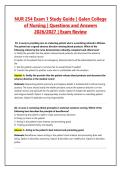
NUR 254 Exam 1 Study Guide | Galen College
of Nursing | Questions and Answers
2026/2027 | Exam Review
Q1. A nurse is providing care to a laboring patient who is a practicing Jehovah's Witness.
The patient has a signed advance directive refusing blood products. Which of the
following actions by the nurse demonstrates culturally competent and ethical care?
A. Notify the provider that the patient refuses blood products and document the advance
directive in the medical record
B. Explain to the patient that in an emergency, blood products will be administered to save her
life
C. Ask the patient's spouse to convince her to accept blood if needed
D. Transfer the patient to another nurse who is comfortable with the situation
Answer: A. Notify the provider that the patient refuses blood products and document the
advance directive in the medical record
Rationale: Respecting patient autonomy and religious beliefs is fundamental to ethical nursing
practice. The nurse should notify the healthcare team, ensure the advance directive is in the
medical record, and advocate for the patient's wishes. Option B violates the patient's autonomy
and religious beliefs. Option C inappropriately involves family members in overriding patient
decisions. Option D abdicates nursing responsibility .
Q2. A nurse is reviewing ethical principles in maternal-newborn nursing. Which of the
following best describes the principle of beneficence?
A. Respecting the patient's right to make autonomous decisions
B. Doing no harm to the patient
C. Acting in the patient's best interest and promoting good
D. Treating all patients fairly and equally
Answer: C. Acting in the patient's best interest and promoting good
Rationale: Beneficence means acting in the patient's best interest and promoting their well-
being. Option A describes autonomy. Option B describes non-maleficence. Option D describes
justice .
,Q3. Which of the following statements about family-centered care in maternal-newborn
nursing is correct? (Select all that apply)
A. The family is considered the primary unit of care
B. The nurse makes all decisions regarding newborn care without family input
C. Cultural beliefs and practices are respected and incorporated into care
D. Siblings are excluded from the birth experience to prevent disruption
E. Open communication with the family is encouraged
Answer: A, C, E
Rationale: Family-centered care recognizes the family as the primary unit of care, respects
cultural beliefs and practices, and encourages open communication. The nurse collaborates with
the family rather than making decisions unilaterally, and siblings may be included in the birth
experience when appropriate .
Q4. A nurse is caring for a pregnant client who is of Asian descent. Which of the following
cultural influences should the nurse consider first when providing nutritional care?
A. Food preferences and methods of preparation
B. Religious dietary restrictions
C. Economic factors affecting food access
D. Language barriers affecting teaching
Answer: A. Food preferences and methods of preparation
Rationale: When providing nutritional care, cultural food preferences and preparation methods
are primary considerations as they directly impact dietary intake and compliance. While religious
and socioeconomic factors are important, initial focus on dietary habits ensures culturally
sensitive, effective counseling .
Q5. A nurse is explaining fetal circulation to a nursing student. Which of the following
statements about the ductus venosus is correct?
A. It connects the pulmonary artery to the aorta
B. It allows blood to bypass the fetal liver
C. It connects the umbilical vein to the inferior vena cava
D. It allows blood to bypass the fetal lungs
Answer: B. It allows blood to bypass the fetal liver
Rationale: The ductus venosus connects the umbilical vein to the inferior vena cava, allowing
oxygenated blood from the placenta to bypass the fetal liver. Option A describes the ductus
arteriosus. Option C is the anatomical connection but the function is to bypass the liver. Option
D describes the foramen ovale and ductus arteriosus .
,Q6. Which of the following is the primary function of the foramen ovale in fetal
circulation?
A. Connects the umbilical artery to the placenta
B. Allows blood to flow from the right atrium to the left atrium, bypassing the lungs
C. Connects the pulmonary artery to the aorta
D. Allows oxygenated blood to bypass the liver
Answer: B. Allows blood to flow from the right atrium to the left atrium, bypassing the
lungs
Rationale: The foramen ovale is an opening in the interatrial septum that allows oxygenated
blood from the inferior vena cava to flow from the right atrium to the left atrium, bypassing the
pulmonary circulation. Option A describes umbilical vessels. Option C describes the ductus
arteriosus. Option D describes the ductus venosus .
Q7. A nursing student asks about the purpose of the ductus arteriosus. Which explanation
by the nurse is correct?
A. It connects the umbilical vein to the inferior vena cava
B. It shunts blood from the pulmonary artery to the aorta, bypassing the lungs
C. It connects the umbilical vein to the inferior vena cava
D. It allows blood to flow between the atria
Answer: B. It shunts blood from the pulmonary artery to the aorta, bypassing the lungs
Rationale: The ductus arteriosus connects the pulmonary artery to the aorta, allowing blood to
bypass the non-functioning fetal lungs. Option A describes the ductus venosus. Option D
describes the foramen ovale .
Q8. The nurse is teaching a group of adolescents about the menstrual cycle. Which
statement accurately describes ovulation?
A. Ovulation occurs 14 days before the onset of the next menstrual period
B. Ovulation occurs on day 14 of every woman's cycle
C. Ovulation occurs at the beginning of the proliferative phase
D. Ovulation occurs during the secretory phase
Answer: A. Ovulation occurs 14 days before the onset of the next menstrual period
Rationale: Ovulation occurs approximately 14 days before the next menstrual period, regardless
of cycle length. The luteal phase is relatively fixed at 14 days, while the follicular phase varies .
, Q9. A pregnant patient asks about the function of the amniotic fluid. Which response by
the nurse is correct?
A. "Amniotic fluid provides nutrients for the fetus"
B. "Amniotic fluid cushions the fetus and maintains temperature"
C. "Amniotic fluid is primarily waste product from the fetus"
D. "Amniotic fluid is only present in the third trimester"
Answer: B. "Amniotic fluid cushions the fetus and maintains temperature"
Rationale: Amniotic fluid cushions the fetus from trauma, maintains a stable temperature,
allows for fetal movement and development, and prevents umbilical cord compression .
Q10. The nurse is caring for a client who is at 38 weeks gestation and in a supine position
for a pelvic examination. The client reports feeling dizzy and nauseated, and upon
assessment, her skin feels damp and cool. Which of the following actions should the nurse
take first?
A. Elevate the client's legs 20 degrees above her hips
B. Encourage the client to take deep breaths
C. Position the client on her left side
D. Provide a cold compress to the forehead
Answer: C. Position the client on her left side
Rationale: The client is exhibiting signs of supine hypotension syndrome caused by the gravid
uterus compressing the inferior vena cava. The priority is to reposition the client onto her left
side to relieve vena cava compression and improve venous return .
Q11. The nurse has provided dietary teaching for a pregnant client who has iron
deficiency anemia. Which of the following meal options selected by the client indicates
that teaching has been effective?
A. Grilled steak, creamed spinach, and an apple
B. Fried chicken, mashed potatoes, and orange soda
C. Tofu scramble, whole-grain toast, and grapefruit juice
D. Pasta with tomato sauce and a mixed green salad
Answer: A. Grilled steak, creamed spinach, and an apple
Rationale: Iron-rich foods include red meat (steak) and dark leafy greens (creamed spinach).
Vitamin C from the apple enhances iron absorption. The other options lack adequate iron
sources or contain items that inhibit absorption .
of Nursing | Questions and Answers
2026/2027 | Exam Review
Q1. A nurse is providing care to a laboring patient who is a practicing Jehovah's Witness.
The patient has a signed advance directive refusing blood products. Which of the
following actions by the nurse demonstrates culturally competent and ethical care?
A. Notify the provider that the patient refuses blood products and document the advance
directive in the medical record
B. Explain to the patient that in an emergency, blood products will be administered to save her
life
C. Ask the patient's spouse to convince her to accept blood if needed
D. Transfer the patient to another nurse who is comfortable with the situation
Answer: A. Notify the provider that the patient refuses blood products and document the
advance directive in the medical record
Rationale: Respecting patient autonomy and religious beliefs is fundamental to ethical nursing
practice. The nurse should notify the healthcare team, ensure the advance directive is in the
medical record, and advocate for the patient's wishes. Option B violates the patient's autonomy
and religious beliefs. Option C inappropriately involves family members in overriding patient
decisions. Option D abdicates nursing responsibility .
Q2. A nurse is reviewing ethical principles in maternal-newborn nursing. Which of the
following best describes the principle of beneficence?
A. Respecting the patient's right to make autonomous decisions
B. Doing no harm to the patient
C. Acting in the patient's best interest and promoting good
D. Treating all patients fairly and equally
Answer: C. Acting in the patient's best interest and promoting good
Rationale: Beneficence means acting in the patient's best interest and promoting their well-
being. Option A describes autonomy. Option B describes non-maleficence. Option D describes
justice .
,Q3. Which of the following statements about family-centered care in maternal-newborn
nursing is correct? (Select all that apply)
A. The family is considered the primary unit of care
B. The nurse makes all decisions regarding newborn care without family input
C. Cultural beliefs and practices are respected and incorporated into care
D. Siblings are excluded from the birth experience to prevent disruption
E. Open communication with the family is encouraged
Answer: A, C, E
Rationale: Family-centered care recognizes the family as the primary unit of care, respects
cultural beliefs and practices, and encourages open communication. The nurse collaborates with
the family rather than making decisions unilaterally, and siblings may be included in the birth
experience when appropriate .
Q4. A nurse is caring for a pregnant client who is of Asian descent. Which of the following
cultural influences should the nurse consider first when providing nutritional care?
A. Food preferences and methods of preparation
B. Religious dietary restrictions
C. Economic factors affecting food access
D. Language barriers affecting teaching
Answer: A. Food preferences and methods of preparation
Rationale: When providing nutritional care, cultural food preferences and preparation methods
are primary considerations as they directly impact dietary intake and compliance. While religious
and socioeconomic factors are important, initial focus on dietary habits ensures culturally
sensitive, effective counseling .
Q5. A nurse is explaining fetal circulation to a nursing student. Which of the following
statements about the ductus venosus is correct?
A. It connects the pulmonary artery to the aorta
B. It allows blood to bypass the fetal liver
C. It connects the umbilical vein to the inferior vena cava
D. It allows blood to bypass the fetal lungs
Answer: B. It allows blood to bypass the fetal liver
Rationale: The ductus venosus connects the umbilical vein to the inferior vena cava, allowing
oxygenated blood from the placenta to bypass the fetal liver. Option A describes the ductus
arteriosus. Option C is the anatomical connection but the function is to bypass the liver. Option
D describes the foramen ovale and ductus arteriosus .
,Q6. Which of the following is the primary function of the foramen ovale in fetal
circulation?
A. Connects the umbilical artery to the placenta
B. Allows blood to flow from the right atrium to the left atrium, bypassing the lungs
C. Connects the pulmonary artery to the aorta
D. Allows oxygenated blood to bypass the liver
Answer: B. Allows blood to flow from the right atrium to the left atrium, bypassing the
lungs
Rationale: The foramen ovale is an opening in the interatrial septum that allows oxygenated
blood from the inferior vena cava to flow from the right atrium to the left atrium, bypassing the
pulmonary circulation. Option A describes umbilical vessels. Option C describes the ductus
arteriosus. Option D describes the ductus venosus .
Q7. A nursing student asks about the purpose of the ductus arteriosus. Which explanation
by the nurse is correct?
A. It connects the umbilical vein to the inferior vena cava
B. It shunts blood from the pulmonary artery to the aorta, bypassing the lungs
C. It connects the umbilical vein to the inferior vena cava
D. It allows blood to flow between the atria
Answer: B. It shunts blood from the pulmonary artery to the aorta, bypassing the lungs
Rationale: The ductus arteriosus connects the pulmonary artery to the aorta, allowing blood to
bypass the non-functioning fetal lungs. Option A describes the ductus venosus. Option D
describes the foramen ovale .
Q8. The nurse is teaching a group of adolescents about the menstrual cycle. Which
statement accurately describes ovulation?
A. Ovulation occurs 14 days before the onset of the next menstrual period
B. Ovulation occurs on day 14 of every woman's cycle
C. Ovulation occurs at the beginning of the proliferative phase
D. Ovulation occurs during the secretory phase
Answer: A. Ovulation occurs 14 days before the onset of the next menstrual period
Rationale: Ovulation occurs approximately 14 days before the next menstrual period, regardless
of cycle length. The luteal phase is relatively fixed at 14 days, while the follicular phase varies .
, Q9. A pregnant patient asks about the function of the amniotic fluid. Which response by
the nurse is correct?
A. "Amniotic fluid provides nutrients for the fetus"
B. "Amniotic fluid cushions the fetus and maintains temperature"
C. "Amniotic fluid is primarily waste product from the fetus"
D. "Amniotic fluid is only present in the third trimester"
Answer: B. "Amniotic fluid cushions the fetus and maintains temperature"
Rationale: Amniotic fluid cushions the fetus from trauma, maintains a stable temperature,
allows for fetal movement and development, and prevents umbilical cord compression .
Q10. The nurse is caring for a client who is at 38 weeks gestation and in a supine position
for a pelvic examination. The client reports feeling dizzy and nauseated, and upon
assessment, her skin feels damp and cool. Which of the following actions should the nurse
take first?
A. Elevate the client's legs 20 degrees above her hips
B. Encourage the client to take deep breaths
C. Position the client on her left side
D. Provide a cold compress to the forehead
Answer: C. Position the client on her left side
Rationale: The client is exhibiting signs of supine hypotension syndrome caused by the gravid
uterus compressing the inferior vena cava. The priority is to reposition the client onto her left
side to relieve vena cava compression and improve venous return .
Q11. The nurse has provided dietary teaching for a pregnant client who has iron
deficiency anemia. Which of the following meal options selected by the client indicates
that teaching has been effective?
A. Grilled steak, creamed spinach, and an apple
B. Fried chicken, mashed potatoes, and orange soda
C. Tofu scramble, whole-grain toast, and grapefruit juice
D. Pasta with tomato sauce and a mixed green salad
Answer: A. Grilled steak, creamed spinach, and an apple
Rationale: Iron-rich foods include red meat (steak) and dark leafy greens (creamed spinach).
Vitamin C from the apple enhances iron absorption. The other options lack adequate iron
sources or contain items that inhibit absorption .