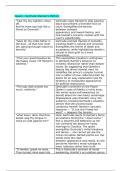
Queen – Gertrude (Hamlet’s Mother)
“Cast thy sky nighters colour Gertrude urges Hamlet to stop wearing
off, black and present a friendlier face at
And let thine eye look like a court. Exemplifies the tension
friend on Denmark.” between outward
appearance and inward feeling, and
how Hamlet’s sincerity clashes with the
court’s superficiality.
“Seek for thy noble father in Gertrude reminds Hamlet of mortality,
the dust…all that lives must insisting death is natural and universal.
die, passing through nature to Exemplifies the theme of death and
eternity” acceptance, while highlighting Hamlet’s
refusal to treat grief as a mere
convention.
“That your good beauties be This exemplifies Claudius’s willingness
the happy cause / Of Hamlet’s to attribute Hamlet’s behavior to
wildness.” romantic distraction rather than deeper
issues. By suggesting that Ophelia’s
beauty has driven Hamlet mad, he
simplifies the prince’s complex turmoil
into a matter of love, reflecting both his
desire for an easy explanation and his
tendency to manipulate appearances
for political reassurance
“The lady doth protest too Gertrude’s comment on the Player
much, methinks.” Queen’s vows of fidelity is richly ironic.
Her words reveal self-awareness (or
denial) about her own hasty remarriage.
Shakespeare uses dramatic irony: the
audience, knowing Gertrude’s situation,
senses that she unconsciously
condemns herself. Hamlet’s sarcastic
response — “O, but she’ll keep her
word” — deepens the tension.
“what have i done that thou Here, Gertrude reacts to Hamlet’s fierce
darest wag thy tongue in accusations during the “closet scene.”
noise so rude against me?” She is shocked and defensive as her
son confronts her about her hasty
marriage to Claudius. The quote
exemplifies Gertrude’s initial blindness
and denial — she cannot yet see the
moral corruption Hamlet points out. Her
words show the clash
between appearance and reality, as she
perceives Hamlet’s moral outrage as
mere rudeness rather than truth.
“O Hamlet, speak no more. This is Gertrude’s moment of moral
Thou turnest mine eyes into awakening. Hamlet’s accusations pierce
“Cast thy sky nighters colour Gertrude urges Hamlet to stop wearing
off, black and present a friendlier face at
And let thine eye look like a court. Exemplifies the tension
friend on Denmark.” between outward
appearance and inward feeling, and
how Hamlet’s sincerity clashes with the
court’s superficiality.
“Seek for thy noble father in Gertrude reminds Hamlet of mortality,
the dust…all that lives must insisting death is natural and universal.
die, passing through nature to Exemplifies the theme of death and
eternity” acceptance, while highlighting Hamlet’s
refusal to treat grief as a mere
convention.
“That your good beauties be This exemplifies Claudius’s willingness
the happy cause / Of Hamlet’s to attribute Hamlet’s behavior to
wildness.” romantic distraction rather than deeper
issues. By suggesting that Ophelia’s
beauty has driven Hamlet mad, he
simplifies the prince’s complex turmoil
into a matter of love, reflecting both his
desire for an easy explanation and his
tendency to manipulate appearances
for political reassurance
“The lady doth protest too Gertrude’s comment on the Player
much, methinks.” Queen’s vows of fidelity is richly ironic.
Her words reveal self-awareness (or
denial) about her own hasty remarriage.
Shakespeare uses dramatic irony: the
audience, knowing Gertrude’s situation,
senses that she unconsciously
condemns herself. Hamlet’s sarcastic
response — “O, but she’ll keep her
word” — deepens the tension.
“what have i done that thou Here, Gertrude reacts to Hamlet’s fierce
darest wag thy tongue in accusations during the “closet scene.”
noise so rude against me?” She is shocked and defensive as her
son confronts her about her hasty
marriage to Claudius. The quote
exemplifies Gertrude’s initial blindness
and denial — she cannot yet see the
moral corruption Hamlet points out. Her
words show the clash
between appearance and reality, as she
perceives Hamlet’s moral outrage as
mere rudeness rather than truth.
“O Hamlet, speak no more. This is Gertrude’s moment of moral
Thou turnest mine eyes into awakening. Hamlet’s accusations pierce