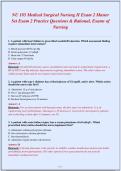
NU 185 Medical Surgical Nursing II Exam 2 Master
Set Exam 2 Practice Questions & Rational, Exams of
Nursing
1. A patient with heart failure is prescribed sacubitril/valsartan. Which assessment finding
requires immediate intervention?
A. Blood pressure 88/52 mm Hg
B. Serum potassium 4.2 mEq/L
C. Heart rate 72 beats/min
D. Urine output 40 mL/hr
Answer: A
Rationale: Sacubitril/valsartan causes vasodilation and can lead to symptomatic hypotension; a
BP of 88/52 mm Hg indicates hypotension requiring immediate action. The other values are
within normal limits and do not require urgent intervention.
2. A patient with type 1 diabetes has a blood glucose of 52 mg/dL and is alert. Which action
should the nurse take first?
A. Administer 15 g of oral glucose
B. Give 1 mg glucagon IM
C. Start an IV infusion of D5W
D. Recheck blood glucose in 30 minutes
Answer: A
Rationale: For an alert patient with hypoglycemia, the first step is to administer 15 g of
rapid-acting oral carbohydrate. Glucagon or IV dextrose is reserved for unresponsive patients,
and rechecking is done after 15 minutes, not 30.
3. A patient with acute kidney injury has a serum potassium of 6.8 mEq/L. Which
prescribed intervention should the nurse implement first?
A. Administer sodium polystyrene sulfonate
B. Give intravenous calcium gluconate
C. Start hemodialysis
D. Administer regular insulin with dextrose
Answer: B
Rationale: Calcium gluconate is the priority to stabilize cardiac membranes and prevent lethal
arrhythmias from hyperkalemia. The other options lower potassium but do not provide
immediate cardioprotection.
Page 1
,4. A patient is admitted with an acute ischemic stroke and has a blood pressure of 210/110
mm Hg. Which action is most appropriate?
A. Administer labetalol to lower BP by 15% in 24 hours
B. Withhold antihypertensives unless BP exceeds 220/120 mm Hg
C. Administer nitroprusside to maintain BP below 140/90 mm Hg
D. Prepare for immediate thrombolytic therapy
Answer: B
Rationale: Permissive hypertension is maintained in acute ischemic stroke to preserve cerebral
perfusion; antihypertensives are generally withheld unless BP is >220/120 mm Hg or
thrombolytics are given. Lowering BP aggressively can worsen ischemia.
5. A patient receiving heparin has a platelet count drop from 250,000 to 80,000/mm³.
Which action should the nurse take?
A. Continue heparin and monitor platelets daily
B. Stop heparin and notify the provider immediately
C. Administer vitamin K
D. Transition to warfarin therapy
Answer: B
Rationale: A >50% drop in platelets suggests heparin-induced thrombocytopenia (HIT); heparin
must be stopped immediately to prevent thrombosis. Vitamin K reverses warfarin, not heparin,
and warfarin should not be started until HIT is confirmed and anticoagulation is managed
appropriately.
6. A patient with COPD has an oxygen saturation of 85% on room air. Which oxygen
delivery method is most appropriate?
A. Nasal cannula at 6 L/min
B. Venturi mask at 24%
C. Simple face mask at 10 L/min
D. Nonrebreather mask at 15 L/min
Answer: B
Rationale: For COPD patients with chronic CO2 retention, controlled oxygen via Venturi mask at
low FiO2 (24-28%) is safest to avoid suppressing hypoxic drive. High-flow oxygen can lead to
hypercapnia and respiratory depression.
7. A patient with a new ileostomy has liquid output of 1500 mL/day. Which complication is
the priority concern?
A. Hyperkalemia
B. Fluid and electrolyte imbalance
C. Constipation
D. Wound infection
Page 2
, Answer: B
Rationale: High-output ileostomies can cause significant fluid and electrolyte losses, leading to
dehydration and hypokalemia. Constipation is not a concern, and hyperkalemia is unlikely due
to loss of potassium-rich fluid.
8. A patient is scheduled for a thyroidectomy. Which preoperative teaching is essential?
A. Support the head with pillows when turning
B. Perform neck exercises to strengthen muscles
C. Expect a temporary hoarse voice
D. Avoid coughing and deep breathing
Answer: A
Rationale: After thyroidectomy, supporting the head with pillows during position changes
reduces tension on the incision and prevents strain. Neck exercises are not recommended,
hoarseness may indicate nerve injury and is not expected, and coughing should be encouraged
to prevent atelectasis.
9. A patient with a blood pressure of 160/100 mm Hg is prescribed lisinopril. Which
laboratory value should the nurse monitor most closely?
A. Serum sodium
B. Serum potassium
C. Serum calcium
D. Serum magnesium
Answer: B
Rationale: ACE inhibitors like lisinopril can cause hyperkalemia, especially in patients with
renal impairment. Monitoring potassium is essential to prevent cardiac dysrhythmias.
10. A patient with a new colostomy has a dusky, edematous stoma. Which action should the
nurse take?
A. Apply a tight pouch to reduce swelling
B. Notify the provider immediately
C. Document as a normal finding
D. Apply ice packs to the stoma
Answer: B
Rationale: A dusky, edematous stoma may indicate ischemia and requires immediate provider
notification. Normal stomas are pink to red and moist; tight pouches or ice can further
compromise circulation.
11. A patient with acute decompensated heart failure is receiving IV furosemide. Which
assessment finding best indicates the diuretic is producing the desired hemodynamic effect?
A. Serum potassium of 3.2 mEq/L
Page 3
Set Exam 2 Practice Questions & Rational, Exams of
Nursing
1. A patient with heart failure is prescribed sacubitril/valsartan. Which assessment finding
requires immediate intervention?
A. Blood pressure 88/52 mm Hg
B. Serum potassium 4.2 mEq/L
C. Heart rate 72 beats/min
D. Urine output 40 mL/hr
Answer: A
Rationale: Sacubitril/valsartan causes vasodilation and can lead to symptomatic hypotension; a
BP of 88/52 mm Hg indicates hypotension requiring immediate action. The other values are
within normal limits and do not require urgent intervention.
2. A patient with type 1 diabetes has a blood glucose of 52 mg/dL and is alert. Which action
should the nurse take first?
A. Administer 15 g of oral glucose
B. Give 1 mg glucagon IM
C. Start an IV infusion of D5W
D. Recheck blood glucose in 30 minutes
Answer: A
Rationale: For an alert patient with hypoglycemia, the first step is to administer 15 g of
rapid-acting oral carbohydrate. Glucagon or IV dextrose is reserved for unresponsive patients,
and rechecking is done after 15 minutes, not 30.
3. A patient with acute kidney injury has a serum potassium of 6.8 mEq/L. Which
prescribed intervention should the nurse implement first?
A. Administer sodium polystyrene sulfonate
B. Give intravenous calcium gluconate
C. Start hemodialysis
D. Administer regular insulin with dextrose
Answer: B
Rationale: Calcium gluconate is the priority to stabilize cardiac membranes and prevent lethal
arrhythmias from hyperkalemia. The other options lower potassium but do not provide
immediate cardioprotection.
Page 1
,4. A patient is admitted with an acute ischemic stroke and has a blood pressure of 210/110
mm Hg. Which action is most appropriate?
A. Administer labetalol to lower BP by 15% in 24 hours
B. Withhold antihypertensives unless BP exceeds 220/120 mm Hg
C. Administer nitroprusside to maintain BP below 140/90 mm Hg
D. Prepare for immediate thrombolytic therapy
Answer: B
Rationale: Permissive hypertension is maintained in acute ischemic stroke to preserve cerebral
perfusion; antihypertensives are generally withheld unless BP is >220/120 mm Hg or
thrombolytics are given. Lowering BP aggressively can worsen ischemia.
5. A patient receiving heparin has a platelet count drop from 250,000 to 80,000/mm³.
Which action should the nurse take?
A. Continue heparin and monitor platelets daily
B. Stop heparin and notify the provider immediately
C. Administer vitamin K
D. Transition to warfarin therapy
Answer: B
Rationale: A >50% drop in platelets suggests heparin-induced thrombocytopenia (HIT); heparin
must be stopped immediately to prevent thrombosis. Vitamin K reverses warfarin, not heparin,
and warfarin should not be started until HIT is confirmed and anticoagulation is managed
appropriately.
6. A patient with COPD has an oxygen saturation of 85% on room air. Which oxygen
delivery method is most appropriate?
A. Nasal cannula at 6 L/min
B. Venturi mask at 24%
C. Simple face mask at 10 L/min
D. Nonrebreather mask at 15 L/min
Answer: B
Rationale: For COPD patients with chronic CO2 retention, controlled oxygen via Venturi mask at
low FiO2 (24-28%) is safest to avoid suppressing hypoxic drive. High-flow oxygen can lead to
hypercapnia and respiratory depression.
7. A patient with a new ileostomy has liquid output of 1500 mL/day. Which complication is
the priority concern?
A. Hyperkalemia
B. Fluid and electrolyte imbalance
C. Constipation
D. Wound infection
Page 2
, Answer: B
Rationale: High-output ileostomies can cause significant fluid and electrolyte losses, leading to
dehydration and hypokalemia. Constipation is not a concern, and hyperkalemia is unlikely due
to loss of potassium-rich fluid.
8. A patient is scheduled for a thyroidectomy. Which preoperative teaching is essential?
A. Support the head with pillows when turning
B. Perform neck exercises to strengthen muscles
C. Expect a temporary hoarse voice
D. Avoid coughing and deep breathing
Answer: A
Rationale: After thyroidectomy, supporting the head with pillows during position changes
reduces tension on the incision and prevents strain. Neck exercises are not recommended,
hoarseness may indicate nerve injury and is not expected, and coughing should be encouraged
to prevent atelectasis.
9. A patient with a blood pressure of 160/100 mm Hg is prescribed lisinopril. Which
laboratory value should the nurse monitor most closely?
A. Serum sodium
B. Serum potassium
C. Serum calcium
D. Serum magnesium
Answer: B
Rationale: ACE inhibitors like lisinopril can cause hyperkalemia, especially in patients with
renal impairment. Monitoring potassium is essential to prevent cardiac dysrhythmias.
10. A patient with a new colostomy has a dusky, edematous stoma. Which action should the
nurse take?
A. Apply a tight pouch to reduce swelling
B. Notify the provider immediately
C. Document as a normal finding
D. Apply ice packs to the stoma
Answer: B
Rationale: A dusky, edematous stoma may indicate ischemia and requires immediate provider
notification. Normal stomas are pink to red and moist; tight pouches or ice can further
compromise circulation.
11. A patient with acute decompensated heart failure is receiving IV furosemide. Which
assessment finding best indicates the diuretic is producing the desired hemodynamic effect?
A. Serum potassium of 3.2 mEq/L
Page 3