
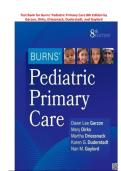
Test Bank for Burns’ Pediatric Primary Care, 8th Edition — Study & Practice Resource
Test Bank for Burns’ Pediatric Primary Care, 8th Edition — Study & Practice Resource Prepare for pediatric primary care coursework, nursing and advanced practice assessments, clinical rotations, and comprehensive examinations with this study and practice resource for Burns’ Pediatric Primary Care, 8th Edition, by Cynthia J. Garzon, Rebecca Dirks, Mary Driessnack, Marilyn J. Duderstadt, and Karen K. Gaylord. Pediatric primary care requires healthcare professionals to understand normal growth and development while recognizing deviations from expected patterns, common childhood illnesses, chronic conditions, developmental concerns, health promotion needs, and family-centered care considerations. This resource provides an organized approach to reviewing pediatric primary care concepts through question-based practice. It can be used alongside textbook readings, classroom lectures, clinical experiences, instructor materials, and other authorized study resources. Comprehensive Pediatric Primary Care Review Pediatric patients have unique physiological, developmental, emotional, and social needs. Healthcare providers must consider the child's age and developmental stage while also incorporating family participation into assessment and care. Practice review can cover major areas such as: Pediatric health assessment Growth and development Developmental milestones Preventive healthcare Health promotion Immunizations Nutrition Newborn and infant care Early childhood School-age children Adolescents Acute pediatric conditions Chronic pediatric conditions Respiratory disorders Gastrointestinal disorders Cardiovascular conditions Neurological conditions Dermatological disorders Musculoskeletal problems Infectious diseases Behavioral and developmental concerns Mental health Family-centered care Patient and caregiver education Active Learning Through Practice Questions Question-based learning can help students actively recall and apply pediatric concepts. Rather than simply reading the material, learners can test their understanding and identify topics requiring additional study. Students can use practice questions to reinforce: Assessment Clinical reasoning Differential considerations Health promotion Patient education Treatment planning Safety Developmental considerations Family communication Follow-up care Pediatric Assessment Assessment of children requires knowledge of age-appropriate techniques and expected developmental findings. Students can review concepts related to: Health histories Physical examinations Vital signs Growth measurements Developmental screening Behavioral assessment Nutrition assessment Family history Social determinants of health Safety assessment Practice questions can help learners distinguish normal developmental findings from findings that may require further evaluation. Growth and Development Understanding growth and development is fundamental to pediatric primary care. Students can review physical, cognitive, emotional, and social development across childhood and adolescence. Practice topics can include: Developmental milestones Growth patterns Developmental screening Language development Motor development Social development Cognitive development Puberty Adolescent development These concepts can help learners recognize potential developmental concerns and understand appropriate anticipatory guidance. Health Promotion and Preventive Care Pediatric primary care places significant emphasis on prevention. Students can review health-promotion strategies involving: Nutrition Physical activity Sleep Oral health Injury prevention Immunization Safety School health Adolescent health Family education Practice questions can help learners understand how preventive care changes according to the child's age and developmental stage. Immunization Review Vaccination is an important component of pediatric primary care. Students can review immunization principles, schedules, precautions, contraindications, caregiver education, and appropriate follow-up. Question-based practice provides an opportunity to reinforce immunization concepts and identify areas that require additional review using current clinical guidelines. Pediatric Respiratory Conditions Respiratory disorders are common reasons children seek primary care. Students can review assessment and management concepts associated with common respiratory conditions. Topics may include: Upper respiratory infections Asthma Bronchiolitis Pneumonia Cough Respiratory assessment Oxygenation Patient and caregiver education Pediatric Gastrointestinal Conditions Children may experience a variety of gastrointestinal problems requiring assessment and appropriate intervention. Students can review conditions involving: Abdominal pain Nausea and vomiting Diarrhea Constipation Dehydration Feeding concerns Nutritional problems Practice questions can reinforce assessment findings, hydration considerations, patient education, and appropriate clinical responses. Pediatric Infectious Diseases Pediatric providers frequently encounter infectious illnesses. Students can review recognition, assessment, prevention, treatment principles, and caregiver education associated with common childhood infections. Question practice can encourage learners to distinguish expected clinical findings from signs requiring further evaluation. Dermatological Conditions Skin findings can provide important information about a child's health. Students can review common pediatric dermatological conditions, assessment findings, treatment principles, hygiene, infection prevention, and caregiver education. Neurological and Developmental Concerns Pediatric neurological assessment requires attention to developmental stage and changes from baseline. Students can review topics involving: Headaches Seizures Neurological assessment Developmental concerns Learning difficulties Behavioral changes Developmental screening Practice questions can help learners develop appropriate assessment and referral considerations. Behavioral and Mental Health Pediatric primary care increasingly incorporates behavioral and mental health assessment. Students can review: Behavioral assessment Anxiety Depression Attention-related concerns School problems Family concerns Adolescent mental health Safety assessment Patient and caregiver communication These topics encourage a holistic approach to pediatric healthcare. Adolescent Health Adolescence involves significant physical, emotional, and social changes. Students can review preventive healthcare and assessment considerations specific to adolescents. Topics may include: Puberty Nutrition Physical activity Mental health Risk behaviors Health education Confidentiality Communication Preventive screening Family-Centered Care Children are often cared for within the context of their families and communities. Effective pediatric care therefore requires communication with parents and caregivers while respecting the developing child's autonomy. Practice questions can reinforce principles of: Family participation Caregiver education Shared decision-making Cultural considerations Communication Advocacy Patient safety Clinical Judgment and Prioritization Pediatric primary care questions often require learners to determine which finding is most concerning or what should happen next. Students can practice asking: What is the child's baseline condition? Is the finding expected for the child's age? What assessment information is most important? Is immediate intervention required? What education should be provided? Does the child require follow-up or referral? This approach helps learners connect assessment findings with appropriate clinical decisions. Useful for Nursing and Advanced Practice Students This study resource may be useful for: Pediatric nursing students Family nurse practitioner students Pediatric nurse practitioner students Advanced practice nursing students Undergraduate nursing students Graduate nursing students Pediatric primary care students Nursing study groups Students preparing for pediatric examinations Flexible Study Strategies Learners can incorporate this resource into: Chapter-by-chapter review Pediatric clinical preparation Active recall Flashcard creation Group study Practice examinations Remediation Midterm review Final examination preparation Clinical case review For the best learning experience, students should combine practice questions with textbook readings, current clinical guidelines, instructor materials, clinical experiences, and other authorized resources. Build Confidence in Pediatric Primary Care Pediatric primary care requires students to integrate development, assessment, pathophysiology, prevention, family dynamics, treatment, and patient education. Regular practice can help learners identify knowledge gaps and focus their study time on concepts that need additional attention. Product Information Title: Burns’ Pediatric Primary Care Edition: 8th Edition Authors: Garzon, Dirks, Driessnack, Duderstadt & Gaylord Subject: Pediatric Primary Care Resource Type: Study and practice resource Focus: Pediatric assessment, growth and development, preventive care, acute and chronic conditions, health promotion, family-centered care, clinical judgment, and patient education. Important Note This listing describes a study and practice resource associated with Burns’ Pediatric Primary Care, 8th Edition. It should not be represented as an official publisher test bank, confidential instructor resource, or collection of unreleased examination questions unless authorization and provenance have been verified
Document information
- Uploaded on
- September 20, 2026
- Number of pages
- 135
- Written in
- 2026/2027
- Type
- Exam (elaborations)
- Contains
- Questions & answers


