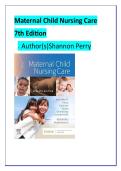
Maternal Child Nursing Care
7th Edition
• Author(s)Shannon Perry
,Question 1
A maternity nurse is updating a unit orientation program for newly
hired nurses. Which statement best reflects a key characteristic of 21st-
century maternity nursing?
A. Care is primarily centered on managing complications after they
occur.
B. Care emphasizes evidence-informed practice, prevention, and
partnership with families.
C. Care is focused mainly on technological monitoring during pregnancy
and birth.
D. Care is standardized so that cultural and individual differences have
minimal influence.
Correct Answer: B. Care emphasizes evidence-informed practice,
prevention, and partnership with families.
Rationale:
Contemporary maternity nursing extends beyond treatment of
complications. Nurses emphasize prevention, health promotion,
evidence-informed practice, patient participation, and family-centered
care while adapting care to individual needs.
Why the Other Options Are Incorrect:
A. Modern maternity care emphasizes prevention and early
identification of problems rather than waiting until complications
develop.
C. Technology is important, but maternity nursing also requires
assessment, education, communication, advocacy, and psychosocial
support.
,D. Contemporary practice recognizes cultural, social, developmental,
and individual differences rather than minimizing them.
Question 2
A nurse is explaining the major advances that have influenced maternal
and infant care. Which development has had the greatest effect on
improving the ability to identify potential problems before they become
severe?
A. Expansion of prenatal screening and diagnostic services
B. Increased use of postpartum hospital stays
**C. Greater reliance on family members for clinical decisions
**D. Reduction in routine maternal assessments
Correct Answer: A. Expansion of prenatal screening and diagnostic
services
Rationale:
Advances in prenatal screening and diagnostic technology allow
healthcare professionals to identify maternal or fetal concerns earlier,
supporting timely evaluation, treatment, referral, and surveillance.
Why the Other Options Are Incorrect:
B. The length of hospitalization does not itself provide the primary
mechanism for early identification of prenatal problems.
C. Family participation is valuable, but families do not replace clinical
screening and assessment.
D. Reducing assessments would limit opportunities to recognize
emerging problems.
, Question 3
A nurse is caring for pregnant patients from different socioeconomic
backgrounds. Which nursing action best supports efforts to reduce
maternal and infant health disparities?
A. Provide identical discharge instructions to every patient.
B. Focus resources on patients who already attend prenatal
appointments consistently.
C. Identify barriers to care and connect patients with appropriate
resources.
D. Encourage patients to manage healthcare barriers independently.
Correct Answer: C. Identify barriers to care and connect patients with
appropriate resources.
Rationale:
Reducing disparities requires nurses to recognize barriers such as
transportation, financial limitations, limited access to care, health
literacy challenges, and other social determinants of health. Connecting
patients with available resources promotes more equitable access to
needed services.
Why the Other Options Are Incorrect:
A. Identical teaching may not address differences in literacy, language,
resources, or individual needs.
B. Focusing primarily on patients already engaged in care can overlook
populations experiencing barriers to healthcare access.
D. Expecting patients to overcome systemic barriers without assistance
does not promote equitable care.
7th Edition
• Author(s)Shannon Perry
,Question 1
A maternity nurse is updating a unit orientation program for newly
hired nurses. Which statement best reflects a key characteristic of 21st-
century maternity nursing?
A. Care is primarily centered on managing complications after they
occur.
B. Care emphasizes evidence-informed practice, prevention, and
partnership with families.
C. Care is focused mainly on technological monitoring during pregnancy
and birth.
D. Care is standardized so that cultural and individual differences have
minimal influence.
Correct Answer: B. Care emphasizes evidence-informed practice,
prevention, and partnership with families.
Rationale:
Contemporary maternity nursing extends beyond treatment of
complications. Nurses emphasize prevention, health promotion,
evidence-informed practice, patient participation, and family-centered
care while adapting care to individual needs.
Why the Other Options Are Incorrect:
A. Modern maternity care emphasizes prevention and early
identification of problems rather than waiting until complications
develop.
C. Technology is important, but maternity nursing also requires
assessment, education, communication, advocacy, and psychosocial
support.
,D. Contemporary practice recognizes cultural, social, developmental,
and individual differences rather than minimizing them.
Question 2
A nurse is explaining the major advances that have influenced maternal
and infant care. Which development has had the greatest effect on
improving the ability to identify potential problems before they become
severe?
A. Expansion of prenatal screening and diagnostic services
B. Increased use of postpartum hospital stays
**C. Greater reliance on family members for clinical decisions
**D. Reduction in routine maternal assessments
Correct Answer: A. Expansion of prenatal screening and diagnostic
services
Rationale:
Advances in prenatal screening and diagnostic technology allow
healthcare professionals to identify maternal or fetal concerns earlier,
supporting timely evaluation, treatment, referral, and surveillance.
Why the Other Options Are Incorrect:
B. The length of hospitalization does not itself provide the primary
mechanism for early identification of prenatal problems.
C. Family participation is valuable, but families do not replace clinical
screening and assessment.
D. Reducing assessments would limit opportunities to recognize
emerging problems.
, Question 3
A nurse is caring for pregnant patients from different socioeconomic
backgrounds. Which nursing action best supports efforts to reduce
maternal and infant health disparities?
A. Provide identical discharge instructions to every patient.
B. Focus resources on patients who already attend prenatal
appointments consistently.
C. Identify barriers to care and connect patients with appropriate
resources.
D. Encourage patients to manage healthcare barriers independently.
Correct Answer: C. Identify barriers to care and connect patients with
appropriate resources.
Rationale:
Reducing disparities requires nurses to recognize barriers such as
transportation, financial limitations, limited access to care, health
literacy challenges, and other social determinants of health. Connecting
patients with available resources promotes more equitable access to
needed services.
Why the Other Options Are Incorrect:
A. Identical teaching may not address differences in literacy, language,
resources, or individual needs.
B. Focusing primarily on patients already engaged in care can overlook
populations experiencing barriers to healthcare access.
D. Expecting patients to overcome systemic barriers without assistance
does not promote equitable care.