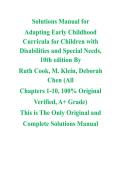
Solutions Manual for
Adapting Early Childhood
Curricula for Children with
Q
Disabilities and Special Needs,
U
10th edition By
IZ
Ruth Cook, M. Klein, Deborah
M
Chen (All
AS
Chapters 1-10, 100% Original
Verified, A+ Grade)
TE
This is The Only Original and
Complete Solutions Manual
R
S
, Table of Content
1. Educating Young Children with Disabilities: The Challenge
2. In Partnership with Families
3. Developing Individualized Intervention Plans and Programs and Monitoring Progress
4. Designing Instructional Programs
Q
5. Considerations for Teaching Children with Specific Disabilities
U
6. Promoting Emotional and Social Development
7. Helping Young Children Develop Motor and Self-Care Skills
IZ
8. Nurturing Communication Skills
9. Encouraging the Development of Cognitive Skills and Literacy
M
10. Teaming: Collaboration, Problem Solving, and Inclusion Support
AS
TE
R
S
, dfghjkl
Chapter 1 ALL CHAPTERS INCLUDED ⬛⬛
EDUCATING YOUNG CHILDREN WITH DISABILITIES
THE CHALLENGE
OUTLINE
Q
I. Viewing the Child with Disabilities as a Child First
A. Person-First Language
II. Inclusion of Young Children with Disabilities in Community-Based Settings
U
III. Philosophy of This Text
IV. Early Childhood Special Education: An Evolving Field
IZ
A. Pioneering Influences and History of Early Childhood Special Education
B. Casa dei Bambini
C. Piaget’s Theory of Cognitive Development
D. Recognition of the Role of Early Experiences
E. Project Head Start: A Breakthrough
M
F. Doubts
G. Impact of Early Education
H. Early Education for Children with Disabilities
V. Changing Policies: The Impact of Public Pressure and Legislation
AS
A. Development of Professional Groups
B. The Power of Private Citizens
C. The First Chance Program
D. Civil Rights Legislation
E. Public Law 94-142: The Education for All Handicapped Children Act of 1975
F. Public Law 99-457: The Education of the Handicapped Act Amendments of 1986
G. Public Law 101-336: The Americans with Disabilities Act of 1990
TE
H. Public Law 101-476: The Education of the Handicapped Act Amendments of 1990
I. Public Law102-119: The Individuals with Disabilities Education Act Amendments of
1991
J. Public Law 105-17: The individuals with Disabilities Education Act Amendments of
1997
K. Public Law 108-446: The Individuals with Disabilities Act of 2004
R
VI. Foundational Principles of Early Childhood Special Education
A. Relationship-Focused Models of Early Intervention
B. Family-Centered Services
C. Community-Based Inclusive Settings
S
D. Interdisciplinary Collaboration
E. Culturally Responsive Practices
F. Coordinated, Comprehensive Services
G. Evidence-based Practices
H. Routine-Based and Embedded Interventions
I. Standards-Based Curriculum
J. Child Outcomes
K. Response to Intervention (RTI) or Tiered Instruction
L. Pre-K Response to Intervention
M. Universal Design for Learning (UDL)
Zxcvbnhjmk,l
, dfghjkl
VI. Building on Recommended Practices
A. Collaboration Between Early Childhood Education and Early Childhood Special
Education Professionals
B. The Importance of Ongoing Pursuit of Evidence-Based Practices
VII. Service Delivery
A. Services for Infants and Toddlers
B. Services for Preschoolers
Q
VIII. Educating Young Children with Disabilities in Inclusive Settings
A. Unique Challenges Involved in Supporting Early Childhood Inclusion
B. Key Findings from Research on Preschool Inclusion
C. The Role of the Early Childhood Special Educator
D. The Case for Specific Training Related to Inclusion Support
U
IX. Summary
X. Reflect and Apply
IZ
ESSENTIAL CONCEPTS AND VOCABULARY
M
Activity-based intervention
Americans with Disabilities Act
Americans with Disabilities Act Amendments Act
Developmentally Appropriate Practices (DAP)
AS
Early Intervention
Embedded intervention
Evidence-based practices
Family-centered approach
Free appropriate public education
Inclusion
Inclusion support
Inclusive settings
TE
Individuals with Disabilities Education Act
Individuals with Disabilities Education Improvement Act
Interdisciplinary team approach
Least restrictive environment
Natural environments
Person-first language
Recognition and response
R
Recommended practices
Relationship-focused intervention model
Response to Intervention (RTI)
Routines-based intervention
S
Section 504 of the Rehabilitation Act of 1973
Tiered instruction
Transactional
Transdisciplinary approach
Universal Design for Learning (UDL)
Zxcvbnhjmk,l
Adapting Early Childhood
Curricula for Children with
Q
Disabilities and Special Needs,
U
10th edition By
IZ
Ruth Cook, M. Klein, Deborah
M
Chen (All
AS
Chapters 1-10, 100% Original
Verified, A+ Grade)
TE
This is The Only Original and
Complete Solutions Manual
R
S
, Table of Content
1. Educating Young Children with Disabilities: The Challenge
2. In Partnership with Families
3. Developing Individualized Intervention Plans and Programs and Monitoring Progress
4. Designing Instructional Programs
Q
5. Considerations for Teaching Children with Specific Disabilities
U
6. Promoting Emotional and Social Development
7. Helping Young Children Develop Motor and Self-Care Skills
IZ
8. Nurturing Communication Skills
9. Encouraging the Development of Cognitive Skills and Literacy
M
10. Teaming: Collaboration, Problem Solving, and Inclusion Support
AS
TE
R
S
, dfghjkl
Chapter 1 ALL CHAPTERS INCLUDED ⬛⬛
EDUCATING YOUNG CHILDREN WITH DISABILITIES
THE CHALLENGE
OUTLINE
Q
I. Viewing the Child with Disabilities as a Child First
A. Person-First Language
II. Inclusion of Young Children with Disabilities in Community-Based Settings
U
III. Philosophy of This Text
IV. Early Childhood Special Education: An Evolving Field
IZ
A. Pioneering Influences and History of Early Childhood Special Education
B. Casa dei Bambini
C. Piaget’s Theory of Cognitive Development
D. Recognition of the Role of Early Experiences
E. Project Head Start: A Breakthrough
M
F. Doubts
G. Impact of Early Education
H. Early Education for Children with Disabilities
V. Changing Policies: The Impact of Public Pressure and Legislation
AS
A. Development of Professional Groups
B. The Power of Private Citizens
C. The First Chance Program
D. Civil Rights Legislation
E. Public Law 94-142: The Education for All Handicapped Children Act of 1975
F. Public Law 99-457: The Education of the Handicapped Act Amendments of 1986
G. Public Law 101-336: The Americans with Disabilities Act of 1990
TE
H. Public Law 101-476: The Education of the Handicapped Act Amendments of 1990
I. Public Law102-119: The Individuals with Disabilities Education Act Amendments of
1991
J. Public Law 105-17: The individuals with Disabilities Education Act Amendments of
1997
K. Public Law 108-446: The Individuals with Disabilities Act of 2004
R
VI. Foundational Principles of Early Childhood Special Education
A. Relationship-Focused Models of Early Intervention
B. Family-Centered Services
C. Community-Based Inclusive Settings
S
D. Interdisciplinary Collaboration
E. Culturally Responsive Practices
F. Coordinated, Comprehensive Services
G. Evidence-based Practices
H. Routine-Based and Embedded Interventions
I. Standards-Based Curriculum
J. Child Outcomes
K. Response to Intervention (RTI) or Tiered Instruction
L. Pre-K Response to Intervention
M. Universal Design for Learning (UDL)
Zxcvbnhjmk,l
, dfghjkl
VI. Building on Recommended Practices
A. Collaboration Between Early Childhood Education and Early Childhood Special
Education Professionals
B. The Importance of Ongoing Pursuit of Evidence-Based Practices
VII. Service Delivery
A. Services for Infants and Toddlers
B. Services for Preschoolers
Q
VIII. Educating Young Children with Disabilities in Inclusive Settings
A. Unique Challenges Involved in Supporting Early Childhood Inclusion
B. Key Findings from Research on Preschool Inclusion
C. The Role of the Early Childhood Special Educator
D. The Case for Specific Training Related to Inclusion Support
U
IX. Summary
X. Reflect and Apply
IZ
ESSENTIAL CONCEPTS AND VOCABULARY
M
Activity-based intervention
Americans with Disabilities Act
Americans with Disabilities Act Amendments Act
Developmentally Appropriate Practices (DAP)
AS
Early Intervention
Embedded intervention
Evidence-based practices
Family-centered approach
Free appropriate public education
Inclusion
Inclusion support
Inclusive settings
TE
Individuals with Disabilities Education Act
Individuals with Disabilities Education Improvement Act
Interdisciplinary team approach
Least restrictive environment
Natural environments
Person-first language
Recognition and response
R
Recommended practices
Relationship-focused intervention model
Response to Intervention (RTI)
Routines-based intervention
S
Section 504 of the Rehabilitation Act of 1973
Tiered instruction
Transactional
Transdisciplinary approach
Universal Design for Learning (UDL)
Zxcvbnhjmk,l