
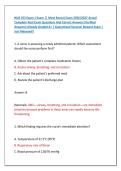
NUR 253 Exam 1 Exam || Most Recent Exam 2026|2027 Actual
Complete Real Exam Questions And Correct Answers (Verified
Answers) Already Graded A+ | Guaranteed Success! Newest Exam |
Just Released!!
1. A nurse is assessing a newly admitted patient. Which assessment
should the nurse perform first?
A. Obtain the patient's complete medication history
B. Assess airway, breathing, and circulation
C. Ask about the patient's preferred meal
D. Review the patient's discharge plan
Answer: B
Rationale: ABCs—airway, breathing, and circulation—are immediate
priorities because problems in these areas can rapidly become life-
threatening.
2. Which finding requires the nurse's immediate attention?
A. Temperature of 37.2°C (99°F)
B. Respiratory rate of 8/min
C. Blood pressure of 128/76 mmHg
,D. Pain rating of 3/10
Answer: B
Rationale: A respiratory rate of 8/min indicates bradypnea and may
represent respiratory depression. Airway and breathing problems take
priority.
3. Which nursing action best demonstrates patient-centered care?
A. Making decisions for the patient
B. Following the same plan for every patient
C. Incorporating the patient's preferences and values into the plan of
care
D. Allowing the healthcare provider to make all decisions
Answer: C
Rationale: Patient-centered care recognizes the patient's values,
preferences, needs, and participation in healthcare decisions.
4. Which ethical principle refers to the patient's right to make their own
healthcare decisions?
,A. Justice
B. Autonomy
C. Fidelity
D. Beneficence
Answer: B
Rationale: Autonomy means respecting a patient's right to make
informed decisions about their own care.
5. A nurse promises a patient that they will return in 30 minutes with
pain medication. The nurse returns as promised. Which ethical principle
is demonstrated?
A. Fidelity
B. Justice
C. Autonomy
D. Veracity
Answer: A
, Rationale: Fidelity means keeping promises and maintaining
commitments made to patients.
6. Which ethical principle means “do no harm”?
A. Beneficence
B. Autonomy
C. Nonmaleficence
D. Justice
Answer: C
Rationale: Nonmaleficence requires healthcare professionals to avoid
causing harm.
7. Which action demonstrates beneficence?
A. Providing an intervention intended to benefit the patient
B. Allowing the patient to refuse treatment
C. Treating patients equally
D. Keeping a promise
Answer: A
Complete Real Exam Questions And Correct Answers (Verified
Answers) Already Graded A+ | Guaranteed Success! Newest Exam |
Just Released!!
1. A nurse is assessing a newly admitted patient. Which assessment
should the nurse perform first?
A. Obtain the patient's complete medication history
B. Assess airway, breathing, and circulation
C. Ask about the patient's preferred meal
D. Review the patient's discharge plan
Answer: B
Rationale: ABCs—airway, breathing, and circulation—are immediate
priorities because problems in these areas can rapidly become life-
threatening.
2. Which finding requires the nurse's immediate attention?
A. Temperature of 37.2°C (99°F)
B. Respiratory rate of 8/min
C. Blood pressure of 128/76 mmHg
,D. Pain rating of 3/10
Answer: B
Rationale: A respiratory rate of 8/min indicates bradypnea and may
represent respiratory depression. Airway and breathing problems take
priority.
3. Which nursing action best demonstrates patient-centered care?
A. Making decisions for the patient
B. Following the same plan for every patient
C. Incorporating the patient's preferences and values into the plan of
care
D. Allowing the healthcare provider to make all decisions
Answer: C
Rationale: Patient-centered care recognizes the patient's values,
preferences, needs, and participation in healthcare decisions.
4. Which ethical principle refers to the patient's right to make their own
healthcare decisions?
,A. Justice
B. Autonomy
C. Fidelity
D. Beneficence
Answer: B
Rationale: Autonomy means respecting a patient's right to make
informed decisions about their own care.
5. A nurse promises a patient that they will return in 30 minutes with
pain medication. The nurse returns as promised. Which ethical principle
is demonstrated?
A. Fidelity
B. Justice
C. Autonomy
D. Veracity
Answer: A
, Rationale: Fidelity means keeping promises and maintaining
commitments made to patients.
6. Which ethical principle means “do no harm”?
A. Beneficence
B. Autonomy
C. Nonmaleficence
D. Justice
Answer: C
Rationale: Nonmaleficence requires healthcare professionals to avoid
causing harm.
7. Which action demonstrates beneficence?
A. Providing an intervention intended to benefit the patient
B. Allowing the patient to refuse treatment
C. Treating patients equally
D. Keeping a promise
Answer: A


