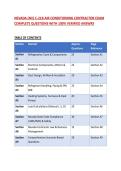
NEVADA (NV) C-21B AIR CONDITIONING CONTRACTOR EXAM
COMPLETE QUESTIONS WITH 100% VERIFIED ANSWRS
TABLE OF CONTENTS
Section Domain Approx. Page
Questions Reference
Section Refrigeration Cycle & Components 25 Section A1
A1
Section Electrical Components, Motors & 25 Section A2
A2 Controls
Section Duct Design, Airflow & Insulation 20 Section A3
A3
Section Refrigerant Handling, Piping & EPA 25 Section A4
A4 608
Section Heating Systems, Furnaces & Heat 20 Section A5
A5 Pumps
Section Load Calculations (Manual J, S, D) 20 Section A6
A6
Section Nevada State Code Compliance 30 Section A7
A7 (UMC/IMC) & Safety
Section Nevada Contractor Law & Business 15 Section A8
A8 Management
Section Comprehensive Scenario-Based 20 Section A9
A9 Questions
,SECTION A1: REFRIGERATION CYCLE & COMPONENTS
1. What is the primary purpose of the condenser in a refrigeration
cycle?
A. Absorb heat from the conditioned space
B. Reject heat absorbed by the refrigerant to the outdoor air
C. Reduce refrigerant pressure before the evaporator
D. Compress low-pressure vapor into high-pressure vapor
Correct Answer: B
Rationale: The condenser's function is to reject heat that the refrigerant
absorbed in the evaporator and from the compression process. The
refrigerant enters the condenser as a high-pressure, high-temperature
superheated vapor and leaves as a high-pressure subcooled liquid,
transferring heat to the outdoor air or water. The evaporator absorbs
heat from the conditioned space (A), the metering device reduces
pressure (C), and the compressor compresses vapor (D).
2. In a standard vapor-compression cycle, which component separates
the low-pressure side from the high-pressure side?
A. Evaporator
B. Compressor
C. Thermostatic expansion valve
D. Accumulator
Correct Answer: C
Rationale: The thermostatic expansion valve (TXV) acts as the dividing
point between the high-pressure liquid line and the low-pressure
evaporator. It meters refrigerant flow and creates a pressure drop,
allowing the refrigerant to flash into a low-pressure mixture entering
,the evaporator. The compressor separates low-pressure suction from
high-pressure discharge, but the TXV is the boundary between the high-
side liquid and low-side vapor regions.
3. What is the primary function of the evaporator coil in an air
conditioning system?
A. Reject heat to the outdoors
B. Absorb heat from the indoor air and evaporate the refrigerant
C. Compress refrigerant vapor
D. Store excess refrigerant during low-load conditions
Correct Answer: B
Rationale: The evaporator coil is where the low-pressure liquid
refrigerant absorbs heat from the indoor air passing over the coil. This
heat causes the refrigerant to boil and evaporate into a vapor, while the
air is cooled and dehumidified. The condenser rejects heat (A), the
compressor compresses (C), and a receiver or accumulator handles
storage (D).
4. What is the term for the temperature difference between the actual
vapor temperature leaving the evaporator and the saturation
temperature at the evaporator pressure?
A. Subcooling
B. Superheat
C. Approach
D. Delta-T
Correct Answer: B
Rationale: Superheat is the amount of heat added to refrigerant vapor
above its saturation temperature. It is calculated by subtracting the
, saturation temperature (from a pressure-temperature chart) from the
actual suction line temperature. Subcooling (A) applies to liquid lines,
approach (C) is a condenser term, and delta-T (D) typically refers to air
temperature difference.
5. Which refrigerant is classified as A1 by ASHRAE and is commonly
used in new residential air conditioning systems?
A. R-22
B. R-410A
C. R-134a
D. R-123
Correct Answer: B
Rationale: R-410A is classified as A1 (low toxicity, non-flammable) by
ASHRAE and is the standard replacement for R-22 in new residential
and light commercial air conditioning systems. R-22 (A) is an HCFC being
phased out, R-134a (C) is used in automotive and medium-temperature
refrigeration, and R-123 (D) is a low-pressure centrifugal chiller
refrigerant classified as B1.
6. What is the function of the accumulator in a refrigeration system?
A. Store liquid refrigerant and prevent it from reaching the compressor
B. Increase refrigerant pressure before the condenser
C. Meter refrigerant into the evaporator
D. Remove moisture from the refrigerant
Correct Answer: A
Rationale: An accumulator is installed on the suction line to trap and
hold any liquid refrigerant that may leave the evaporator, preventing it
from reaching the compressor and causing slugging or mechanical
COMPLETE QUESTIONS WITH 100% VERIFIED ANSWRS
TABLE OF CONTENTS
Section Domain Approx. Page
Questions Reference
Section Refrigeration Cycle & Components 25 Section A1
A1
Section Electrical Components, Motors & 25 Section A2
A2 Controls
Section Duct Design, Airflow & Insulation 20 Section A3
A3
Section Refrigerant Handling, Piping & EPA 25 Section A4
A4 608
Section Heating Systems, Furnaces & Heat 20 Section A5
A5 Pumps
Section Load Calculations (Manual J, S, D) 20 Section A6
A6
Section Nevada State Code Compliance 30 Section A7
A7 (UMC/IMC) & Safety
Section Nevada Contractor Law & Business 15 Section A8
A8 Management
Section Comprehensive Scenario-Based 20 Section A9
A9 Questions
,SECTION A1: REFRIGERATION CYCLE & COMPONENTS
1. What is the primary purpose of the condenser in a refrigeration
cycle?
A. Absorb heat from the conditioned space
B. Reject heat absorbed by the refrigerant to the outdoor air
C. Reduce refrigerant pressure before the evaporator
D. Compress low-pressure vapor into high-pressure vapor
Correct Answer: B
Rationale: The condenser's function is to reject heat that the refrigerant
absorbed in the evaporator and from the compression process. The
refrigerant enters the condenser as a high-pressure, high-temperature
superheated vapor and leaves as a high-pressure subcooled liquid,
transferring heat to the outdoor air or water. The evaporator absorbs
heat from the conditioned space (A), the metering device reduces
pressure (C), and the compressor compresses vapor (D).
2. In a standard vapor-compression cycle, which component separates
the low-pressure side from the high-pressure side?
A. Evaporator
B. Compressor
C. Thermostatic expansion valve
D. Accumulator
Correct Answer: C
Rationale: The thermostatic expansion valve (TXV) acts as the dividing
point between the high-pressure liquid line and the low-pressure
evaporator. It meters refrigerant flow and creates a pressure drop,
allowing the refrigerant to flash into a low-pressure mixture entering
,the evaporator. The compressor separates low-pressure suction from
high-pressure discharge, but the TXV is the boundary between the high-
side liquid and low-side vapor regions.
3. What is the primary function of the evaporator coil in an air
conditioning system?
A. Reject heat to the outdoors
B. Absorb heat from the indoor air and evaporate the refrigerant
C. Compress refrigerant vapor
D. Store excess refrigerant during low-load conditions
Correct Answer: B
Rationale: The evaporator coil is where the low-pressure liquid
refrigerant absorbs heat from the indoor air passing over the coil. This
heat causes the refrigerant to boil and evaporate into a vapor, while the
air is cooled and dehumidified. The condenser rejects heat (A), the
compressor compresses (C), and a receiver or accumulator handles
storage (D).
4. What is the term for the temperature difference between the actual
vapor temperature leaving the evaporator and the saturation
temperature at the evaporator pressure?
A. Subcooling
B. Superheat
C. Approach
D. Delta-T
Correct Answer: B
Rationale: Superheat is the amount of heat added to refrigerant vapor
above its saturation temperature. It is calculated by subtracting the
, saturation temperature (from a pressure-temperature chart) from the
actual suction line temperature. Subcooling (A) applies to liquid lines,
approach (C) is a condenser term, and delta-T (D) typically refers to air
temperature difference.
5. Which refrigerant is classified as A1 by ASHRAE and is commonly
used in new residential air conditioning systems?
A. R-22
B. R-410A
C. R-134a
D. R-123
Correct Answer: B
Rationale: R-410A is classified as A1 (low toxicity, non-flammable) by
ASHRAE and is the standard replacement for R-22 in new residential
and light commercial air conditioning systems. R-22 (A) is an HCFC being
phased out, R-134a (C) is used in automotive and medium-temperature
refrigeration, and R-123 (D) is a low-pressure centrifugal chiller
refrigerant classified as B1.
6. What is the function of the accumulator in a refrigeration system?
A. Store liquid refrigerant and prevent it from reaching the compressor
B. Increase refrigerant pressure before the condenser
C. Meter refrigerant into the evaporator
D. Remove moisture from the refrigerant
Correct Answer: A
Rationale: An accumulator is installed on the suction line to trap and
hold any liquid refrigerant that may leave the evaporator, preventing it
from reaching the compressor and causing slugging or mechanical