
MASSACHUSETTS FIRE ALARM SYSTEMS TECHNICIAN EXAM
200 EXAM QUESTIONS & VERIFIED ANSWERS
TABLE OF CONTENTS
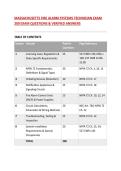
Section Domain Approx. Page Reference
Questions
1 Licensing Laws, Regulations & 25 527 CMR 1.00; MGL c.
State-Specific Requirements 148; 237 CMR 12.00–
23.00
2 NFPA 72 Fundamentals, 30 NFPA 72 Ch. 3, 10, 12
Definitions & Signal Types
3 Initiating Devices (Detection) 30 NFPA 72 Ch. 17
4 Notification Appliances & 25 NFPA 72 Ch. 18
Signaling Circuits
5 Fire Alarm Control Units 25 NFPA 72 Ch. 10, 12, 14
(FACP) & Power Supplies
6 Circuit Calculations, 20 NEC Art. 760; NFPA 72
Schematics & Wiring Methods Ch. 12
7 Troubleshooting, Testing & 25 NFPA 72 Ch. 14
Inspection
8 System Installation 20 NFPA 72 Ch. 23, 24;
Requirements & Special 527 CMR 1.00
Occupancies
TOTAL 200
,SECTION 1: LICENSING LAWS, REGULATIONS & STATE-SPECIFIC
REQUIREMENTS (25 Questions)
Question 1.
In Massachusetts, the primary adopting authority for fire alarm system
regulations is the:
A) Massachusetts Building Code (780 CMR)
B) Massachusetts Fire Prevention Regulations (527 CMR)
C) Massachusetts Electrical Code (527 CMR 12.00)
D) Massachusetts Plumbing Code (248 CMR)
Correct Answer: B
Rationale: 527 CMR (Commonwealth of Massachusetts Comprehensive
Fire Safety Code) is the primary regulation that adopts and amends
NFPA standards for fire alarm systems in the state. While the Building
Code (780 CMR) references fire alarms, the specific regulations are
detailed in 527 CMR.
Question 2.
Under Massachusetts law, the installation, alteration, or repair of fire
alarm systems must be performed by a:
A) Master Electrician
B) Systems Contractor
C) Systems Technician
D) Both B and C, as part of a licensed firm
Correct Answer: D
Rationale: M.G.L. c. 112, § 165 requires that all fire alarm system work
be performed by a licensed Systems Contractor (the firm) and
,supervised by a licensed Systems Technician. A master electrician's
license does not automatically qualify someone for fire alarm work
without the specific systems certification.
Question 3.
Which NFPA standard is the primary document referenced for the
installation of fire alarm systems in Massachusetts?
A) NFPA 70
B) NFPA 72
C) NFPA 101
D) NFPA 13
Correct Answer: B
Rationale: NFPA 72, the National Fire Alarm and Signaling Code, is the
primary standard governing the installation, performance, testing, and
maintenance of fire alarm systems. NFPA 70 is the National Electrical
Code, NFPA 101 is the Life Safety Code, and NFPA 13 is for sprinkler
systems.
Question 4.
The "Massachusetts Amendments" to NFPA 72 are primarily found in
which regulation?
A) 780 CMR
B) 527 CMR 1.00
C) 527 CMR 12.00
D) 524 CMR
, Correct Answer: C
Rationale: 527 CMR 12.00 is the Massachusetts Electrical Code, which
contains specific state amendments to NFPA 70. The amendments to
NFPA 72 are found within the body of 527 CMR 1.00, the
Comprehensive Fire Safety Code, which adopts NFPA 72 with state-
specific modifications.
Question 5.
A fire alarm control panel (FACP) installed in a new building in
Massachusetts must have a secondary power supply capable of
operating the system under quiescent load for:
A) 24 hours
B) 48 hours
C) 60 hours
D) 90 hours
Correct Answer: A
Rationale: NFPA 72 requires primary and secondary power supplies. The
secondary (battery) power supply must be able to operate the system in
a quiescent (non-alarm) state for 24 hours, followed by 5 minutes of
alarm operation for a protected premises system.
Question 6.
When a new fire alarm system is installed in a high-rise building, the
required alarm notification time for the fire department is:
A) 30 seconds
B) 60 seconds
200 EXAM QUESTIONS & VERIFIED ANSWERS
TABLE OF CONTENTS
Section Domain Approx. Page Reference
Questions
1 Licensing Laws, Regulations & 25 527 CMR 1.00; MGL c.
State-Specific Requirements 148; 237 CMR 12.00–
23.00
2 NFPA 72 Fundamentals, 30 NFPA 72 Ch. 3, 10, 12
Definitions & Signal Types
3 Initiating Devices (Detection) 30 NFPA 72 Ch. 17
4 Notification Appliances & 25 NFPA 72 Ch. 18
Signaling Circuits
5 Fire Alarm Control Units 25 NFPA 72 Ch. 10, 12, 14
(FACP) & Power Supplies
6 Circuit Calculations, 20 NEC Art. 760; NFPA 72
Schematics & Wiring Methods Ch. 12
7 Troubleshooting, Testing & 25 NFPA 72 Ch. 14
Inspection
8 System Installation 20 NFPA 72 Ch. 23, 24;
Requirements & Special 527 CMR 1.00
Occupancies
TOTAL 200
,SECTION 1: LICENSING LAWS, REGULATIONS & STATE-SPECIFIC
REQUIREMENTS (25 Questions)
Question 1.
In Massachusetts, the primary adopting authority for fire alarm system
regulations is the:
A) Massachusetts Building Code (780 CMR)
B) Massachusetts Fire Prevention Regulations (527 CMR)
C) Massachusetts Electrical Code (527 CMR 12.00)
D) Massachusetts Plumbing Code (248 CMR)
Correct Answer: B
Rationale: 527 CMR (Commonwealth of Massachusetts Comprehensive
Fire Safety Code) is the primary regulation that adopts and amends
NFPA standards for fire alarm systems in the state. While the Building
Code (780 CMR) references fire alarms, the specific regulations are
detailed in 527 CMR.
Question 2.
Under Massachusetts law, the installation, alteration, or repair of fire
alarm systems must be performed by a:
A) Master Electrician
B) Systems Contractor
C) Systems Technician
D) Both B and C, as part of a licensed firm
Correct Answer: D
Rationale: M.G.L. c. 112, § 165 requires that all fire alarm system work
be performed by a licensed Systems Contractor (the firm) and
,supervised by a licensed Systems Technician. A master electrician's
license does not automatically qualify someone for fire alarm work
without the specific systems certification.
Question 3.
Which NFPA standard is the primary document referenced for the
installation of fire alarm systems in Massachusetts?
A) NFPA 70
B) NFPA 72
C) NFPA 101
D) NFPA 13
Correct Answer: B
Rationale: NFPA 72, the National Fire Alarm and Signaling Code, is the
primary standard governing the installation, performance, testing, and
maintenance of fire alarm systems. NFPA 70 is the National Electrical
Code, NFPA 101 is the Life Safety Code, and NFPA 13 is for sprinkler
systems.
Question 4.
The "Massachusetts Amendments" to NFPA 72 are primarily found in
which regulation?
A) 780 CMR
B) 527 CMR 1.00
C) 527 CMR 12.00
D) 524 CMR
, Correct Answer: C
Rationale: 527 CMR 12.00 is the Massachusetts Electrical Code, which
contains specific state amendments to NFPA 70. The amendments to
NFPA 72 are found within the body of 527 CMR 1.00, the
Comprehensive Fire Safety Code, which adopts NFPA 72 with state-
specific modifications.
Question 5.
A fire alarm control panel (FACP) installed in a new building in
Massachusetts must have a secondary power supply capable of
operating the system under quiescent load for:
A) 24 hours
B) 48 hours
C) 60 hours
D) 90 hours
Correct Answer: A
Rationale: NFPA 72 requires primary and secondary power supplies. The
secondary (battery) power supply must be able to operate the system in
a quiescent (non-alarm) state for 24 hours, followed by 5 minutes of
alarm operation for a protected premises system.
Question 6.
When a new fire alarm system is installed in a high-rise building, the
required alarm notification time for the fire department is:
A) 30 seconds
B) 60 seconds


