
[STUDY GUIDE] • HIGH-YIELD PRACTICE & REVIEW EDITION
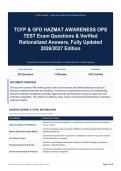
TCFP & GFD HAZMAT AWARENESS OPS
TEST Exam Questions & Verified
Rationalized Answers, Fully Updated
2026/2027 Edition
Comprehensive Examination Question Bank • In-Depth Rationales • Concept Mapping
TOTAL QUESTIONS EXAM TOPICS RATIONALES
495 Questions 12 Modules 100% Verified
DOCUMENT OVERVIEW
This document contains 495 verified questions with correct answers and detailed rationales focusing on
hazardous materials awareness and operations. It serves as a comprehensive resource for understanding
hazardous materials management principles, aligning directly with training for emergency responders and
certification preparation. This material is suitable for study, review, and enhancing preparedness in hazardous
materials incidents.
EXAM BLUEPRINT & TOPIC DISTRIBUTION
Systematic breakdown of subject domains and exam coverage.
Topic Module Scope & Core Focus
Explores the methods and regulations for identifying and classifying hazardous materials in
Hazardous Materials Identification various contexts.
Covers the importance and components of MSDS in providing essential safety information on
Material Safety Data Sheets (MSDS) hazardous substances.
Examines the Department of Transportation's classification system for hazardous materials
DOT Hazard Classes and the implications for transport.
Focuses on the strategies and protocols necessary for effective emergency response to
Emergency Response Planning hazardous materials incidents.
Discusses the regulations and best practices for protecting the environment during
Environmental Protection Protocols hazardous materials management.
Confidential • Student Study Edition • Practice & Review Guide Page 1 of 149
,STUDENT STUDY & MASTERY EDITION PRACTICE & REVIEW GUIDE
Details the types and uses of PPE required for safe handling and response to hazardous
Personal Protective Equipment (PPE) materials.
Outlines the structure and function of ICS in coordinating response efforts during hazardous
Incident Command System (ICS) materials emergencies.
Analyzes the physical and chemical properties of hazardous materials that affect their
Chemical Properties and Behaviors behavior in emergencies.
Covers the protocols and techniques for decontaminating personnel and equipment after
Decontamination Procedures exposure to hazardous materials.
Chemical, Biological, Radiological, and Explores the identification and response protocols for CBRN materials in emergency
Nuclear (CBRN) Awareness situations.
Discusses regulations and best practices for the proper management and disposal of
Hazardous Waste Management hazardous waste.
Focuses on the strategies for effectively communicating risks associated with hazardous
Risk Communication materials to stakeholders.
Total Exam Coverage 12 Integrated Topic Modules • 495 Examination Questions
Confidential • Student Study Edition • Practice & Review Guide Page 2 of 149
,STUDENT STUDY & MASTERY EDITION PRACTICE & REVIEW GUIDE
QUESTION 1
Substances or materials in quantities or forms that may pose an unreasonable risk to
health, safety, or property when transported, stored, or used in commerce is a
definition for a:
Correct Answer: Hazardous material.
Rationale: This definition highlights the key aspects of hazardous materials, which include the potential for posing an
unreasonable risk to health, safety, or property, emphasizing the severity of the threats involved. The reference to
transportation, storage, and use in commerce further underscores the focus on managing and regulating substances that
could cause harm in various settings.
QUESTION 2
When dealing with a radiological incident involving a leak or spill, what exposure
guidelines should the hazmat first responder use to minimize radioactive
contamination?
Correct Answer: Time, distance, shielding.
Rationale: The "Time, distance, shielding" concept is a fundamental guideline for minimizing radioactive contamination
because it emphasizes the importance of reducing exposure time, increasing physical distance from the source, and utilizing
radiation-blocking materials or structures to absorb or deflect radiation. By prioritizing these three factors, hazmat first
responders can effectively mitigate radiation exposure and ensure a safer response to radiological incidents.
QUESTION 3
A reference book intended as a guide to aid emergency responders to guide quickly
and identify specific hazards during the initial phase is the:
Correct Answer: DOT, Emergency Response Guidebook.
Rationale: The DOT Emergency Response Guidebook is a reference book specifically designed to provide emergency
responders with quick access to information about the hazards of various hazardous materials, enabling them to make
informed decisions during the initial response
phase. Its purpose and structure make it an ideal resource for quickly identifying specific hazards and guiding emergency
responses.
Confidential • Student Study Edition • Practice & Review Guide Page 3 of 149
, STUDENT STUDY & MASTERY EDITION PRACTICE & REVIEW GUIDE
QUESTION 4
The two types of potential hazards found in each guide of the Emergency Response
Guidebook are:
Correct Answer: Health and fire/explosion.
Rationale: The Emergency Response Guidebook is designed to aid responders in handling emergencies involving
hazardous materials, and "health" and "fire/explosion" are the primary types of hazards these materials can pose because
they can cause harm to people's health or start fires and explosions. These two categories cover the most critical hazards
associated with hazardous materials, allowing responders to quickly identify the potential risks and take appropriate actions.
QUESTION 5
The steps that are taken to preserve the health and safety of emergency responders
and the public during an incident involving releases of hazardous materials are called:
Correct Answer: Protective actions.
Rationale: Protective actions refer to the measures taken to safeguard the health and safety of emergency responders and
the public by minimizing exposure to hazardous substances released during an incident. This involves implementing
strategies to prevent or mitigate the effects of hazardous material releases, ensuring the well-being of those involved or
potentially affected.
QUESTION 6
The most important part of assessment is:
Correct Answer: Recognizing the presence of hazardous materials.
Rationale: Recognizing the presence of hazardous materials is crucial because it allows responders to anticipate and
mitigate potential risks, preventing harm to themselves and others during the assessment process. This early identification
enables effective planning and implementation of safety protocols, ultimately ensuring a more controlled and successful
assessment outcome.
Confidential • Student Study Edition • Practice & Review Guide Page 4 of 149
TCFP & GFD HAZMAT AWARENESS OPS
TEST Exam Questions & Verified
Rationalized Answers, Fully Updated
2026/2027 Edition
Comprehensive Examination Question Bank • In-Depth Rationales • Concept Mapping
TOTAL QUESTIONS EXAM TOPICS RATIONALES
495 Questions 12 Modules 100% Verified
DOCUMENT OVERVIEW
This document contains 495 verified questions with correct answers and detailed rationales focusing on
hazardous materials awareness and operations. It serves as a comprehensive resource for understanding
hazardous materials management principles, aligning directly with training for emergency responders and
certification preparation. This material is suitable for study, review, and enhancing preparedness in hazardous
materials incidents.
EXAM BLUEPRINT & TOPIC DISTRIBUTION
Systematic breakdown of subject domains and exam coverage.
Topic Module Scope & Core Focus
Explores the methods and regulations for identifying and classifying hazardous materials in
Hazardous Materials Identification various contexts.
Covers the importance and components of MSDS in providing essential safety information on
Material Safety Data Sheets (MSDS) hazardous substances.
Examines the Department of Transportation's classification system for hazardous materials
DOT Hazard Classes and the implications for transport.
Focuses on the strategies and protocols necessary for effective emergency response to
Emergency Response Planning hazardous materials incidents.
Discusses the regulations and best practices for protecting the environment during
Environmental Protection Protocols hazardous materials management.
Confidential • Student Study Edition • Practice & Review Guide Page 1 of 149
,STUDENT STUDY & MASTERY EDITION PRACTICE & REVIEW GUIDE
Details the types and uses of PPE required for safe handling and response to hazardous
Personal Protective Equipment (PPE) materials.
Outlines the structure and function of ICS in coordinating response efforts during hazardous
Incident Command System (ICS) materials emergencies.
Analyzes the physical and chemical properties of hazardous materials that affect their
Chemical Properties and Behaviors behavior in emergencies.
Covers the protocols and techniques for decontaminating personnel and equipment after
Decontamination Procedures exposure to hazardous materials.
Chemical, Biological, Radiological, and Explores the identification and response protocols for CBRN materials in emergency
Nuclear (CBRN) Awareness situations.
Discusses regulations and best practices for the proper management and disposal of
Hazardous Waste Management hazardous waste.
Focuses on the strategies for effectively communicating risks associated with hazardous
Risk Communication materials to stakeholders.
Total Exam Coverage 12 Integrated Topic Modules • 495 Examination Questions
Confidential • Student Study Edition • Practice & Review Guide Page 2 of 149
,STUDENT STUDY & MASTERY EDITION PRACTICE & REVIEW GUIDE
QUESTION 1
Substances or materials in quantities or forms that may pose an unreasonable risk to
health, safety, or property when transported, stored, or used in commerce is a
definition for a:
Correct Answer: Hazardous material.
Rationale: This definition highlights the key aspects of hazardous materials, which include the potential for posing an
unreasonable risk to health, safety, or property, emphasizing the severity of the threats involved. The reference to
transportation, storage, and use in commerce further underscores the focus on managing and regulating substances that
could cause harm in various settings.
QUESTION 2
When dealing with a radiological incident involving a leak or spill, what exposure
guidelines should the hazmat first responder use to minimize radioactive
contamination?
Correct Answer: Time, distance, shielding.
Rationale: The "Time, distance, shielding" concept is a fundamental guideline for minimizing radioactive contamination
because it emphasizes the importance of reducing exposure time, increasing physical distance from the source, and utilizing
radiation-blocking materials or structures to absorb or deflect radiation. By prioritizing these three factors, hazmat first
responders can effectively mitigate radiation exposure and ensure a safer response to radiological incidents.
QUESTION 3
A reference book intended as a guide to aid emergency responders to guide quickly
and identify specific hazards during the initial phase is the:
Correct Answer: DOT, Emergency Response Guidebook.
Rationale: The DOT Emergency Response Guidebook is a reference book specifically designed to provide emergency
responders with quick access to information about the hazards of various hazardous materials, enabling them to make
informed decisions during the initial response
phase. Its purpose and structure make it an ideal resource for quickly identifying specific hazards and guiding emergency
responses.
Confidential • Student Study Edition • Practice & Review Guide Page 3 of 149
, STUDENT STUDY & MASTERY EDITION PRACTICE & REVIEW GUIDE
QUESTION 4
The two types of potential hazards found in each guide of the Emergency Response
Guidebook are:
Correct Answer: Health and fire/explosion.
Rationale: The Emergency Response Guidebook is designed to aid responders in handling emergencies involving
hazardous materials, and "health" and "fire/explosion" are the primary types of hazards these materials can pose because
they can cause harm to people's health or start fires and explosions. These two categories cover the most critical hazards
associated with hazardous materials, allowing responders to quickly identify the potential risks and take appropriate actions.
QUESTION 5
The steps that are taken to preserve the health and safety of emergency responders
and the public during an incident involving releases of hazardous materials are called:
Correct Answer: Protective actions.
Rationale: Protective actions refer to the measures taken to safeguard the health and safety of emergency responders and
the public by minimizing exposure to hazardous substances released during an incident. This involves implementing
strategies to prevent or mitigate the effects of hazardous material releases, ensuring the well-being of those involved or
potentially affected.
QUESTION 6
The most important part of assessment is:
Correct Answer: Recognizing the presence of hazardous materials.
Rationale: Recognizing the presence of hazardous materials is crucial because it allows responders to anticipate and
mitigate potential risks, preventing harm to themselves and others during the assessment process. This early identification
enables effective planning and implementation of safety protocols, ultimately ensuring a more controlled and successful
assessment outcome.
Confidential • Student Study Edition • Practice & Review Guide Page 4 of 149


