
BIOL 2402 LAB FINAL UPDATED ACTUAL QUESTIONS
AND CORRECT ANSWERS
Question:
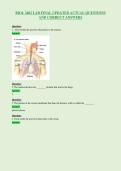
1. -Click inside the gray box that points to the trachea.
Answer:
Question:
2. The trachea divides into ________ bronchi that lead to the lungs.
Answer:
2
Question:
3. The portion of the serous membrane that lines the thoracic walls is called the ________.
Answer:
parietal plerua
Question:
4. Click inside the gray box that points to the uvula.
Answer:
,Question:
5. The palatine tonsils are found in which of the following regions?
Answer:
oropharynx
The palatine tonsils are found in the part of the pharynx that is shared with the oral cavity and is known as
the oropharynx.
Question:
6. The neural centers that control respiratory rhythm and maintain a rate of 12-18 respirations per minute
are located in the medulla and thalamus. T/F
Answer:
false
Question:
7. Which muscles are activated during forced expiration?
Answer:
the internal intercostal, oblique, and transversus muscles
During forced expiration, the internal intercostal, oblique, and transversus muscles contract to increase the
intra-abdominal pressure and depress the rib cage.
Question:
8. __________ is the phase of pulmonary ventilation when air passes out of the lungs.
Answer:
Expiration
Question:
9. Which of the following is an INCORRECT statement relating to the airflow to the lungs?
Answer:
-When the sternocleidomastoid is activated, expiration occurs.
The sternocleidomastoid muscle elevates the ribs, assisting in inspiration.
Question:
10. Which volumes are combined to provide the inspiratory capacity?
, Answer:
tidal volume (TV) and inspiratory reserve volume (IRV)
The inspiratory capacity, which is the total amount of air that can be taken into the lungs after a normal
relaxed exhalation, is equal to the tidal volume (TV) plus inspiratory reserve volume (IRV).
Question:
11. After you measure TV and vital capacity, you must also calculate ________ before you can determine
total lung capacity.
Answer:
residual volume
Question:
12. Which of the following, if activated as a group, would result in inspiration?
Answer:
external intercostals, sternocleidomastoid, diaphragm
All of these muscles, when activated, assist in increasing the size of the thoracic cavity and causing
inspiration.
Question:
13. These muscles are active during quiet expiration.
Answer:
No muscles are active
Question:
14. Rate and depth of breathing, hyperventilation, and hypoventilation should have little or NO effect on
the acid-base balance of blood.
Answer:
False
Question:
15. Click inside the gray box that points to the left main (primary) bronchus.
Answer:
AND CORRECT ANSWERS
Question:
1. -Click inside the gray box that points to the trachea.
Answer:
Question:
2. The trachea divides into ________ bronchi that lead to the lungs.
Answer:
2
Question:
3. The portion of the serous membrane that lines the thoracic walls is called the ________.
Answer:
parietal plerua
Question:
4. Click inside the gray box that points to the uvula.
Answer:
,Question:
5. The palatine tonsils are found in which of the following regions?
Answer:
oropharynx
The palatine tonsils are found in the part of the pharynx that is shared with the oral cavity and is known as
the oropharynx.
Question:
6. The neural centers that control respiratory rhythm and maintain a rate of 12-18 respirations per minute
are located in the medulla and thalamus. T/F
Answer:
false
Question:
7. Which muscles are activated during forced expiration?
Answer:
the internal intercostal, oblique, and transversus muscles
During forced expiration, the internal intercostal, oblique, and transversus muscles contract to increase the
intra-abdominal pressure and depress the rib cage.
Question:
8. __________ is the phase of pulmonary ventilation when air passes out of the lungs.
Answer:
Expiration
Question:
9. Which of the following is an INCORRECT statement relating to the airflow to the lungs?
Answer:
-When the sternocleidomastoid is activated, expiration occurs.
The sternocleidomastoid muscle elevates the ribs, assisting in inspiration.
Question:
10. Which volumes are combined to provide the inspiratory capacity?
, Answer:
tidal volume (TV) and inspiratory reserve volume (IRV)
The inspiratory capacity, which is the total amount of air that can be taken into the lungs after a normal
relaxed exhalation, is equal to the tidal volume (TV) plus inspiratory reserve volume (IRV).
Question:
11. After you measure TV and vital capacity, you must also calculate ________ before you can determine
total lung capacity.
Answer:
residual volume
Question:
12. Which of the following, if activated as a group, would result in inspiration?
Answer:
external intercostals, sternocleidomastoid, diaphragm
All of these muscles, when activated, assist in increasing the size of the thoracic cavity and causing
inspiration.
Question:
13. These muscles are active during quiet expiration.
Answer:
No muscles are active
Question:
14. Rate and depth of breathing, hyperventilation, and hypoventilation should have little or NO effect on
the acid-base balance of blood.
Answer:
False
Question:
15. Click inside the gray box that points to the left main (primary) bronchus.
Answer:


