
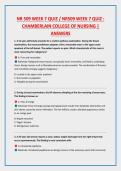
NR 509 WEEK 7 QUIZ / NR509 WEEK 7 QUIZ :
CHAMBERLAIN COLLEGE OF NURSING |
ANSWERS
1. A 52-year-old female presents for a routine wellness examination. During the breast
examination, the nurse practitioner palpates a firm, immovable mass in the upper outer
quadrant of the left breast. The patient reports no pain. Which characteristic of this mass is
most concerning for malignancy?
A. Firm and immovable
Rationale: Malignant breast masses are typically hard, immovable, and fixed to underlying
tissue. Benign masses such as fibroadenomas are usually movable. The combination of firmness
and immobility strongly suggests malignancy.
B. Located in the upper outer quadrant
C. Non-tender on palpation
D. Palpable during the examination
2. During a breast examination, the NP observes dimpling of the skin overlying a breast mass.
This finding is known as:
A. Peau d'orange
Rationale: Peau d'orange (orange peel appearance) results from lymphatic obstruction and
skin edema caused by tumor infiltration. The hair follicles create a dimpled appearance similar
to an orange peel.
B. Nipple retraction
C. Paget's disease
D. Montgomery tubercles
3. A 45-year-old woman reports a clear, watery nipple discharge from her right breast that
occurs spontaneously. This finding is most consistent with:
A. Intraductal papilloma
Rationale: Intraductal papillomas are benign tumors of the mammary ducts that commonly
,present with spontaneous, unilateral, clear or bloody nipple discharge. Malignancy is less likely
with clear discharge alone.
B. Fibrocystic breast changes
C. Mammary duct ectasia
D. Breast abscess
4. The nurse practitioner is teaching a patient about breast self-examination. Which
statement by the patient indicates correct understanding?
A. "I should perform the examination about 3 to 5 days after my period ends."
Rationale: The optimal time for breast self-examination is 3-5 days after the menstrual
period ends when hormonal effects are at their lowest, reducing breast tenderness and
nodularity.
B. "I should check my breasts only once a year during my annual exam."
C. "I should examine my breasts during my period when they are easiest to feel."
D. "I don't need to do self-exams if I have annual mammograms."
5. During a breast examination, the NP palpates multiple small, mobile, well-defined masses
in both breasts of a 38-year-old female. These findings are most consistent with:
A. Fibrocystic breast changes
Rationale: Fibrocystic changes are characterized by multiple bilateral, mobile, well-defined
masses that often fluctuate with the menstrual cycle. This is a common benign condition in
women of reproductive age.
B. Inflammatory breast cancer
C. Metastatic breast cancer
D. Ductal carcinoma in situ
6. Which of the following is a modifiable risk factor for breast cancer?
A. Postmenopausal obesity
Rationale: Postmenopausal obesity is a modifiable risk factor for breast cancer due to
increased peripheral estrogen production in adipose tissue. Other modifiable factors include
alcohol consumption and hormone replacement therapy use.
,B. Family history of breast cancer
C. Early menarche
D. BRCA1 gene mutation
7. A 55-year-old female presents with a unilateral, bloody nipple discharge and a palpable
mass. The NP should prioritize which action?
A. Refer for diagnostic mammography and biopsy
Rationale: Bloody nipple discharge associated with a palpable mass is highly concerning for
malignancy and requires urgent diagnostic mammography and biopsy. This presentation is not
consistent with benign conditions.
B. Prescribe antibiotics and reassess in 2 weeks
C. Reassure the patient this is a normal finding
D. Schedule routine screening mammography in 1 year
8. The tail of Spence is located:
A. In the upper outer quadrant extending toward the axilla
Rationale: The tail of Spence is an extension of breast tissue into the axilla that is often
overlooked during examination. This area is a common site for breast cancer development.
B. In the lower inner quadrant near the sternum
C. Directly behind the nipple
D. In the lower outer quadrant
9. A new mother presents with a red, warm, tender area on her right breast accompanied by
fever and chills. The most likely diagnosis is:
A. Mastitis
Rationale: Mastitis presents with localized redness, warmth, tenderness, and systemic
symptoms such as fever and chills, typically in breastfeeding women. Prompt treatment with
antibiotics and continued milk expression is essential.
B. Fibroadenoma
C. Breast cancer
D. Intraductal papilloma
, 10. Which finding on breast examination warrants immediate further evaluation?
A. Unilateral nipple retraction of recent onset
Rationale: Recent onset of unilateral nipple retraction is a concerning sign of malignancy.
Benign nipple inversion is typically bilateral and long-standing.
B. Bilateral breast tenderness before menses
C. Bilateral symmetric breast nodularity
D. Montgomery tubercles on the areola
11. SATA: The nurse practitioner is performing a breast examination on a 60-year-old woman.
Which of the following findings would be considered normal age-related changes? Select all
that apply.
A. Decreased glandular tissue
B. Increased fatty tissue
C. Pendulous breasts
Rationale: With aging, glandular tissue atrophies and is replaced by fatty tissue, leading to
decreased density and pendulous appearance. These are normal age-related changes. A fixed
mass would be abnormal and concerning for malignancy.
D. Fixed, hard mass in the upper outer quadrant
E. Unilateral nipple discharge
12. During a breast examination, the NP asks the patient to place her hands on her hips and
press firmly. This maneuver is used to assess for:
A. Skin dimpling or retraction
Rationale: Having the patient press hands on hips contracts the pectoral muscles, which can
reveal skin dimpling or retraction caused by underlying malignancy. This is part of the inspection
phase of breast examination.
B. Nipple discharge
C. Axillary lymph nodes
D. Breast tenderness
CHAMBERLAIN COLLEGE OF NURSING |
ANSWERS
1. A 52-year-old female presents for a routine wellness examination. During the breast
examination, the nurse practitioner palpates a firm, immovable mass in the upper outer
quadrant of the left breast. The patient reports no pain. Which characteristic of this mass is
most concerning for malignancy?
A. Firm and immovable
Rationale: Malignant breast masses are typically hard, immovable, and fixed to underlying
tissue. Benign masses such as fibroadenomas are usually movable. The combination of firmness
and immobility strongly suggests malignancy.
B. Located in the upper outer quadrant
C. Non-tender on palpation
D. Palpable during the examination
2. During a breast examination, the NP observes dimpling of the skin overlying a breast mass.
This finding is known as:
A. Peau d'orange
Rationale: Peau d'orange (orange peel appearance) results from lymphatic obstruction and
skin edema caused by tumor infiltration. The hair follicles create a dimpled appearance similar
to an orange peel.
B. Nipple retraction
C. Paget's disease
D. Montgomery tubercles
3. A 45-year-old woman reports a clear, watery nipple discharge from her right breast that
occurs spontaneously. This finding is most consistent with:
A. Intraductal papilloma
Rationale: Intraductal papillomas are benign tumors of the mammary ducts that commonly
,present with spontaneous, unilateral, clear or bloody nipple discharge. Malignancy is less likely
with clear discharge alone.
B. Fibrocystic breast changes
C. Mammary duct ectasia
D. Breast abscess
4. The nurse practitioner is teaching a patient about breast self-examination. Which
statement by the patient indicates correct understanding?
A. "I should perform the examination about 3 to 5 days after my period ends."
Rationale: The optimal time for breast self-examination is 3-5 days after the menstrual
period ends when hormonal effects are at their lowest, reducing breast tenderness and
nodularity.
B. "I should check my breasts only once a year during my annual exam."
C. "I should examine my breasts during my period when they are easiest to feel."
D. "I don't need to do self-exams if I have annual mammograms."
5. During a breast examination, the NP palpates multiple small, mobile, well-defined masses
in both breasts of a 38-year-old female. These findings are most consistent with:
A. Fibrocystic breast changes
Rationale: Fibrocystic changes are characterized by multiple bilateral, mobile, well-defined
masses that often fluctuate with the menstrual cycle. This is a common benign condition in
women of reproductive age.
B. Inflammatory breast cancer
C. Metastatic breast cancer
D. Ductal carcinoma in situ
6. Which of the following is a modifiable risk factor for breast cancer?
A. Postmenopausal obesity
Rationale: Postmenopausal obesity is a modifiable risk factor for breast cancer due to
increased peripheral estrogen production in adipose tissue. Other modifiable factors include
alcohol consumption and hormone replacement therapy use.
,B. Family history of breast cancer
C. Early menarche
D. BRCA1 gene mutation
7. A 55-year-old female presents with a unilateral, bloody nipple discharge and a palpable
mass. The NP should prioritize which action?
A. Refer for diagnostic mammography and biopsy
Rationale: Bloody nipple discharge associated with a palpable mass is highly concerning for
malignancy and requires urgent diagnostic mammography and biopsy. This presentation is not
consistent with benign conditions.
B. Prescribe antibiotics and reassess in 2 weeks
C. Reassure the patient this is a normal finding
D. Schedule routine screening mammography in 1 year
8. The tail of Spence is located:
A. In the upper outer quadrant extending toward the axilla
Rationale: The tail of Spence is an extension of breast tissue into the axilla that is often
overlooked during examination. This area is a common site for breast cancer development.
B. In the lower inner quadrant near the sternum
C. Directly behind the nipple
D. In the lower outer quadrant
9. A new mother presents with a red, warm, tender area on her right breast accompanied by
fever and chills. The most likely diagnosis is:
A. Mastitis
Rationale: Mastitis presents with localized redness, warmth, tenderness, and systemic
symptoms such as fever and chills, typically in breastfeeding women. Prompt treatment with
antibiotics and continued milk expression is essential.
B. Fibroadenoma
C. Breast cancer
D. Intraductal papilloma
, 10. Which finding on breast examination warrants immediate further evaluation?
A. Unilateral nipple retraction of recent onset
Rationale: Recent onset of unilateral nipple retraction is a concerning sign of malignancy.
Benign nipple inversion is typically bilateral and long-standing.
B. Bilateral breast tenderness before menses
C. Bilateral symmetric breast nodularity
D. Montgomery tubercles on the areola
11. SATA: The nurse practitioner is performing a breast examination on a 60-year-old woman.
Which of the following findings would be considered normal age-related changes? Select all
that apply.
A. Decreased glandular tissue
B. Increased fatty tissue
C. Pendulous breasts
Rationale: With aging, glandular tissue atrophies and is replaced by fatty tissue, leading to
decreased density and pendulous appearance. These are normal age-related changes. A fixed
mass would be abnormal and concerning for malignancy.
D. Fixed, hard mass in the upper outer quadrant
E. Unilateral nipple discharge
12. During a breast examination, the NP asks the patient to place her hands on her hips and
press firmly. This maneuver is used to assess for:
A. Skin dimpling or retraction
Rationale: Having the patient press hands on hips contracts the pectoral muscles, which can
reveal skin dimpling or retraction caused by underlying malignancy. This is part of the inspection
phase of breast examination.
B. Nipple discharge
C. Axillary lymph nodes
D. Breast tenderness


