
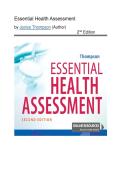
Essential Health Assessment
by Janice Thompson (Author)
2nd Edition
,TABLE OF CONTENTS
1. Understanding Health Assessment
2. Interviewing the Patient for a Health History
3. Taking the Health History
4. Assessing Nutrition and Anthropometric Measurements
5. Assessment Techniques
6. General Survey and Assessing Vital Signs
7. Assessing Pain
8. Assessing the Skin, Hair, and Nails
9. Assessing the Head, Face, Mouth, and Neck
10. Assessing the Ears
11. Assessing the Eyes
12. Assessing the Respiratory System
13. Assessing the Cardiovascular System
14. Assessing the Abdomen
15. Assessing the Peripheral Vascular System and Regional Lymphatic System
16. Assessing the Musculoskeletal System
17. Assessing the Neurological System
18. Assessing the Female Breasts, Axillae, and Reproductive System
19. Assessing the Male Breasts and Reproductive System
20. Assessing the Anus and Rectum
21. Assessing the Newborn
22. Assessing the Child and Adolescent
23. Assessment of the Pregnant Woman
24. Assessing the Older Adult
,TEST BANK: Essential Health Assessment, 2nd Edition (Thompson,
2018)
Multiple Choice Questions
CHAPTER 1: Understanding Health Assessment
Q1. Which of the following best defines health assessment?
A) A series of diagnostic laboratory tests ordered by a physician
B) A systematic, holistic process of collecting subjective and objective data about a patient's health
status
C) A brief review of a patient's medical chart before discharge
D) The process of prescribing medications based on patient complaints
Answer: B
Rationale: Health assessment is a systematic, holistic process that involves collecting both subjective
(what the patient reports) and objective (what the clinician observes/measures) data to determine the
patient's overall health status. It is foundational to nursing practice and goes beyond lab tests or chart
reviews.
Q2. A nurse is performing a comprehensive health assessment on a newly admitted patient. Which
component should the nurse address first?
A) Physical examination
B) Diagnostic testing
C) Health history
D) Vital signs measurement
Answer: C
Rationale: The health history is typically the first component of a comprehensive assessment. It provides
the foundation for the physical examination by identifying the patient's concerns, past medical history,
and risk factors, which then guide the focus of the physical exam.
Q3. Which type of health assessment is most appropriate for a patient presenting to the emergency
department with acute chest pain?
A) Comprehensive assessment
B) Focused assessment
C) Ongoing assessment
D) Screening assessment
Answer: B
Rationale: A focused assessment is appropriate in emergency or acute situations. It targets the specific
body system or problem related to the chief complaint (in this case, the cardiovascular and respiratory
systems) rather than performing a full head-to-toe examination.
Q4. A nurse conducts a head-to-toe assessment on a patient at the beginning of each shift. This is an
example of which type of assessment?
, A) Initial comprehensive assessment
B) Focused assessment
C) Ongoing or partial assessment
D) Emergency assessment
Answer: C
Rationale: An ongoing (or partial) assessment is performed at regular intervals (e.g., each shift) to
monitor changes in the patient's condition. It is less detailed than an initial comprehensive assessment
but tracks trends over time.
Q5. The primary purpose of health assessment in nursing practice is to:
A) Fulfill hospital documentation requirements
B) Establish a database for identifying patient problems and planning care
C) Determine the patient's insurance eligibility
D) Replace the need for physician evaluation
Answer: B
Rationale: The primary purpose of health assessment is to establish a comprehensive database that
allows the nurse to identify actual and potential health problems, formulate nursing diagnoses, and
develop an individualized plan of care.
Q6. Which of the following is considered subjective data?
A) Blood pressure of 130/82 mmHg
B) Temperature of 101.2°F
C) Patient reports "I have a throbbing headache"
D) Heart rate of 98 beats per minute
Answer: C
Rationale: Subjective data are symptoms or information reported by the patient that cannot be directly
observed or measured by the clinician. A patient's description of pain is subjective. Vital signs are
objective data because they can be measured.
Q7. Objective data are best described as:
A) Information gathered from the patient's family members
B) The patient's feelings about their illness
C) Observable and measurable data obtained through examination and diagnostic testing
D) The patient's perception of their health status
Answer: C
Rationale: Objective data are signs that can be observed, measured, or tested by the healthcare
provider. Examples include vital signs, physical examination findings, and laboratory results.
Q8. A nurse is preparing to perform a health assessment. Which action demonstrates an understanding
of the holistic approach to assessment?
A) Focusing only on the body system related to the chief complaint
B) Assessing only the patient's physical symptoms
C) Considering the patient's physical, psychological, sociocultural, and spiritual needs
D) Relying solely on laboratory data to form conclusions
Answer: C
by Janice Thompson (Author)
2nd Edition
,TABLE OF CONTENTS
1. Understanding Health Assessment
2. Interviewing the Patient for a Health History
3. Taking the Health History
4. Assessing Nutrition and Anthropometric Measurements
5. Assessment Techniques
6. General Survey and Assessing Vital Signs
7. Assessing Pain
8. Assessing the Skin, Hair, and Nails
9. Assessing the Head, Face, Mouth, and Neck
10. Assessing the Ears
11. Assessing the Eyes
12. Assessing the Respiratory System
13. Assessing the Cardiovascular System
14. Assessing the Abdomen
15. Assessing the Peripheral Vascular System and Regional Lymphatic System
16. Assessing the Musculoskeletal System
17. Assessing the Neurological System
18. Assessing the Female Breasts, Axillae, and Reproductive System
19. Assessing the Male Breasts and Reproductive System
20. Assessing the Anus and Rectum
21. Assessing the Newborn
22. Assessing the Child and Adolescent
23. Assessment of the Pregnant Woman
24. Assessing the Older Adult
,TEST BANK: Essential Health Assessment, 2nd Edition (Thompson,
2018)
Multiple Choice Questions
CHAPTER 1: Understanding Health Assessment
Q1. Which of the following best defines health assessment?
A) A series of diagnostic laboratory tests ordered by a physician
B) A systematic, holistic process of collecting subjective and objective data about a patient's health
status
C) A brief review of a patient's medical chart before discharge
D) The process of prescribing medications based on patient complaints
Answer: B
Rationale: Health assessment is a systematic, holistic process that involves collecting both subjective
(what the patient reports) and objective (what the clinician observes/measures) data to determine the
patient's overall health status. It is foundational to nursing practice and goes beyond lab tests or chart
reviews.
Q2. A nurse is performing a comprehensive health assessment on a newly admitted patient. Which
component should the nurse address first?
A) Physical examination
B) Diagnostic testing
C) Health history
D) Vital signs measurement
Answer: C
Rationale: The health history is typically the first component of a comprehensive assessment. It provides
the foundation for the physical examination by identifying the patient's concerns, past medical history,
and risk factors, which then guide the focus of the physical exam.
Q3. Which type of health assessment is most appropriate for a patient presenting to the emergency
department with acute chest pain?
A) Comprehensive assessment
B) Focused assessment
C) Ongoing assessment
D) Screening assessment
Answer: B
Rationale: A focused assessment is appropriate in emergency or acute situations. It targets the specific
body system or problem related to the chief complaint (in this case, the cardiovascular and respiratory
systems) rather than performing a full head-to-toe examination.
Q4. A nurse conducts a head-to-toe assessment on a patient at the beginning of each shift. This is an
example of which type of assessment?
, A) Initial comprehensive assessment
B) Focused assessment
C) Ongoing or partial assessment
D) Emergency assessment
Answer: C
Rationale: An ongoing (or partial) assessment is performed at regular intervals (e.g., each shift) to
monitor changes in the patient's condition. It is less detailed than an initial comprehensive assessment
but tracks trends over time.
Q5. The primary purpose of health assessment in nursing practice is to:
A) Fulfill hospital documentation requirements
B) Establish a database for identifying patient problems and planning care
C) Determine the patient's insurance eligibility
D) Replace the need for physician evaluation
Answer: B
Rationale: The primary purpose of health assessment is to establish a comprehensive database that
allows the nurse to identify actual and potential health problems, formulate nursing diagnoses, and
develop an individualized plan of care.
Q6. Which of the following is considered subjective data?
A) Blood pressure of 130/82 mmHg
B) Temperature of 101.2°F
C) Patient reports "I have a throbbing headache"
D) Heart rate of 98 beats per minute
Answer: C
Rationale: Subjective data are symptoms or information reported by the patient that cannot be directly
observed or measured by the clinician. A patient's description of pain is subjective. Vital signs are
objective data because they can be measured.
Q7. Objective data are best described as:
A) Information gathered from the patient's family members
B) The patient's feelings about their illness
C) Observable and measurable data obtained through examination and diagnostic testing
D) The patient's perception of their health status
Answer: C
Rationale: Objective data are signs that can be observed, measured, or tested by the healthcare
provider. Examples include vital signs, physical examination findings, and laboratory results.
Q8. A nurse is preparing to perform a health assessment. Which action demonstrates an understanding
of the holistic approach to assessment?
A) Focusing only on the body system related to the chief complaint
B) Assessing only the patient's physical symptoms
C) Considering the patient's physical, psychological, sociocultural, and spiritual needs
D) Relying solely on laboratory data to form conclusions
Answer: C



