
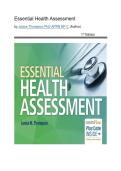
Essential Health Assessment
by Janice Thompson PhD APRN NP-C (Author)
1st Edition
,TABLE OF CONTENTS
Chapter 1 Understanding Health Assessment
Chapter 2 Interviewing the Patient for a Health History
Chapter 3 Taking the Health History
Chapter 4 Assessing Nutrition and Anthropometric Measurements
Chapter 5 Assessment Techniques
Chapter 6 General Survey and Assessing Vital Signs
Chapter 7 Assessing Pain
Chapter 8 Assessing the Skin, Hair, and Nails
Chapter 9 Assessing the Head, Face, Mouth, and Neck
Chapter 10 Assessing the Ears
Chapter 11 Assessing the Eyes
Chapter 12 Assessing the Respiratory System
Chapter 13 Assessing the Cardiovascular System
Chapter 14 Assessing the Abdomen
Chapter 15 Assessing the Peripheral Vascular System andRegional Lymphatic System
Chapter 16 Assessing the Musculoskeletal System
Chapter 17 Assessing the Neurological System
Chapter 18 Assessing the Female Breasts, Axillae,and Reproductive System
Chapter 19 Assessing the Male Breasts and Reproductive System
Chapter 20 Assessing the Anus and Rectum
Chapter 21 Assessing the Newborn
Chapter 22 Assessing the Child and Adolescent
Chapter 23 Assessment of the Pregnant Woman
Chapter 24 Assessing the Older Adult
,TEST BANK
Essential Health Assessment, 1st Edition (Thompson, 2018)
Chapters 1–24
CHAPTER 1: UNDERSTANDING HEALTH ASSESSMENT
Multiple Choice Questions
1. Which of the following best defines health assessment?
A) A process limited to physical examination of the patient
B) A systematic collection of data used to evaluate the health status of a patient
C) A diagnostic procedure performed only by physicians
D) A review of laboratory test results to identify disease
Answer: B
Rationale: Health assessment is a systematic, deliberate, and interactive process in which data about a
patient are collected and analyzed. It includes both subjective and objective data gathering, not just
physical examination or laboratory review.
2. The nurse understands that the primary purpose of health assessment is to:
A) Diagnose medical conditions
B) Prescribe medications based on findings
C) Establish a database from which to plan patient care
D) Replace the physician's physical examination
Answer: C
Rationale: The primary purpose of nursing health assessment is to establish a comprehensive database
of information about the patient's health status, from which individualized nursing care can be planned,
implemented, and evaluated.
3. Subjective data collected during a health assessment include:
A) Blood pressure readings
B) Information the patient reports about symptoms and feelings
C) Observable physical findings noted during examination
D) Laboratory and diagnostic test results
Answer: B
Rationale: Subjective data are information reported by the patient, including symptoms, feelings,
, perceptions, preferences, values, and personal history. Objective data include measurable and
observable findings.
4. Which of the following is an example of objective data?
A) The patient states, "I feel dizzy."
B) The patient reports a family history of diabetes
C) The nurse measures a blood pressure of 160/90 mmHg
D) The patient describes pain as 8 on a 0–10 scale
Answer: C
Rationale: Objective data are observable and measurable findings obtained through examination,
observation, or diagnostic testing. Blood pressure measurement is a quantifiable, objective finding. The
other options are subjective reports from the patient.
5. Which type of health assessment is most comprehensive and typically performed upon admission?
A) Focused assessment
B) Emergency assessment
C) Comprehensive assessment
D) Ongoing assessment
Answer: C
Rationale: A comprehensive (complete) health assessment includes a thorough health history and full
physical examination. It is typically performed upon initial encounter or admission to establish a
complete baseline of the patient's health status.
6. A focused assessment is best described as:
A) A complete head-to-toe examination
B) An assessment targeted to a specific problem or body system
C) An assessment performed only in emergency situations
D) A screening examination for all body systems
Answer: B
Rationale: A focused assessment concentrates on a particular problem, complaint, or body system rather
than examining all systems comprehensively. It is used when a specific concern or change in status is
identified.
7. Critical thinking in health assessment is best defined as:
A) Following a rigid protocol without deviation
B) Purposeful, goal-directed thinking based on scientific evidence and clinical reasoning
C) Making quick decisions without considering all the data
D) Relying solely on intuition and past experience
by Janice Thompson PhD APRN NP-C (Author)
1st Edition
,TABLE OF CONTENTS
Chapter 1 Understanding Health Assessment
Chapter 2 Interviewing the Patient for a Health History
Chapter 3 Taking the Health History
Chapter 4 Assessing Nutrition and Anthropometric Measurements
Chapter 5 Assessment Techniques
Chapter 6 General Survey and Assessing Vital Signs
Chapter 7 Assessing Pain
Chapter 8 Assessing the Skin, Hair, and Nails
Chapter 9 Assessing the Head, Face, Mouth, and Neck
Chapter 10 Assessing the Ears
Chapter 11 Assessing the Eyes
Chapter 12 Assessing the Respiratory System
Chapter 13 Assessing the Cardiovascular System
Chapter 14 Assessing the Abdomen
Chapter 15 Assessing the Peripheral Vascular System andRegional Lymphatic System
Chapter 16 Assessing the Musculoskeletal System
Chapter 17 Assessing the Neurological System
Chapter 18 Assessing the Female Breasts, Axillae,and Reproductive System
Chapter 19 Assessing the Male Breasts and Reproductive System
Chapter 20 Assessing the Anus and Rectum
Chapter 21 Assessing the Newborn
Chapter 22 Assessing the Child and Adolescent
Chapter 23 Assessment of the Pregnant Woman
Chapter 24 Assessing the Older Adult
,TEST BANK
Essential Health Assessment, 1st Edition (Thompson, 2018)
Chapters 1–24
CHAPTER 1: UNDERSTANDING HEALTH ASSESSMENT
Multiple Choice Questions
1. Which of the following best defines health assessment?
A) A process limited to physical examination of the patient
B) A systematic collection of data used to evaluate the health status of a patient
C) A diagnostic procedure performed only by physicians
D) A review of laboratory test results to identify disease
Answer: B
Rationale: Health assessment is a systematic, deliberate, and interactive process in which data about a
patient are collected and analyzed. It includes both subjective and objective data gathering, not just
physical examination or laboratory review.
2. The nurse understands that the primary purpose of health assessment is to:
A) Diagnose medical conditions
B) Prescribe medications based on findings
C) Establish a database from which to plan patient care
D) Replace the physician's physical examination
Answer: C
Rationale: The primary purpose of nursing health assessment is to establish a comprehensive database
of information about the patient's health status, from which individualized nursing care can be planned,
implemented, and evaluated.
3. Subjective data collected during a health assessment include:
A) Blood pressure readings
B) Information the patient reports about symptoms and feelings
C) Observable physical findings noted during examination
D) Laboratory and diagnostic test results
Answer: B
Rationale: Subjective data are information reported by the patient, including symptoms, feelings,
, perceptions, preferences, values, and personal history. Objective data include measurable and
observable findings.
4. Which of the following is an example of objective data?
A) The patient states, "I feel dizzy."
B) The patient reports a family history of diabetes
C) The nurse measures a blood pressure of 160/90 mmHg
D) The patient describes pain as 8 on a 0–10 scale
Answer: C
Rationale: Objective data are observable and measurable findings obtained through examination,
observation, or diagnostic testing. Blood pressure measurement is a quantifiable, objective finding. The
other options are subjective reports from the patient.
5. Which type of health assessment is most comprehensive and typically performed upon admission?
A) Focused assessment
B) Emergency assessment
C) Comprehensive assessment
D) Ongoing assessment
Answer: C
Rationale: A comprehensive (complete) health assessment includes a thorough health history and full
physical examination. It is typically performed upon initial encounter or admission to establish a
complete baseline of the patient's health status.
6. A focused assessment is best described as:
A) A complete head-to-toe examination
B) An assessment targeted to a specific problem or body system
C) An assessment performed only in emergency situations
D) A screening examination for all body systems
Answer: B
Rationale: A focused assessment concentrates on a particular problem, complaint, or body system rather
than examining all systems comprehensively. It is used when a specific concern or change in status is
identified.
7. Critical thinking in health assessment is best defined as:
A) Following a rigid protocol without deviation
B) Purposeful, goal-directed thinking based on scientific evidence and clinical reasoning
C) Making quick decisions without considering all the data
D) Relying solely on intuition and past experience


