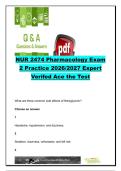
This NUR 2474 Pharmacology Exam 2 Practice 2026/2027 resource is a comprehensive 23-page exam-preparation guide containing more than 120 identifiable practice questions, answers, and rapid-review items. The material focuses on high-yield pharmacology concepts involving cardiovascular and antihypertensive medications, anticoagulants and antiplatelets, hematopoietic drugs, coronary heart disease and angina therapy, antibiotics and urinary anti-infectives, antidysrhythmic medications, vasopressors, heart-failure pharmacology, and dyslipidemia medications. Questions emphasize mechanisms of action, clinical indications, adverse effects, contraindications, antidotes, laboratory monitoring, medication administration, drug interactions, and nursing patient education.
The anticoagulation and hematology section differentiates heparin, warfarin, aspirin, clopidogrel, and alteplase according to their pharmacologic roles. The document associates heparin with aPTT monitoring and protamine sulfate, warfarin with INR monitoring and vitamin K, and emphasizes bleeding as a shared concern with coagulation-altering medications. Alteplase (tPA) is reviewed for thrombolytic therapy, while patient teaching emphasizes bleeding precautions. Hematopoietic medications include epoetin alfa, filgrastim, interferon alfa, and aldesleukin, with review of RBC and neutrophil production, CBC monitoring, infection risk, clotting concerns, bone pain, and flu-like adverse effects.
A major portion covers coronary heart disease, angina, and cardiovascular pharmacology. Nitroglycerin is reviewed extensively, including vasodilation, reduced preload and cardiac workload, sublingual administration, headache, hypotension, dizziness, and fall precautions. Additional drugs include atenolol, nifedipine, ranolazine, aspirin, and morphine, with questions addressing myocardial oxygen demand and supply, heart-rate reduction, coronary vasodilation, clot prevention, and chest-pain management as presented in the document.
The anti-infective pharmacology section reviews tetracyclines, sulfonamides such as trimethoprim-sulfamethoxazole (Bactrim), nitrofurantoin, phenazopyridine, and silver sulfadiazine. Topics include bacteriostatic activity, inhibition of protein synthesis, culture and sensitivity testing, pregnancy and pediatric precautions, interactions affecting tetracycline absorption, Pneumocystis jirovecii pneumonia, urinary antiseptics, urine pH, and the distinction between an antimicrobial and a urinary analgesic.
The hypertension section provides concentrated review of lisinopril, losartan, metoprolol, amlodipine, hydrochlorothiazide, furosemide, and hydralazine. Students review ACE inhibition and angiotensin-receptor blockade, vasodilation, reductions in heart rate and cardiac output, fluid-volume reduction, potassium abnormalities, dehydration, ototoxicity, peripheral edema, cough, hyperkalemia, first-dose hypotension, reflex tachycardia, and medication considerations involving pregnancy and renal artery stenosis. Hypertensive-emergency findings and IV antihypertensive therapy are also included.
The guide provides a structured review of antidysrhythmic drug classes I–IV, including sodium-channel blockers, beta blockers, potassium-channel blockers, and calcium-channel blockers. Specific drugs include lidocaine, propranolol, amiodarone, and diltiazem, with questions covering ventricular dysrhythmias, atrial fibrillation/flutter, AV-node conduction, bradycardia, hypotension, CNS effects, and pulmonary, hepatic, and thyroid adverse effects. Nursing priorities include ECG rhythm identification, heart-rate and blood-pressure assessment, continuous cardiac monitoring, potassium monitoring, and recognition of new or worsening dysrhythmias.
The vasopressor and adrenergic pharmacology material addresses norepinephrine, epinephrine, dopamine, phenylephrine, and albuterol. The document reviews alpha- and beta-receptor effects, vasoconstriction, blood-pressure support, cardiac contractility, bronchodilation, septic shock, severe hypotension, cardiac arrest, anaphylaxis, asthma, and reflex bradycardia. It identifies norepinephrine as the first-line vasopressor for shock in its review material and highlights IV administration, extravasation-related tissue injury, hypertension, and arrhythmias as nursing considerations.
The heart-failure section reviews furosemide, enalapril, valsartan, spironolactone, propranolol, and digoxin. Core goals include decreasing cardiac workload and fluid overload, improving cardiac output, and limiting disease progression. Digoxin questions cover increased myocardial contractility, apical-pulse assessment, bradycardia, kidney disease, hypokalemia, visual changes, nausea and vomiting, and dysrhythmias associated in the document with toxicity. The resource also briefly introduces neprilysin inhibitors, PDE inhibitors, and natriuretic peptides and reinforces patient education concerning sodium intake, medication adherence, weight gain, swelling, and shortness of breath.
The final section provides focused preparation on dyslipidemia pharmacology, including atorvastatin, cholestyramine, niacin, gemfibrozil, and ezetimibe. Students review LDL, HDL, and triglyceride management, myopathy and rhabdomyolysis, elevated liver enzymes, flushing, constipation, medication-absorption interactions, and cholesterol absorption. The document also emphasizes monitoring liver enzymes and lipid levels while maintaining diet, exercise, and weight-management measures alongside pharmacologic treatment.
The uploaded document identifies the course as NUR 2474 Pharmacology Exam 2 Practice and labels the material 2026/2027, but it does not name a university or provide a verifiable assigned textbook, journal, author, or edition. Those details therefore should not be invented. The source consists largely of condensed exam-preparation statements, so the content is best used according to the expectations of the NUR 2474 course and alongside the student's assigned pharmacology references.
Relevant students: This resource is particularly relevant for NUR 2474 students, professional nursing students, RN students, ADN and BSN students, nursing pharmacology students, medical-surgical nursing students, and learners preparing for Pharmacology Exam 2 or medication-focused nursing examinations. It is especially useful for students who want practice with cardiovascular drugs, anticoagulants, antibiotics, dysrhythmias, vasopressors, heart-failure medications, lipid-lowering agents, adverse effects, antidotes, laboratory monitoring, and medication-related nursing interventions.
Keywords: NUR 2474 Pharmacology Exam 2 Practice, NUR 2474 Exam 2, NUR , NUR , pharmacology practice questions, nursing pharmacology questions and answers, cardiovascular pharmacology, anticoagulants nursing, heparin aPTT, warfarin INR, protamine sulfate, vitamin K antidote, antiplatelet drugs, alteplase tPA, epoetin alfa nursing, filgrastim nursing, nitroglycerin nursing, coronary heart disease pharmacology, angina medications, tetracycline nursing, sulfonamides nursing, Bactrim pharmacology, nitrofurantoin nursing, lisinopril nursing, losartan nursing, metoprolol nursing, amlodipine nursing, furosemide nursing, hydrochlorothiazide nursing, hydralazine nursing, antidysrhythmic drugs, lidocaine pharmacology, amiodarone nursing, diltiazem nursing, norepinephrine nursing, epinephrine pharmacology, dopamine nursing, septic shock vasopressors, heart failure medications, digoxin toxicity, spironolactone nursing, atorvastatin nursing, dyslipidemia pharmacology, cholestyramine nursing, niacin pharmacology, gemfibrozil nursing, ezetimibe nursing, RN pharmacology exam preparation
Inhaltsvorschau
NUR 2474 Pharmacology Exam
2 Practice 2026/2027 Expert
Verifed Ace the Test
What are three common side effects of Nitroglycerin?
Choose an answer
1
Headache, hypotension, and dizziness.
2
Sedation, dizziness, orthostasis, and fall risk.
3
,Dry cough, hyperkalemia, and hypotension.
4
Myalgia, myopathy, and rare rhabdomyolysis.
ANS 1
Block angiotensin II, cause vasodilation, decrease BP, and decrease
aldosterone leading to decreased fluid.
Choose an answer
1
Hydrochlorothiazide (Diuretics) mechanism of action
2
Metoprolol (Beta Blockers) mechanism of action
3
Amlodipine (Calcium Channel Blockers) mechanism of action
Falsches Dokument? Kostenlos tauschen
Innerhalb von 14 Tagen nach dem Kauf und vor dem Herunterladen kannst du ein anderes Dokument wählen. Du kannst den Betrag einfach neu ausgeben.
Geschrieben von Student*innen, die bestanden haben
Sofort verfügbar nach Zahlung
Online lesen oder als PDF
Bewertungen des Ansehens basieren auf der Anzahl der Dokumente, die ein Verkäufer gegen eine Gebühr verkauft hat, und den Bewertungen, die er für diese Dokumente erhalten hat. Es gibt drei Stufen: Bronze, Silber und Gold. Je besser das Ansehen eines Verkäufers ist, desto mehr kannst du dich auf die Qualität der Arbeiten verlassen.