[STUDY GUIDE] • HIGH-YIELD PRACTICE & REVIEW EDITION
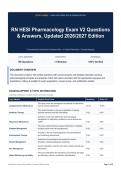
RN HESI Pharmacology Exam V2 Questions
& Answers, Updated 2026/2027 Edition
Comprehensive Examination Question Bank • In-Depth Rationales • Concept Mapping
TOTAL QUESTIONS EXAM TOPICS RATIONALES
100 Questions 11 Modules 100% Verified
DOCUMENT OVERVIEW
This document contains 100 verified questions with correct answers and detailed rationales covering
pharmacological principles and practices. Each item pairs a scenario with the appropriate response and
explanation, making it suitable for exam preparation, course review, and certification studies.
EXAM BLUEPRINT & TOPIC DISTRIBUTION
Systematic breakdown of subject domains and exam coverage.
Topic Module Scope & Core Focus Questions Share (%)
This topic covers the management and effects of medications
Antihypertensive Medications used to control hypertension. 10 Qs 10.0%
This section focuses on the use of antibiotics in treating
Antibiotic Therapy bacterial infections and their side effects. 9 Qs 9.0%
Questions in this topic address the pharmacological
management of respiratory conditions such as asthma and
Respiratory Medications COPD. 9 Qs 9.0%
This topic explores pharmacological treatments for diabetes,
Diabetes Management including insulin and oral hypoglycemics. 9 Qs 9.0%
Focuses on the use of anticoagulants, their administration,
Anticoagulant Therapy and monitoring requirements. 9 Qs 9.0%
Examines pharmacological interventions for seizure
Seizure Management disorders, including dosing and monitoring. 9 Qs 9.0%
Covers medications used for pain relief, including opioids and
Pain Management their effects. 9 Qs 9.0%
This topic emphasizes the importance of monitoring vital signs
Patient Monitoring and Safety and laboratory values in medication administration. 9 Qs 9.0%
Confidential • Student Study Edition • Practice & Review Guide Page 1 of 52
,STUDENT STUDY & MASTERY EDITION PRACTICE & REVIEW GUIDE
Medication Administration This section addresses best practices in medication
Guidelines administration and patient safety protocols. 9 Qs 9.0%
Explores potential side effects and adverse reactions
Adverse Drug Reactions associated with various medications. 9 Qs 9.0%
Discusses the pharmacological management of hormonal
Hormonal Therapies imbalances and related conditions. 9 Qs 9.0%
Total Exam Coverage 11 Integrated Topic Modules 100 Qs 100.0%
Confidential • Student Study Edition • Practice & Review Guide Page 2 of 52
,STUDENT STUDY & MASTERY EDITION PRACTICE & REVIEW GUIDE
TOPIC 1: ANTIHYPERTENSIVE MEDICATIONS
10 Questions • 10.0% of Exam • This topic covers the management and effects of medications used to control hypertension.
QUESTION 1
A 58-year-old man has been taking atenolol for two years to control hypertension. His
provider recently switched him to enalapril. He calls the clinic asking how to take the
new medication safely. Which instruction should the nurse prioritize when teaching this
client about enalapril?
[A] Take the medication with food to reduce gastrointestinal upset.
[B] Monitor blood pressure daily and report any episodes of dizziness or lightheadedness.
[C] Discontinue the medication immediately if a dry cough develops without contacting the provider.
[D] Take the dose at bedtime to avoid nocturnal hypotension.
Correct Answer: Monitor blood pressure daily and report any episodes of dizziness or lightheadedness.
Rationale: Enalapril can cause hypotension; patients should monitor BP and report dizziness, indicating possible excessive
lowering.
QUESTION 2
A 66-year-old client on atenolol for hypertension presents with a blood pressure of
120/68 mmHg, a sinus bradycardia of 58 beats/min, and a PR interval of 0.24 seconds
on ECG. What is the most appropriate nursing action?
[A] Hold the next dose of atenolol and notify the health-care provider.
[B] Increase the atenolol dose to achieve a lower heart rate.
[C] Encourage the client to rise slowly from a seated position.
[D] Document the findings and continue the medication as prescribed.
Correct Answer: Hold the next dose of atenolol and notify the health-care provider.
Rationale: Bradycardia with a prolonged PR interval suggests excessive β-blockade; the dose should beheld and the
provider notified.
Confidential • Student Study Edition • Practice & Review Guide Page 3 of 52
, STUDENT STUDY & MASTERY EDITION PRACTICE & REVIEW GUIDE
QUESTION 3
A 62-year-old male with hypertension has been taking atenolol 50 mg daily for two
years. During his routine visit, his heart rate is 55 beats/min and blood pressure 115/70
mmHg. He reports mild fatigue but no chest pain. What is the most appropriate nursing
action regarding his beta-blocker therapy?
[A] Hold dose and notify prescriber
[B] Increase dose
[C] Administer atropine
[D] Continue as prescribed
Correct Answer: Hold dose and notify prescriber.
Rationale: Bradycardia warrants holding the beta-blocker and contacting the provider for further orders.
QUESTION 4
A 55-year-old man with a 10-year history of hypertension has been taking metoprolol 50
mg daily. His provider recently switched his therapy to enalapril 10 mg daily to improve
blood pressure control. He also reports occasional mild cough and takes a potassium
supplement daily. He asks the nurse what instructions he should follow when starting
the new medication.
[A] Take enalapril with meals to avoid stomach upset.
[B] Expect a persistent dry cough and report it if severe.
[C] Avoid potassium-rich foods and potassium supplements while on enalapril.
[D] Measure blood pressure daily and report dizziness or lightheadedness.
Correct Answer: Measure blood pressure daily and report dizziness or lightheadedness.
Rationale: ACE inhibitors can cause hypotension; daily BP checks and reporting dizziness help detect adverse effects
early.
Confidential • Student Study Edition • Practice & Review Guide Page 4 of 52
RN HESI Pharmacology Exam V2 Questions
& Answers, Updated 2026/2027 Edition
Comprehensive Examination Question Bank • In-Depth Rationales • Concept Mapping
TOTAL QUESTIONS EXAM TOPICS RATIONALES
100 Questions 11 Modules 100% Verified
DOCUMENT OVERVIEW
This document contains 100 verified questions with correct answers and detailed rationales covering
pharmacological principles and practices. Each item pairs a scenario with the appropriate response and
explanation, making it suitable for exam preparation, course review, and certification studies.
EXAM BLUEPRINT & TOPIC DISTRIBUTION
Systematic breakdown of subject domains and exam coverage.
Topic Module Scope & Core Focus Questions Share (%)
This topic covers the management and effects of medications
Antihypertensive Medications used to control hypertension. 10 Qs 10.0%
This section focuses on the use of antibiotics in treating
Antibiotic Therapy bacterial infections and their side effects. 9 Qs 9.0%
Questions in this topic address the pharmacological
management of respiratory conditions such as asthma and
Respiratory Medications COPD. 9 Qs 9.0%
This topic explores pharmacological treatments for diabetes,
Diabetes Management including insulin and oral hypoglycemics. 9 Qs 9.0%
Focuses on the use of anticoagulants, their administration,
Anticoagulant Therapy and monitoring requirements. 9 Qs 9.0%
Examines pharmacological interventions for seizure
Seizure Management disorders, including dosing and monitoring. 9 Qs 9.0%
Covers medications used for pain relief, including opioids and
Pain Management their effects. 9 Qs 9.0%
This topic emphasizes the importance of monitoring vital signs
Patient Monitoring and Safety and laboratory values in medication administration. 9 Qs 9.0%
Confidential • Student Study Edition • Practice & Review Guide Page 1 of 52
,STUDENT STUDY & MASTERY EDITION PRACTICE & REVIEW GUIDE
Medication Administration This section addresses best practices in medication
Guidelines administration and patient safety protocols. 9 Qs 9.0%
Explores potential side effects and adverse reactions
Adverse Drug Reactions associated with various medications. 9 Qs 9.0%
Discusses the pharmacological management of hormonal
Hormonal Therapies imbalances and related conditions. 9 Qs 9.0%
Total Exam Coverage 11 Integrated Topic Modules 100 Qs 100.0%
Confidential • Student Study Edition • Practice & Review Guide Page 2 of 52
,STUDENT STUDY & MASTERY EDITION PRACTICE & REVIEW GUIDE
TOPIC 1: ANTIHYPERTENSIVE MEDICATIONS
10 Questions • 10.0% of Exam • This topic covers the management and effects of medications used to control hypertension.
QUESTION 1
A 58-year-old man has been taking atenolol for two years to control hypertension. His
provider recently switched him to enalapril. He calls the clinic asking how to take the
new medication safely. Which instruction should the nurse prioritize when teaching this
client about enalapril?
[A] Take the medication with food to reduce gastrointestinal upset.
[B] Monitor blood pressure daily and report any episodes of dizziness or lightheadedness.
[C] Discontinue the medication immediately if a dry cough develops without contacting the provider.
[D] Take the dose at bedtime to avoid nocturnal hypotension.
Correct Answer: Monitor blood pressure daily and report any episodes of dizziness or lightheadedness.
Rationale: Enalapril can cause hypotension; patients should monitor BP and report dizziness, indicating possible excessive
lowering.
QUESTION 2
A 66-year-old client on atenolol for hypertension presents with a blood pressure of
120/68 mmHg, a sinus bradycardia of 58 beats/min, and a PR interval of 0.24 seconds
on ECG. What is the most appropriate nursing action?
[A] Hold the next dose of atenolol and notify the health-care provider.
[B] Increase the atenolol dose to achieve a lower heart rate.
[C] Encourage the client to rise slowly from a seated position.
[D] Document the findings and continue the medication as prescribed.
Correct Answer: Hold the next dose of atenolol and notify the health-care provider.
Rationale: Bradycardia with a prolonged PR interval suggests excessive β-blockade; the dose should beheld and the
provider notified.
Confidential • Student Study Edition • Practice & Review Guide Page 3 of 52
, STUDENT STUDY & MASTERY EDITION PRACTICE & REVIEW GUIDE
QUESTION 3
A 62-year-old male with hypertension has been taking atenolol 50 mg daily for two
years. During his routine visit, his heart rate is 55 beats/min and blood pressure 115/70
mmHg. He reports mild fatigue but no chest pain. What is the most appropriate nursing
action regarding his beta-blocker therapy?
[A] Hold dose and notify prescriber
[B] Increase dose
[C] Administer atropine
[D] Continue as prescribed
Correct Answer: Hold dose and notify prescriber.
Rationale: Bradycardia warrants holding the beta-blocker and contacting the provider for further orders.
QUESTION 4
A 55-year-old man with a 10-year history of hypertension has been taking metoprolol 50
mg daily. His provider recently switched his therapy to enalapril 10 mg daily to improve
blood pressure control. He also reports occasional mild cough and takes a potassium
supplement daily. He asks the nurse what instructions he should follow when starting
the new medication.
[A] Take enalapril with meals to avoid stomach upset.
[B] Expect a persistent dry cough and report it if severe.
[C] Avoid potassium-rich foods and potassium supplements while on enalapril.
[D] Measure blood pressure daily and report dizziness or lightheadedness.
Correct Answer: Measure blood pressure daily and report dizziness or lightheadedness.
Rationale: ACE inhibitors can cause hypotension; daily BP checks and reporting dizziness help detect adverse effects
early.
Confidential • Student Study Edition • Practice & Review Guide Page 4 of 52