
83_
NR283_
Pathophysiology
NR283_
Pathophysiology
Pathophysiology
Final Exam-study
Final Exam-study
Final Exam-study
guide.pdf!@@@@@@@@!!!!!!!!!!!!!!!!!!!!!!!!!!!!!!!!!!!!!!!!1!!!!!!!!!!!!!!!!!!!!!!!!!!!!!!!!!!!!!!!!!!!!!!!!!!!!!!!!!!1
guide.pdf!@@@@@@@@!!!!!!!!!!!!!!!!!!!!!!!!!!!!!!!!!!!!!!!!1!!!!!!!!!!!!!!!!!!!!!!!!!!!!!!!!!!!!!!!!!!!!!!!!!!!!!!!!!!1
guide.pdf!@@@@@@@@!!!!!!!!!!!!!!!!!!!!!!!!!!!!!!!!!!!!!!!!1!!!!!!!!!!!!!!!!!!!!!!!!!!!!!!!!!!!!!!!!!!!!!!!!!!!!
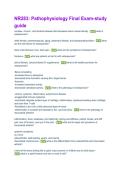
NR283: Pathophysiology Final Exam-study
guide
complex, chronic, multi factorial disease that decreases bone mineral density - ✅-what is
osteoporosis?
white female, postmenopausal, aging, sedentary lifestyle, and hyperparathyroidism - -what
are the risk factors for osteoporosis?
silent until fractures occur, back pain - -what are the symptoms of osteoporosis?
fractures - -what are patients at risk for with osteoporosis?
active lifestyle, calcium/vitamin D supplements - -what is the health promotion for
osteoporosis?
-Bone remodeling
-increased bone re absorption
-decreased bone formation causing thin, fragile bones
-fractures.
-Increased osteoclast activity
-decreased osteoblast activity. - -what is the pathology of osteoporosis?
-chronic, systemic, inflammatory autoimmune disease
-exaggerated immune response
-neutrophils degrade surface layer of cartilage -inflammatory cytokines breaking down cartilage
and bone then T-cells
-fibroblasts to turn into a thick abnormal layer of tissue
-inflammation is constant and spreads to ALL synovial joints - -what is the pathology of
rheumatoid arthritis?
inflammation, fever, weakness, joint deformity, aching and stiffness, painful, tender, and stiff
joint, loss of function, and cyst in the joint. - -what are the signs and symptoms of
rheumatoid arthritis?
systemic symptoms
ex.) fever
osteoarthritis: load bearing, sports, and trauma
rheumatoid: Autoimmune - -what is the differentiation from osteoarthritis and rheumatoid
arthritis?
a twist of the bone looking like a spiral, most common in children due to child abuse -
-what is a spiral fracture and who is most at risk?
83_
NR283_
Pathophysiology
NR283_
Pathophysiology
Pathophysiology
Final Exam-study
Final Exam-study
Final Exam-study
guide.pdf!@@@@@@@@!!!!!!!!!!!!!!!!!!!!!!!!!!!!!!!!!!!!!!!!1!!!!!!!!!!!!!!!!!!!!!!!!!!!!!!!!!!!!!!!!!!!!!!!!!!!!!!!!!!1
guide.pdf!@@@@@@@@!!!!!!!!!!!!!!!!!!!!!!!!!!!!!!!!!!!!!!!!1!!!!!!!!!!!!!!!!!!!!!!!!!!!!!!!!!!!!!!!!!!!!!!!!!!!!!!!!!!1
guide.pdf!@@@@@@@@!!!!!!!!!!!!!!!!!!!!!!!!!!!!!!!!!!!!!!!!1!!!!!!!!!!!!!!!!!!!!!!!!!!!!!!!!!!!!!!!!!!!!!!!!!!!!
,83_
NR283_
Pathophysiology
NR283_
Pathophysiology
Pathophysiology
Final Exam-study
Final Exam-study
Final Exam-study
guide.pdf!@@@@@@@@!!!!!!!!!!!!!!!!!!!!!!!!!!!!!!!!!!!!!!!!1!!!!!!!!!!!!!!!!!!!!!!!!!!!!!!!!!!!!!!!!!!!!!!!!!!!!!!!!!!1
guide.pdf!@@@@@@@@!!!!!!!!!!!!!!!!!!!!!!!!!!!!!!!!!!!!!!!!1!!!!!!!!!!!!!!!!!!!!!!!!!!!!!!!!!!!!!!!!!!!!!!!!!!!!!!!!!!1
guide.pdf!@@@@@@@@!!!!!!!!!!!!!!!!!!!!!!!!!!!!!!!!!!!!!!!!1!!!!!!!!!!!!!!!!!!!!!!!!!!!!!!!!!!!!!!!!!!!!!!!!!!!!
Rest
Ice
✅
Compression
Elevate - -what does RICE stand for in regards to injury?
Decrease pain threshold=increased pain sensation
ex.) Sun burn - -what do prostaglandin, histamine, and cytokine do for the body?
reduce translation of pain
ex) labor - -what does seranin and GABA do for the body?
prevent transmission of pain signals
ex.) exercise - -what do endorphins do for the body?
-what pathway of pain is Efferent?
CNS to PNS
what to do with the pain -
-what pathway of pain is Afferent?
PNS to CNS
processed by the brain -
amount of pain body can handle before you involuntarily remove the stimuli - -what is pain
tolerance?
-what is pain threshold?
*same for everyone*
Minimum amount of stimuli it takes to perceive pain -
-what is pain perception?
brain interprets the signal -
signal goes to the CNS - -what is the role of pain transmission?
nociceptors pick up pain signals - -what is the role of pain transduction?
transmits pain - -what is the role of nociceptors?
chemicals the nervous system use to communicate - -what are neurotransmitters?
increased or decreased transmissions of pain signals (manages pain) - -what is
modulation of pain?
dysfunction of the nervous system?
ex.) fibromyalgia - -what is neuropathic pain?
pain where the real issue is NOT located
83_
NR283_
Pathophysiology
NR283_
Pathophysiology
Pathophysiology
Final Exam-study
Final Exam-study
Final Exam-study
guide.pdf!@@@@@@@@!!!!!!!!!!!!!!!!!!!!!!!!!!!!!!!!!!!!!!!!1!!!!!!!!!!!!!!!!!!!!!!!!!!!!!!!!!!!!!!!!!!!!!!!!!!!!!!!!!!1
guide.pdf!@@@@@@@@!!!!!!!!!!!!!!!!!!!!!!!!!!!!!!!!!!!!!!!!1!!!!!!!!!!!!!!!!!!!!!!!!!!!!!!!!!!!!!!!!!!!!!!!!!!!!!!!!!!1
guide.pdf!@@@@@@@@!!!!!!!!!!!!!!!!!!!!!!!!!!!!!!!!!!!!!!!!1!!!!!!!!!!!!!!!!!!!!!!!!!!!!!!!!!!!!!!!!!!!!!!!!!!!!
NR283_
Pathophysiology
NR283_
Pathophysiology
Pathophysiology
Final Exam-study
Final Exam-study
Final Exam-study
guide.pdf!@@@@@@@@!!!!!!!!!!!!!!!!!!!!!!!!!!!!!!!!!!!!!!!!1!!!!!!!!!!!!!!!!!!!!!!!!!!!!!!!!!!!!!!!!!!!!!!!!!!!!!!!!!!1
guide.pdf!@@@@@@@@!!!!!!!!!!!!!!!!!!!!!!!!!!!!!!!!!!!!!!!!1!!!!!!!!!!!!!!!!!!!!!!!!!!!!!!!!!!!!!!!!!!!!!!!!!!!!!!!!!!1
guide.pdf!@@@@@@@@!!!!!!!!!!!!!!!!!!!!!!!!!!!!!!!!!!!!!!!!1!!!!!!!!!!!!!!!!!!!!!!!!!!!!!!!!!!!!!!!!!!!!!!!!!!!!
NR283: Pathophysiology Final Exam-study
guide
complex, chronic, multi factorial disease that decreases bone mineral density - ✅-what is
osteoporosis?
white female, postmenopausal, aging, sedentary lifestyle, and hyperparathyroidism - -what
are the risk factors for osteoporosis?
silent until fractures occur, back pain - -what are the symptoms of osteoporosis?
fractures - -what are patients at risk for with osteoporosis?
active lifestyle, calcium/vitamin D supplements - -what is the health promotion for
osteoporosis?
-Bone remodeling
-increased bone re absorption
-decreased bone formation causing thin, fragile bones
-fractures.
-Increased osteoclast activity
-decreased osteoblast activity. - -what is the pathology of osteoporosis?
-chronic, systemic, inflammatory autoimmune disease
-exaggerated immune response
-neutrophils degrade surface layer of cartilage -inflammatory cytokines breaking down cartilage
and bone then T-cells
-fibroblasts to turn into a thick abnormal layer of tissue
-inflammation is constant and spreads to ALL synovial joints - -what is the pathology of
rheumatoid arthritis?
inflammation, fever, weakness, joint deformity, aching and stiffness, painful, tender, and stiff
joint, loss of function, and cyst in the joint. - -what are the signs and symptoms of
rheumatoid arthritis?
systemic symptoms
ex.) fever
osteoarthritis: load bearing, sports, and trauma
rheumatoid: Autoimmune - -what is the differentiation from osteoarthritis and rheumatoid
arthritis?
a twist of the bone looking like a spiral, most common in children due to child abuse -
-what is a spiral fracture and who is most at risk?
83_
NR283_
Pathophysiology
NR283_
Pathophysiology
Pathophysiology
Final Exam-study
Final Exam-study
Final Exam-study
guide.pdf!@@@@@@@@!!!!!!!!!!!!!!!!!!!!!!!!!!!!!!!!!!!!!!!!1!!!!!!!!!!!!!!!!!!!!!!!!!!!!!!!!!!!!!!!!!!!!!!!!!!!!!!!!!!1
guide.pdf!@@@@@@@@!!!!!!!!!!!!!!!!!!!!!!!!!!!!!!!!!!!!!!!!1!!!!!!!!!!!!!!!!!!!!!!!!!!!!!!!!!!!!!!!!!!!!!!!!!!!!!!!!!!1
guide.pdf!@@@@@@@@!!!!!!!!!!!!!!!!!!!!!!!!!!!!!!!!!!!!!!!!1!!!!!!!!!!!!!!!!!!!!!!!!!!!!!!!!!!!!!!!!!!!!!!!!!!!!
,83_
NR283_
Pathophysiology
NR283_
Pathophysiology
Pathophysiology
Final Exam-study
Final Exam-study
Final Exam-study
guide.pdf!@@@@@@@@!!!!!!!!!!!!!!!!!!!!!!!!!!!!!!!!!!!!!!!!1!!!!!!!!!!!!!!!!!!!!!!!!!!!!!!!!!!!!!!!!!!!!!!!!!!!!!!!!!!1
guide.pdf!@@@@@@@@!!!!!!!!!!!!!!!!!!!!!!!!!!!!!!!!!!!!!!!!1!!!!!!!!!!!!!!!!!!!!!!!!!!!!!!!!!!!!!!!!!!!!!!!!!!!!!!!!!!1
guide.pdf!@@@@@@@@!!!!!!!!!!!!!!!!!!!!!!!!!!!!!!!!!!!!!!!!1!!!!!!!!!!!!!!!!!!!!!!!!!!!!!!!!!!!!!!!!!!!!!!!!!!!!
Rest
Ice
✅
Compression
Elevate - -what does RICE stand for in regards to injury?
Decrease pain threshold=increased pain sensation
ex.) Sun burn - -what do prostaglandin, histamine, and cytokine do for the body?
reduce translation of pain
ex) labor - -what does seranin and GABA do for the body?
prevent transmission of pain signals
ex.) exercise - -what do endorphins do for the body?
-what pathway of pain is Efferent?
CNS to PNS
what to do with the pain -
-what pathway of pain is Afferent?
PNS to CNS
processed by the brain -
amount of pain body can handle before you involuntarily remove the stimuli - -what is pain
tolerance?
-what is pain threshold?
*same for everyone*
Minimum amount of stimuli it takes to perceive pain -
-what is pain perception?
brain interprets the signal -
signal goes to the CNS - -what is the role of pain transmission?
nociceptors pick up pain signals - -what is the role of pain transduction?
transmits pain - -what is the role of nociceptors?
chemicals the nervous system use to communicate - -what are neurotransmitters?
increased or decreased transmissions of pain signals (manages pain) - -what is
modulation of pain?
dysfunction of the nervous system?
ex.) fibromyalgia - -what is neuropathic pain?
pain where the real issue is NOT located
83_
NR283_
Pathophysiology
NR283_
Pathophysiology
Pathophysiology
Final Exam-study
Final Exam-study
Final Exam-study
guide.pdf!@@@@@@@@!!!!!!!!!!!!!!!!!!!!!!!!!!!!!!!!!!!!!!!!1!!!!!!!!!!!!!!!!!!!!!!!!!!!!!!!!!!!!!!!!!!!!!!!!!!!!!!!!!!1
guide.pdf!@@@@@@@@!!!!!!!!!!!!!!!!!!!!!!!!!!!!!!!!!!!!!!!!1!!!!!!!!!!!!!!!!!!!!!!!!!!!!!!!!!!!!!!!!!!!!!!!!!!!!!!!!!!1
guide.pdf!@@@@@@@@!!!!!!!!!!!!!!!!!!!!!!!!!!!!!!!!!!!!!!!!1!!!!!!!!!!!!!!!!!!!!!!!!!!!!!!!!!!!!!!!!!!!!!!!!!!!!


