
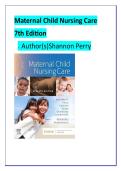
Maternal Child Nursing Care
7th Edition
• Author(s)Shannon Perry
,Question 1
Question:
A maternity nurse is caring for a pregnant patient during a routine
prenatal visit. Which nursing action best reflects a contemporary,
patient-centered approach to maternity care?
A. Provide the same teaching plan to every pregnant patient.
B. Encourage the patient to participate in decisions about her care.
C. Limit discussions to information specifically requested by the
provider.
D. Focus primarily on physical findings rather than social concerns.
Correct Answer: B. Encourage the patient to participate in decisions
about her care.
Rationale:
Contemporary maternity nursing emphasizes patient-centered and
family-centered care, including meaningful participation in decisions.
Nurses consider the patient's preferences, values, circumstances, and
health needs rather than using a one-size-fits-all approach.
Why the Other Options Are Incorrect:
A. A standardized framework may guide care, but teaching should be
individualized to the patient's needs, risks, preferences, and level of
,understanding.
C. Nurses have an independent role in assessment, education, advocacy,
and communication and should address relevant patient concerns.
D. Social, emotional, cultural, and environmental factors can
substantially affect maternal and infant outcomes and should be
considered.
Question 2
Question:
A community maternity nurse is planning an outreach program for
pregnant patients who have limited access to prenatal care. Which
intervention most directly addresses a health disparity?
A. Offer prenatal education only during weekday business hours.
B. Provide information about obtaining prenatal services through
accessible community resources.
C. Require all patients to travel to the hospital for every educational
session.
D. Focus the program only on patients who already attend regular
prenatal appointments.
Correct Answer: B. Provide information about obtaining prenatal
services through accessible community resources.
Rationale:
Reducing health disparities involves identifying barriers to care and
improving access to appropriate health services. Connecting patients
with accessible community resources can reduce obstacles related to
transportation, availability, and healthcare access.
, Why the Other Options Are Incorrect:
A. Restricting hours may make services less accessible to patients with
work, transportation, or caregiving responsibilities.
C. Requiring hospital attendance may create additional access barriers.
D. Targeting only patients already receiving care does not address the
needs of populations experiencing limited access.
Question 3
Question:
Which situation best demonstrates an advance in maternity nursing
practice?
A. Increasing reliance on routine interventions for all laboring patients.
B. Using current evidence to individualize maternal and newborn care.
C. Limiting patient teaching to the postpartum period.
D. Replacing nursing assessment with technology whenever possible.
Correct Answer: B. Using current evidence to individualize maternal
and newborn care.
Rationale:
Advances in maternity nursing include evidence-informed practice,
improved assessment, technology used appropriately, patient
education, and individualized care. Technology supports nursing care
but does not eliminate the need for clinical assessment and judgment.
Why the Other Options Are Incorrect:
A. Modern care emphasizes individualized treatment rather than
automatically applying interventions to every patient.
C. Education is needed throughout the maternity experience, including
7th Edition
• Author(s)Shannon Perry
,Question 1
Question:
A maternity nurse is caring for a pregnant patient during a routine
prenatal visit. Which nursing action best reflects a contemporary,
patient-centered approach to maternity care?
A. Provide the same teaching plan to every pregnant patient.
B. Encourage the patient to participate in decisions about her care.
C. Limit discussions to information specifically requested by the
provider.
D. Focus primarily on physical findings rather than social concerns.
Correct Answer: B. Encourage the patient to participate in decisions
about her care.
Rationale:
Contemporary maternity nursing emphasizes patient-centered and
family-centered care, including meaningful participation in decisions.
Nurses consider the patient's preferences, values, circumstances, and
health needs rather than using a one-size-fits-all approach.
Why the Other Options Are Incorrect:
A. A standardized framework may guide care, but teaching should be
individualized to the patient's needs, risks, preferences, and level of
,understanding.
C. Nurses have an independent role in assessment, education, advocacy,
and communication and should address relevant patient concerns.
D. Social, emotional, cultural, and environmental factors can
substantially affect maternal and infant outcomes and should be
considered.
Question 2
Question:
A community maternity nurse is planning an outreach program for
pregnant patients who have limited access to prenatal care. Which
intervention most directly addresses a health disparity?
A. Offer prenatal education only during weekday business hours.
B. Provide information about obtaining prenatal services through
accessible community resources.
C. Require all patients to travel to the hospital for every educational
session.
D. Focus the program only on patients who already attend regular
prenatal appointments.
Correct Answer: B. Provide information about obtaining prenatal
services through accessible community resources.
Rationale:
Reducing health disparities involves identifying barriers to care and
improving access to appropriate health services. Connecting patients
with accessible community resources can reduce obstacles related to
transportation, availability, and healthcare access.
, Why the Other Options Are Incorrect:
A. Restricting hours may make services less accessible to patients with
work, transportation, or caregiving responsibilities.
C. Requiring hospital attendance may create additional access barriers.
D. Targeting only patients already receiving care does not address the
needs of populations experiencing limited access.
Question 3
Question:
Which situation best demonstrates an advance in maternity nursing
practice?
A. Increasing reliance on routine interventions for all laboring patients.
B. Using current evidence to individualize maternal and newborn care.
C. Limiting patient teaching to the postpartum period.
D. Replacing nursing assessment with technology whenever possible.
Correct Answer: B. Using current evidence to individualize maternal
and newborn care.
Rationale:
Advances in maternity nursing include evidence-informed practice,
improved assessment, technology used appropriately, patient
education, and individualized care. Technology supports nursing care
but does not eliminate the need for clinical assessment and judgment.
Why the Other Options Are Incorrect:
A. Modern care emphasizes individualized treatment rather than
automatically applying interventions to every patient.
C. Education is needed throughout the maternity experience, including


