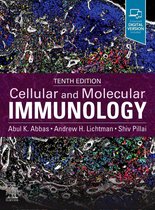
Cellular and Molecular Immunology
English edition by Abul K. Abbas MBBS (Author), Andrew H.
Lichtman MD PhD (Author), & 1 more
10th Edition
,TABLE OF CONTENTS
1. Properties and Overview of Immune Responses
2. Cells and Tissues of the Immune System
3. Leukocyte Circulation and Migration into Tissues
4. Innate Immunity
5. Antibodies and Antigens
6. Antigen Presentation to T Lymphocytes and the Functions of MHC Molecules
7. Immune Receptors and Signal Transduction
8. Lymphocyte Development and Antigen Receptor Gene Rearrangement
9. Activation of T Lymphocytes
10. Differentiation and Functions of CD4+ Effector T Cells
11. Differentiation and Functions of CD8+ Effector T Cells
12. B Cell Activation and Antibody Production
13. Effector Mechanisms of Humoral Immunity
14. Specialized Immunity at Epithelial Barriers and in Immune Privileged Tissues
15. Immunologic Tolerance and Autoimmunity
16. Immunity to Microbes
17. Transplantation Immunology
18. Immunity to Tumors
19. Hypersensitivity Disorders
20. Allergy
21. Congenital and Acquired Immunodeficiencies
,Test Bank: Cellular and Molecular Immunology, 10th Edition (Abbas,
2022)
CHAPTER 1: Properties and Overview of Immune Responses
Multiple Choice Questions
1. Which of the following is the defining feature of adaptive immunity that distinguishes it from innate
immunity?
A) Rapid response to pathogens
B) Use of physical barriers
C) Specificity and memory
D) Recognition of broadly shared molecular patterns
E) Involvement of neutrophils
Answer: C
Rationale: Adaptive immunity is characterized by exquisite specificity for distinct molecules and the
ability to "remember" and respond more vigorously to repeated exposures to the same antigen
(immunologic memory). Innate immunity provides rapid, nonspecific defense mechanisms.
2. A 5-year-old child receives a second dose of the measles, mumps, and rubella (MMR) vaccine.
Compared with the response after the first dose, the secondary immune response is characterized by
all of the following EXCEPT:
A) More rapid antibody production
B) Higher antibody titers
C) Greater affinity of antibodies
D) Predominantly IgM antibody production
E) More robust T cell responses
Answer: D
Rationale: The secondary (anamnestic) immune response is characterized by a predominance of IgG (not
IgM) antibodies, faster kinetics, higher titers, and higher affinity antibodies due to affinity maturation.
IgM predominance is a hallmark of the primary immune response.
3. Which of the following correctly describes the concept of immunologic memory?
A) The innate immune system generates memory cells after each infection
B) The adaptive immune system responds identically to first and subsequent encounters with the same
antigen
, C) Repeated exposure to an antigen leads to faster, more robust, and more effective responses
D) Memory is solely dependent on the persistence of the antigen in the body
E) Memory B cells produce only IgM antibodies
Answer: C
Rationale: Immunologic memory is a cardinal feature of adaptive immunity. Memory cells generated
during a primary response enable a more rapid, larger, and more effective response upon subsequent
encounter with the same antigen.
4. The property of the immune system that prevents it from attacking the host's own tissues is called:
A) Specificity
B) Diversity
C) Self-tolerance
D) Clonal expansion
E) Specialization
Answer: C
Rationale: Self-tolerance refers to the ability of the immune system to recognize and not react against
self-antigens. Failure of self-tolerance leads to autoimmune diseases.
5. Which type of immunity is conferred by the transfer of antibodies from a mother to her fetus
through the placenta?
A) Active immunity
B) Passive immunity
C) Innate immunity
D) Cell-mediated immunity
E) Mucosal immunity
Answer: B
Rationale: Passive immunity involves the transfer of preformed antibodies (or T cells) from an immunized
individual to a naïve host, providing immediate but temporary protection. Transfer of maternal IgG
across the placenta is a classic example of natural passive immunity.
6. Which of the following is a feature of innate immunity?
A) Clonal expansion of lymphocytes
B) Immunologic memory
C) Recognition of pathogen-associated molecular patterns (PAMPs)
D) Generation of high-affinity antibodies
E) Somatic recombination of antigen receptor genes
Answer: C
Rationale: Innate immunity relies on germline-encoded receptors (pattern recognition receptors, or PRRs)
that recognize conserved molecular structures shared by groups of microbes, known as pathogen-
English edition by Abul K. Abbas MBBS (Author), Andrew H.
Lichtman MD PhD (Author), & 1 more
10th Edition
,TABLE OF CONTENTS
1. Properties and Overview of Immune Responses
2. Cells and Tissues of the Immune System
3. Leukocyte Circulation and Migration into Tissues
4. Innate Immunity
5. Antibodies and Antigens
6. Antigen Presentation to T Lymphocytes and the Functions of MHC Molecules
7. Immune Receptors and Signal Transduction
8. Lymphocyte Development and Antigen Receptor Gene Rearrangement
9. Activation of T Lymphocytes
10. Differentiation and Functions of CD4+ Effector T Cells
11. Differentiation and Functions of CD8+ Effector T Cells
12. B Cell Activation and Antibody Production
13. Effector Mechanisms of Humoral Immunity
14. Specialized Immunity at Epithelial Barriers and in Immune Privileged Tissues
15. Immunologic Tolerance and Autoimmunity
16. Immunity to Microbes
17. Transplantation Immunology
18. Immunity to Tumors
19. Hypersensitivity Disorders
20. Allergy
21. Congenital and Acquired Immunodeficiencies
,Test Bank: Cellular and Molecular Immunology, 10th Edition (Abbas,
2022)
CHAPTER 1: Properties and Overview of Immune Responses
Multiple Choice Questions
1. Which of the following is the defining feature of adaptive immunity that distinguishes it from innate
immunity?
A) Rapid response to pathogens
B) Use of physical barriers
C) Specificity and memory
D) Recognition of broadly shared molecular patterns
E) Involvement of neutrophils
Answer: C
Rationale: Adaptive immunity is characterized by exquisite specificity for distinct molecules and the
ability to "remember" and respond more vigorously to repeated exposures to the same antigen
(immunologic memory). Innate immunity provides rapid, nonspecific defense mechanisms.
2. A 5-year-old child receives a second dose of the measles, mumps, and rubella (MMR) vaccine.
Compared with the response after the first dose, the secondary immune response is characterized by
all of the following EXCEPT:
A) More rapid antibody production
B) Higher antibody titers
C) Greater affinity of antibodies
D) Predominantly IgM antibody production
E) More robust T cell responses
Answer: D
Rationale: The secondary (anamnestic) immune response is characterized by a predominance of IgG (not
IgM) antibodies, faster kinetics, higher titers, and higher affinity antibodies due to affinity maturation.
IgM predominance is a hallmark of the primary immune response.
3. Which of the following correctly describes the concept of immunologic memory?
A) The innate immune system generates memory cells after each infection
B) The adaptive immune system responds identically to first and subsequent encounters with the same
antigen
, C) Repeated exposure to an antigen leads to faster, more robust, and more effective responses
D) Memory is solely dependent on the persistence of the antigen in the body
E) Memory B cells produce only IgM antibodies
Answer: C
Rationale: Immunologic memory is a cardinal feature of adaptive immunity. Memory cells generated
during a primary response enable a more rapid, larger, and more effective response upon subsequent
encounter with the same antigen.
4. The property of the immune system that prevents it from attacking the host's own tissues is called:
A) Specificity
B) Diversity
C) Self-tolerance
D) Clonal expansion
E) Specialization
Answer: C
Rationale: Self-tolerance refers to the ability of the immune system to recognize and not react against
self-antigens. Failure of self-tolerance leads to autoimmune diseases.
5. Which type of immunity is conferred by the transfer of antibodies from a mother to her fetus
through the placenta?
A) Active immunity
B) Passive immunity
C) Innate immunity
D) Cell-mediated immunity
E) Mucosal immunity
Answer: B
Rationale: Passive immunity involves the transfer of preformed antibodies (or T cells) from an immunized
individual to a naïve host, providing immediate but temporary protection. Transfer of maternal IgG
across the placenta is a classic example of natural passive immunity.
6. Which of the following is a feature of innate immunity?
A) Clonal expansion of lymphocytes
B) Immunologic memory
C) Recognition of pathogen-associated molecular patterns (PAMPs)
D) Generation of high-affinity antibodies
E) Somatic recombination of antigen receptor genes
Answer: C
Rationale: Innate immunity relies on germline-encoded receptors (pattern recognition receptors, or PRRs)
that recognize conserved molecular structures shared by groups of microbes, known as pathogen-