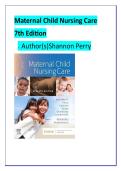
Maternal Child Nursing Care
7th Edition
• Author(s)Shannon Perry
,PART 1: MATERNITY NURSING
UNIT 1: INTRODUCTION TO MATERNITY NURSING
Question 1
Question:
A nurse is reviewing changes in maternity nursing practice over the past
several decades. Which development best reflects a contemporary
approach to maternity care?
A. Increasing separation of newborns from their parents after birth
B. Greater emphasis on family participation in maternal and newborn
care
C. Greater reliance on routine interventions for all pregnant clients
D. Limiting prenatal education to clients with high-risk pregnancies
Correct Answer: B. Greater emphasis on family participation in
maternal and newborn care
Rationale:
Contemporary maternity nursing increasingly emphasizes family-
centered care, recognizing that pregnancy, childbirth, and the
postpartum period affect the entire family. Nurses support informed
participation, education, communication, and collaboration with
parents and other family members.
Why the Other Options Are Incorrect:
A. Routine separation conflicts with family-centered care and can
interfere with early parent-infant interaction.
C. Contemporary practice favors individualized care based on the needs,
,risks, and preferences of the client rather than routine interventions for
everyone.
D. Prenatal education is important for all pregnant clients as part of
health promotion and preparation for childbirth and parenthood.
Question 2
Question:
A nurse working in a maternity clinic is asked to describe a major goal of
21st-century maternity nursing. Which response is most appropriate?
A. Providing identical care plans for clients with similar diagnoses
B. Focusing primarily on treatment after complications occur
C. Integrating health promotion, prevention, and individualized care
across the maternity continuum
D. Reducing the involvement of clients in decisions about their care
Correct Answer: C. Integrating health promotion, prevention, and
individualized care across the maternity continuum
Rationale:
Modern maternity nursing extends beyond management of
complications. It includes prevention, health promotion, risk
assessment, education, early recognition of problems, and
individualized care before, during, and after childbirth.
Why the Other Options Are Incorrect:
A. Clients may have different risks, preferences, cultural backgrounds,
and support systems even when their diagnoses are similar.
B. Contemporary care emphasizes prevention and early intervention
rather than waiting for complications.
, D. Client participation and shared decision-making are important
components of contemporary maternity care.
Question 3
Question:
A maternity nurse is planning care for a population with historically
poorer maternal and infant outcomes. Which nursing action best
addresses health disparities?
A. Providing the same educational materials to every client regardless
of need
B. Identifying barriers to care and connecting clients with appropriate
resources
C. Referring all clients to the same community agency
D. Focusing only on clinical findings documented during the current visit
Correct Answer: B. Identifying barriers to care and connecting clients
with appropriate resources
Rationale:
Reducing health disparities requires recognition of barriers such as
limited access to care, transportation problems, financial constraints,
health literacy challenges, and social factors. Nurses can help connect
clients and families with appropriate healthcare and community
resources.
Why the Other Options Are Incorrect:
A. Standardized education may fail to address differences in health
literacy, language, culture, and access to resources.
C. Resource needs vary among individuals and communities; a single
7th Edition
• Author(s)Shannon Perry
,PART 1: MATERNITY NURSING
UNIT 1: INTRODUCTION TO MATERNITY NURSING
Question 1
Question:
A nurse is reviewing changes in maternity nursing practice over the past
several decades. Which development best reflects a contemporary
approach to maternity care?
A. Increasing separation of newborns from their parents after birth
B. Greater emphasis on family participation in maternal and newborn
care
C. Greater reliance on routine interventions for all pregnant clients
D. Limiting prenatal education to clients with high-risk pregnancies
Correct Answer: B. Greater emphasis on family participation in
maternal and newborn care
Rationale:
Contemporary maternity nursing increasingly emphasizes family-
centered care, recognizing that pregnancy, childbirth, and the
postpartum period affect the entire family. Nurses support informed
participation, education, communication, and collaboration with
parents and other family members.
Why the Other Options Are Incorrect:
A. Routine separation conflicts with family-centered care and can
interfere with early parent-infant interaction.
C. Contemporary practice favors individualized care based on the needs,
,risks, and preferences of the client rather than routine interventions for
everyone.
D. Prenatal education is important for all pregnant clients as part of
health promotion and preparation for childbirth and parenthood.
Question 2
Question:
A nurse working in a maternity clinic is asked to describe a major goal of
21st-century maternity nursing. Which response is most appropriate?
A. Providing identical care plans for clients with similar diagnoses
B. Focusing primarily on treatment after complications occur
C. Integrating health promotion, prevention, and individualized care
across the maternity continuum
D. Reducing the involvement of clients in decisions about their care
Correct Answer: C. Integrating health promotion, prevention, and
individualized care across the maternity continuum
Rationale:
Modern maternity nursing extends beyond management of
complications. It includes prevention, health promotion, risk
assessment, education, early recognition of problems, and
individualized care before, during, and after childbirth.
Why the Other Options Are Incorrect:
A. Clients may have different risks, preferences, cultural backgrounds,
and support systems even when their diagnoses are similar.
B. Contemporary care emphasizes prevention and early intervention
rather than waiting for complications.
, D. Client participation and shared decision-making are important
components of contemporary maternity care.
Question 3
Question:
A maternity nurse is planning care for a population with historically
poorer maternal and infant outcomes. Which nursing action best
addresses health disparities?
A. Providing the same educational materials to every client regardless
of need
B. Identifying barriers to care and connecting clients with appropriate
resources
C. Referring all clients to the same community agency
D. Focusing only on clinical findings documented during the current visit
Correct Answer: B. Identifying barriers to care and connecting clients
with appropriate resources
Rationale:
Reducing health disparities requires recognition of barriers such as
limited access to care, transportation problems, financial constraints,
health literacy challenges, and social factors. Nurses can help connect
clients and families with appropriate healthcare and community
resources.
Why the Other Options Are Incorrect:
A. Standardized education may fail to address differences in health
literacy, language, culture, and access to resources.
C. Resource needs vary among individuals and communities; a single