
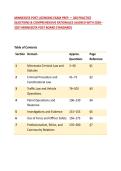
MINNESOTA POST LICENSING EXAM PREP — 200 PRACTICE
QUESTIONS & COMPREHENSIVE RATIONALES ALIGNED WITH 2026–
2027 MINNESOTA POST BOARD STANDARDS
Table of Contents
Section Domain Approx. Page
Questions Reference
1 Minnesota Criminal Law and 1–40 §1
Statutes
2 Criminal Procedure and 41–75 §2
Constitutional Law
3 Traffic Law and Vehicle 76–105 §3
Operations
4 Patrol Operations and 106–130 §4
Response
5 Investigations and Evidence 131–155 §5
6 Use of Force and Officer Safety 156–175 §6
7 Professionalism, Ethics, and 176–200 §7
Community Relations
,SECTION 1 | Minnesota Criminal Law and Statutes
Questions 1–40 · Criminal Code (Ch. 609), Elements of Crimes,
Statutory Definitions, Classification of Crimes
Q1. Under Minnesota Statutes § 609.02, a crime punishable by
imprisonment for not more than 90 days and/or a fine of not more than
$1,000 is classified as:
A. A petty misdemeanor
B. A gross misdemeanor
C. A felony
D. A misdemeanor
Correct Answer: D
Rationale: Minnesota Statutes § 609.02, subd. 3, defines a
misdemeanor as a crime for which a sentence of not more than 90 days
and/or a fine of not more than $1,000 may be imposed. A petty
misdemeanor does not constitute a crime and carries only a fine up to
$300. A gross misdemeanor carries a maximum sentence of more than
90 days but not more than one year. A felony carries a sentence of more
than one year.
Q2. Which of the following best describes the mens rea element of a
criminal offense under Minnesota law?
,A. The physical act or voluntary conduct that constitutes the prohibited
behavior
B. The causal link between the defendant's conduct and the resulting
harm
C. The mental state or culpable intent with which the defendant
committed the act
D. The actual injury or damage suffered by the victim of the offense
Correct Answer: C
Rationale: Mens rea refers to the defendant's mental state — intent,
knowledge, recklessness, or negligence — at the time of the prohibited
act. Option A describes actus reus. Option B describes
concurrence/causation. Option D describes the harm element.
Q3. A defendant is charged with an offense where the maximum
confinement is 365 days. Under Minnesota's classification scheme, this
offense is properly classified as:
A. A misdemeanor
B. A felony
C. A gross misdemeanor
D. A petty misdemeanor
Correct Answer: C
Rationale: Under § 609.02, subd. 4, a gross misdemeanor is any crime
that is not a felony or misdemeanor and carries a maximum sentence of
more than 90 days but not more than one year (365 days).
, Q4. Officer Jensen responds to a report of a stabbing. The victim dies.
The suspect admits he planned the killing for three weeks and used a
hunting knife. Under Minnesota law, the suspect should be charged
with murder in the first degree under § 609.185 because the killing was:
A. Committed in a particularly heinous manner
B. Premeditated, meaning the defendant formed intent to kill prior to
the act
C. Caused during the commission of a burglary
D. Performed with extreme indifference to human life
Correct Answer: B
Rationale: Minnesota Statutes § 609.185, subd. 1(1), defines first-
degree murder as causing the death of a human being with
premeditation and with intent to effect death. Premeditation requires
some period of reflection, however brief, before the killing. Three weeks
of planning clearly establishes premeditation.
Q5. A defendant is charged with second-degree intentional murder.
Which of the following elements must the state prove under § 609.19,
subd. 1?
A. The defendant acted with premeditation
B. The defendant caused death with intent to effect death, but
without premeditation
C. The defendant acted with extreme indifference to human life
QUESTIONS & COMPREHENSIVE RATIONALES ALIGNED WITH 2026–
2027 MINNESOTA POST BOARD STANDARDS
Table of Contents
Section Domain Approx. Page
Questions Reference
1 Minnesota Criminal Law and 1–40 §1
Statutes
2 Criminal Procedure and 41–75 §2
Constitutional Law
3 Traffic Law and Vehicle 76–105 §3
Operations
4 Patrol Operations and 106–130 §4
Response
5 Investigations and Evidence 131–155 §5
6 Use of Force and Officer Safety 156–175 §6
7 Professionalism, Ethics, and 176–200 §7
Community Relations
,SECTION 1 | Minnesota Criminal Law and Statutes
Questions 1–40 · Criminal Code (Ch. 609), Elements of Crimes,
Statutory Definitions, Classification of Crimes
Q1. Under Minnesota Statutes § 609.02, a crime punishable by
imprisonment for not more than 90 days and/or a fine of not more than
$1,000 is classified as:
A. A petty misdemeanor
B. A gross misdemeanor
C. A felony
D. A misdemeanor
Correct Answer: D
Rationale: Minnesota Statutes § 609.02, subd. 3, defines a
misdemeanor as a crime for which a sentence of not more than 90 days
and/or a fine of not more than $1,000 may be imposed. A petty
misdemeanor does not constitute a crime and carries only a fine up to
$300. A gross misdemeanor carries a maximum sentence of more than
90 days but not more than one year. A felony carries a sentence of more
than one year.
Q2. Which of the following best describes the mens rea element of a
criminal offense under Minnesota law?
,A. The physical act or voluntary conduct that constitutes the prohibited
behavior
B. The causal link between the defendant's conduct and the resulting
harm
C. The mental state or culpable intent with which the defendant
committed the act
D. The actual injury or damage suffered by the victim of the offense
Correct Answer: C
Rationale: Mens rea refers to the defendant's mental state — intent,
knowledge, recklessness, or negligence — at the time of the prohibited
act. Option A describes actus reus. Option B describes
concurrence/causation. Option D describes the harm element.
Q3. A defendant is charged with an offense where the maximum
confinement is 365 days. Under Minnesota's classification scheme, this
offense is properly classified as:
A. A misdemeanor
B. A felony
C. A gross misdemeanor
D. A petty misdemeanor
Correct Answer: C
Rationale: Under § 609.02, subd. 4, a gross misdemeanor is any crime
that is not a felony or misdemeanor and carries a maximum sentence of
more than 90 days but not more than one year (365 days).
, Q4. Officer Jensen responds to a report of a stabbing. The victim dies.
The suspect admits he planned the killing for three weeks and used a
hunting knife. Under Minnesota law, the suspect should be charged
with murder in the first degree under § 609.185 because the killing was:
A. Committed in a particularly heinous manner
B. Premeditated, meaning the defendant formed intent to kill prior to
the act
C. Caused during the commission of a burglary
D. Performed with extreme indifference to human life
Correct Answer: B
Rationale: Minnesota Statutes § 609.185, subd. 1(1), defines first-
degree murder as causing the death of a human being with
premeditation and with intent to effect death. Premeditation requires
some period of reflection, however brief, before the killing. Three weeks
of planning clearly establishes premeditation.
Q5. A defendant is charged with second-degree intentional murder.
Which of the following elements must the state prove under § 609.19,
subd. 1?
A. The defendant acted with premeditation
B. The defendant caused death with intent to effect death, but
without premeditation
C. The defendant acted with extreme indifference to human life


