
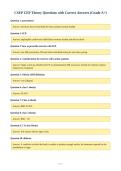
CSEP CEP Theory Questions with Correct Answers (Grade A+)
Question 1: pacemakers
Answer: electronic devices that help the heart maintain normal rhythm
Question 2: ICD
Answer: implantable cardioverter-defibrillator monitor rhythm and deliver shock
Question 3: how to prescribe exercise with ICD
Answer: max HR prescription 10 beats below threshold setting for anti tacky pacing
Question 4: considerations for exercise with cardiac patients
Answer: longer warm ups should meet PA recommendations HR not always reliable for intensity regular
monitory/re-evaluation
Question 5: Obesity BMI definition
Answer: over 30kg/m2
Question 6: class 1 obesity
Answer: 30-34.9
Question 7: Class 2 obesity
Answer: BMI 35-39.9
Question 8: class 3 obesity
Answer: BMI > 40
Question 9: 5 As for Obesity
Answer: Ask Assess Advise Agree Asist
Question 10: diabetes
Answer: A condition in which the body is unable to produce enough insulin, the hormone required for the
metabolism of sugar
Page 1
, Question 11: Type 1 diabetes
Answer: Diabetes of a form that usually develops during childhood or adolescence and is characterized by a
severe deficiency of insulin, leading to high blood glucose levels. destruction of insulin cells
Question 12: Type 2 diabetes
Answer: Diabetes of a form that develops especially in adults and most often obese individuals and that is
characterized by high blood glucose resulting from impaired insulin utilization coupled with the body's
inability to compensate with increased insulin production. can't properly use the insulin made by the body or
cannot produce enough
Question 13: HbA1C
Answer: glycosylated hemoglobin average blood sugars over 3 months
Question 14: Normal HbA1C
Answer: <5.7%
Question 15: pre diabetes HbA1c
Answer: 5.7-6.4%
Question 16: diabetes HbA1C
Answer: >6.5%
Question 17: FPG
Answer: fasting plasma glucose
Question 18: FPG normal values
Answer: <100mg/dL (5.6mm/L)
Question 19: Prediabetes FPG
Answer: 100-125mg/Dl 5.6-6.9mm/L
Question 20: diabetes FPG
Answer: >126 7mmol
Page 2
Question 1: pacemakers
Answer: electronic devices that help the heart maintain normal rhythm
Question 2: ICD
Answer: implantable cardioverter-defibrillator monitor rhythm and deliver shock
Question 3: how to prescribe exercise with ICD
Answer: max HR prescription 10 beats below threshold setting for anti tacky pacing
Question 4: considerations for exercise with cardiac patients
Answer: longer warm ups should meet PA recommendations HR not always reliable for intensity regular
monitory/re-evaluation
Question 5: Obesity BMI definition
Answer: over 30kg/m2
Question 6: class 1 obesity
Answer: 30-34.9
Question 7: Class 2 obesity
Answer: BMI 35-39.9
Question 8: class 3 obesity
Answer: BMI > 40
Question 9: 5 As for Obesity
Answer: Ask Assess Advise Agree Asist
Question 10: diabetes
Answer: A condition in which the body is unable to produce enough insulin, the hormone required for the
metabolism of sugar
Page 1
, Question 11: Type 1 diabetes
Answer: Diabetes of a form that usually develops during childhood or adolescence and is characterized by a
severe deficiency of insulin, leading to high blood glucose levels. destruction of insulin cells
Question 12: Type 2 diabetes
Answer: Diabetes of a form that develops especially in adults and most often obese individuals and that is
characterized by high blood glucose resulting from impaired insulin utilization coupled with the body's
inability to compensate with increased insulin production. can't properly use the insulin made by the body or
cannot produce enough
Question 13: HbA1C
Answer: glycosylated hemoglobin average blood sugars over 3 months
Question 14: Normal HbA1C
Answer: <5.7%
Question 15: pre diabetes HbA1c
Answer: 5.7-6.4%
Question 16: diabetes HbA1C
Answer: >6.5%
Question 17: FPG
Answer: fasting plasma glucose
Question 18: FPG normal values
Answer: <100mg/dL (5.6mm/L)
Question 19: Prediabetes FPG
Answer: 100-125mg/Dl 5.6-6.9mm/L
Question 20: diabetes FPG
Answer: >126 7mmol
Page 2


