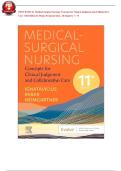
TEST BANK for Medical-Surgical Nursing: Concepts for Clinical Judgment and Collaborative
Care 11th Edition by Donna D. Ignatavicius, All chapters 1 - 74
,
,Chapter 01: Overview of Professional Nursing Concepts for Medical- js js js js js js js js
js Surgical Nursing js
MULTIPLE CHOICE js
1. A nurse wishes to provide client-
js js js js js
centered care in all interactions. Which action by the nurse best demonstrates this concept?
js js js js js js js js js js js js js
a. Assesses for cultural influences affecting health care js js js js js js
b. Ensures that all the clients basic needs are met js js js js js js js js
c. Tells the client and family about all upcoming tests
js js js js js js js js
d. Thoroughly orients the client and family to the room js js js js js js js js
ANSWER: : A jsjs j s
Competency in client- js js
focused care is demonstrated when the nurse focuses on communication, culture, respect compassion, client educat
js js js js js js js js js js js js js js
ion, and empowerment. By assessing the effect of the clients culture on health care, this nurse is practicing client-
js js js js js js js js js js js js js js js js js js
focused care. Providing for basic needs does not demonstrate this competence. Simply telling the client about all
js js js js js js js js js js js js js js js js js
upcoming tests is not providing empowering education. Orienting the client and family to the room is an important
js js js js js js js js js js js js js js js js js
js safety measure, but not directly related to demonstrating client-centered care.
js js js js js js js js js
DIF: Understanding/Comprehension REF: 3
js js js
KEY: Patient- js
centered care| culture MSC: Integrated Process: Caring NOT: Client N
js js js js js js js js js
eeds Category: Psychosocial Integrity
js js js
2. A nurse is caring for a postoperative client on the surgical unit. The clients blood pressure was 142/76 mm Hg
js js js js js js js js js js js js js js js js js js js js
30 minutes ago, and now is 88/50 mm Hg. What action by the nurse is best?
js js js js js js js js js js js js js js js
a. Call the Rapid Response Team. js js js js
b. Document and continue to monitor. js js js js
c. Notify the primary care provider. js js js js
d. Repeat blood pressure measurement in 15 minutes. js js js js js js
ANSWER: : A jsjs j s
The purpose of the Rapid Response Team (RRT) is to intervene when clients are deteriorating before they suff
js js js js js js js js js js js js js js js js js
er either respiratory or cardiac arrest. Since the client has manifested a significant change, the nurse should call the
js js js js js js js js js js js js js js js js js js js
RRT. Changes in blood pressure, mental status, heart rate, and pain are particularly significant.
js js js js js js js js js js js js js
Documentation is vital, but the nurse must do more than document. The primary care provider should be notif
js js js js js js js js js js js js js js js js js
ied, but this is not the priority over calling the RRT. The clients blood pressure should be reassessed frequentl
js js js js js js js js js js js js js js js js js js
y, but the priority is getting the rapid care to the client.
js js js js js js js js js js js
DIF: Applying/Application REF: 3
js js js
KEY: Rapid Response Team (RRT)| medical emergencies MS
js js js js js js j s
C: Integrated Process: Communication and Documentation
js js js js js
, NOT: Client Needs Category: Physiological Integrity: Physiological Adaptation
js js js js js js js
3. A nurse is orienting a new client and family to the inpatient unit. What information does the nurse provide to help
js js js js js js js js js js js js js js js js js js js js js
the client promote his or her own safety?
js js js js js js js
a. Encourage the client and family to be active partners. js js js js js js js js
b. Have the client monitor hand hygiene in caregivers.
js js js js js js js
c. Offer the family the opportunity to stay with the client.
js js js js js js js js js
d. Tell the client to always wear his or her armband.
js js js js js js js js js
ANSWER: : A jsjs j s
Each action could be important for the client or family to perform. However, encouraging the client to be activ
js js js js js js js js js js js js js js js js js js
e in his or her health care as a partner is the most critical. The other actions are very limited in scope and do not provi
js js js js js js js js js js js js js js js js js js js js js js js js js
de the broad protection that being active and involved does.
js js js js js js js js js
DIF: Understanding/Comprehension REF: 3
js js js js
KEY: Patient safety js js
Care 11th Edition by Donna D. Ignatavicius, All chapters 1 - 74
,
,Chapter 01: Overview of Professional Nursing Concepts for Medical- js js js js js js js js
js Surgical Nursing js
MULTIPLE CHOICE js
1. A nurse wishes to provide client-
js js js js js
centered care in all interactions. Which action by the nurse best demonstrates this concept?
js js js js js js js js js js js js js
a. Assesses for cultural influences affecting health care js js js js js js
b. Ensures that all the clients basic needs are met js js js js js js js js
c. Tells the client and family about all upcoming tests
js js js js js js js js
d. Thoroughly orients the client and family to the room js js js js js js js js
ANSWER: : A jsjs j s
Competency in client- js js
focused care is demonstrated when the nurse focuses on communication, culture, respect compassion, client educat
js js js js js js js js js js js js js js
ion, and empowerment. By assessing the effect of the clients culture on health care, this nurse is practicing client-
js js js js js js js js js js js js js js js js js js
focused care. Providing for basic needs does not demonstrate this competence. Simply telling the client about all
js js js js js js js js js js js js js js js js js
upcoming tests is not providing empowering education. Orienting the client and family to the room is an important
js js js js js js js js js js js js js js js js js
js safety measure, but not directly related to demonstrating client-centered care.
js js js js js js js js js
DIF: Understanding/Comprehension REF: 3
js js js
KEY: Patient- js
centered care| culture MSC: Integrated Process: Caring NOT: Client N
js js js js js js js js js
eeds Category: Psychosocial Integrity
js js js
2. A nurse is caring for a postoperative client on the surgical unit. The clients blood pressure was 142/76 mm Hg
js js js js js js js js js js js js js js js js js js js js
30 minutes ago, and now is 88/50 mm Hg. What action by the nurse is best?
js js js js js js js js js js js js js js js
a. Call the Rapid Response Team. js js js js
b. Document and continue to monitor. js js js js
c. Notify the primary care provider. js js js js
d. Repeat blood pressure measurement in 15 minutes. js js js js js js
ANSWER: : A jsjs j s
The purpose of the Rapid Response Team (RRT) is to intervene when clients are deteriorating before they suff
js js js js js js js js js js js js js js js js js
er either respiratory or cardiac arrest. Since the client has manifested a significant change, the nurse should call the
js js js js js js js js js js js js js js js js js js js
RRT. Changes in blood pressure, mental status, heart rate, and pain are particularly significant.
js js js js js js js js js js js js js
Documentation is vital, but the nurse must do more than document. The primary care provider should be notif
js js js js js js js js js js js js js js js js js
ied, but this is not the priority over calling the RRT. The clients blood pressure should be reassessed frequentl
js js js js js js js js js js js js js js js js js js
y, but the priority is getting the rapid care to the client.
js js js js js js js js js js js
DIF: Applying/Application REF: 3
js js js
KEY: Rapid Response Team (RRT)| medical emergencies MS
js js js js js js j s
C: Integrated Process: Communication and Documentation
js js js js js
, NOT: Client Needs Category: Physiological Integrity: Physiological Adaptation
js js js js js js js
3. A nurse is orienting a new client and family to the inpatient unit. What information does the nurse provide to help
js js js js js js js js js js js js js js js js js js js js js
the client promote his or her own safety?
js js js js js js js
a. Encourage the client and family to be active partners. js js js js js js js js
b. Have the client monitor hand hygiene in caregivers.
js js js js js js js
c. Offer the family the opportunity to stay with the client.
js js js js js js js js js
d. Tell the client to always wear his or her armband.
js js js js js js js js js
ANSWER: : A jsjs j s
Each action could be important for the client or family to perform. However, encouraging the client to be activ
js js js js js js js js js js js js js js js js js js
e in his or her health care as a partner is the most critical. The other actions are very limited in scope and do not provi
js js js js js js js js js js js js js js js js js js js js js js js js js
de the broad protection that being active and involved does.
js js js js js js js js js
DIF: Understanding/Comprehension REF: 3
js js js js
KEY: Patient safety js js