

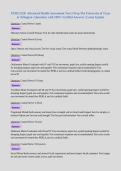
NURS 5220: Advanced Health Assessment Test 2 Prep The University of Texas
at Arlington | Questions with 100% Verified Answers | Latest Update
Question: Cranial Nerve I (one)
Answer:
Olfactory Sense of smell Sensory Test for odor identification (rule out nasal obstruction)
Question: Cranial Nerve II (two)
Answer:
Optic Sensory and visual acuity Test for visual acuity Test visual fields Perform ophthalmologic exam
Question: Cranial Nerve III (three)
Answer:
Oculomotor Motor Evaluated with IV and VI Eye movement, pupil size, eyelid opening Inspect eyelid
for drooping Inspect pupil size and equality Test consensual response and accommodation Test
extra-ocular eye movement So tested thru PERLA and six cardinal fields Eyelid dooping/palsy is cranial
nerve III
Question: Cranial Nerve IV (four)
Answer:
Trochlear Motor Evaluated with III and VI Eye movement, pupil size, eyelid opening Inspect eyelid for
drooping Inspect pupil size and equality Test consensual response and accommodation Test extra-ocular
eye movement So tested thru PERLA and six cardinal fields
Question: Cranial Nerve V (five)
Answer:
Trigeminal Mixed (both sensory and motor) Jaw strength, ask to clench teeth Inspect face for atrophy or
tremors Palpate jaw for tone and strength Test for pain and sensation Test corneal reflex
Question: Cranial Nerve VI (six)
Answer:
Abducens Motor Evaluated with III and IV Eye movement, pupil size, eyelid opening Inspect eyelid for
drooping Inspect pupil size and equality Test consensual response and accommodation Test extra-ocular
eye movement So tested thru PERLA and six cardinal fields
Question: Cranial Nerve VII (seven)
Answer:
Facial Mixed (both sensory and motor) Facial expressions and taste Inspect facial symmetry Test tongue
for salt and sweet Assess smile, frown, puff out cheeks
,Question: Cranial Nerve VIII (eight)
Answer:
Acoustic Sensory Hearing and balance Test hearing (whisper test) Compare bone and air conduction
Test for sound lateralization
Question: Cranial Nerve IX (nine)
Answer:
Glossopharyngeal Mixed (both sensory and motor) Taste and swallowing Test tongue for sour and bitter
Test gag reflex and swallowing
Question: Cranial Nerve X (ten)
Answer:
Vagus Mixed (both sensory and motor) Swallowing and speech Inspect palate and uvula for symmetry
Inspect for swallow difficulty Evaluate guttural speech sounds
Question: Cranial Nerve XI (eleven)
Answer:
Spinal accessory Motor Muscle strength Test trapezius and sternocleidomastoid muscle strength Shrug
shoulders against resistance
Question: Cranial Nerve XII (twelve)
Answer:
Hypoglossal Motor Tongue strength Inspect tongue for tremors, symmetry, atrophy Test tongue
movements Test tongue strength Evaluate lingual speech sounds
Question: Assessing cranial nerves in infants
Answer:
In infants, cranial nerves can be assessed by observing: CN II, III, IV, and VI can be assessed by looking
for optical blink reflex, gaze and tracking, doll's eye CN V is evaluated with rooting and sucking reflex
CN VII look at facial expression, forehead wrinkling, smiling CN VIII look at acoustic blink reflex,
doll's eye manuever CN IX, X evaluate swallow and gag reflex CN XII evaluate sucking and swallowing
ability, tongue position with pinch test
Question: Types of agnosia: Visual
Answer:
Occipital lobe
Question: Types of agnosia: Auditory
, Answer:
Temporal lobe (lateral + superior)
Question: Types of agnosia: Tactile
Answer:
Parietal lobe
Question: Types of agnosia: Body parts and relationships
Answer:
Parietal lobe (posterio-inferior)
Question: Types of aphasia: Auditory receptive
Answer:
Temporal lobe (Wernicke's area)
Question: Types of aphasia: Expressive speaking
Answer:
Inferior posterior frontal area (Broca's)
Question: Types of aphasia: Visual receptive
Answer:
Parietal-occiptal
Question: Broca's aphasia
Answer:
Expressive type of aphasia characterized by intact reading comprehension, impaired writing skills, and
using only nouns and verbs in speech Broca area (frontal lobe) contains the motor cortex, which is
associated with speech formation, as well as decision making, problem solving, the ability to
concentrate, and short-term memory
Question: Which part of the brain contains the Wernicke's speech area?
Answer:
Temporal lobe The temporal lobe is responsible for perception and interpretation of sounds as well as
localizing their source. It contains the Wernicke speech area, which allows a person to understand
spoken and written language. It is also involved in the integration of behavior, emotion, and personality,
as well as long-term memory
Question: Types of aphasia: Expressive writing
at Arlington | Questions with 100% Verified Answers | Latest Update
Question: Cranial Nerve I (one)
Answer:
Olfactory Sense of smell Sensory Test for odor identification (rule out nasal obstruction)
Question: Cranial Nerve II (two)
Answer:
Optic Sensory and visual acuity Test for visual acuity Test visual fields Perform ophthalmologic exam
Question: Cranial Nerve III (three)
Answer:
Oculomotor Motor Evaluated with IV and VI Eye movement, pupil size, eyelid opening Inspect eyelid
for drooping Inspect pupil size and equality Test consensual response and accommodation Test
extra-ocular eye movement So tested thru PERLA and six cardinal fields Eyelid dooping/palsy is cranial
nerve III
Question: Cranial Nerve IV (four)
Answer:
Trochlear Motor Evaluated with III and VI Eye movement, pupil size, eyelid opening Inspect eyelid for
drooping Inspect pupil size and equality Test consensual response and accommodation Test extra-ocular
eye movement So tested thru PERLA and six cardinal fields
Question: Cranial Nerve V (five)
Answer:
Trigeminal Mixed (both sensory and motor) Jaw strength, ask to clench teeth Inspect face for atrophy or
tremors Palpate jaw for tone and strength Test for pain and sensation Test corneal reflex
Question: Cranial Nerve VI (six)
Answer:
Abducens Motor Evaluated with III and IV Eye movement, pupil size, eyelid opening Inspect eyelid for
drooping Inspect pupil size and equality Test consensual response and accommodation Test extra-ocular
eye movement So tested thru PERLA and six cardinal fields
Question: Cranial Nerve VII (seven)
Answer:
Facial Mixed (both sensory and motor) Facial expressions and taste Inspect facial symmetry Test tongue
for salt and sweet Assess smile, frown, puff out cheeks
,Question: Cranial Nerve VIII (eight)
Answer:
Acoustic Sensory Hearing and balance Test hearing (whisper test) Compare bone and air conduction
Test for sound lateralization
Question: Cranial Nerve IX (nine)
Answer:
Glossopharyngeal Mixed (both sensory and motor) Taste and swallowing Test tongue for sour and bitter
Test gag reflex and swallowing
Question: Cranial Nerve X (ten)
Answer:
Vagus Mixed (both sensory and motor) Swallowing and speech Inspect palate and uvula for symmetry
Inspect for swallow difficulty Evaluate guttural speech sounds
Question: Cranial Nerve XI (eleven)
Answer:
Spinal accessory Motor Muscle strength Test trapezius and sternocleidomastoid muscle strength Shrug
shoulders against resistance
Question: Cranial Nerve XII (twelve)
Answer:
Hypoglossal Motor Tongue strength Inspect tongue for tremors, symmetry, atrophy Test tongue
movements Test tongue strength Evaluate lingual speech sounds
Question: Assessing cranial nerves in infants
Answer:
In infants, cranial nerves can be assessed by observing: CN II, III, IV, and VI can be assessed by looking
for optical blink reflex, gaze and tracking, doll's eye CN V is evaluated with rooting and sucking reflex
CN VII look at facial expression, forehead wrinkling, smiling CN VIII look at acoustic blink reflex,
doll's eye manuever CN IX, X evaluate swallow and gag reflex CN XII evaluate sucking and swallowing
ability, tongue position with pinch test
Question: Types of agnosia: Visual
Answer:
Occipital lobe
Question: Types of agnosia: Auditory
, Answer:
Temporal lobe (lateral + superior)
Question: Types of agnosia: Tactile
Answer:
Parietal lobe
Question: Types of agnosia: Body parts and relationships
Answer:
Parietal lobe (posterio-inferior)
Question: Types of aphasia: Auditory receptive
Answer:
Temporal lobe (Wernicke's area)
Question: Types of aphasia: Expressive speaking
Answer:
Inferior posterior frontal area (Broca's)
Question: Types of aphasia: Visual receptive
Answer:
Parietal-occiptal
Question: Broca's aphasia
Answer:
Expressive type of aphasia characterized by intact reading comprehension, impaired writing skills, and
using only nouns and verbs in speech Broca area (frontal lobe) contains the motor cortex, which is
associated with speech formation, as well as decision making, problem solving, the ability to
concentrate, and short-term memory
Question: Which part of the brain contains the Wernicke's speech area?
Answer:
Temporal lobe The temporal lobe is responsible for perception and interpretation of sounds as well as
localizing their source. It contains the Wernicke speech area, which allows a person to understand
spoken and written language. It is also involved in the integration of behavior, emotion, and personality,
as well as long-term memory
Question: Types of aphasia: Expressive writing


