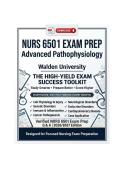
,NURS 6501 Advanced Pathophysiology —
INSTANT PDF DOWNLOAD — Verified NURS
6501 Exam Prep | Walden University | Q & A |
2026/2027 Edition
1. A 68-year-old male with chronic heart failure presents with an enlarged heart on
echocardiogram. The cardiomyocytes have increased in size but not in number. Which cellular
adaptation is this?
A. Atrophy
B. Hypertrophy
C. Hyperplasia
D. Metaplasia
Correct Answer: B
Rationale: Hypertrophy is an increase in cell size without an increase in cell number. It
commonly occurs in cardiac and skeletal muscle in response to increased workload. Atrophy is a
decrease in cell size. Hyperplasia is an increase in cell number, which cannot occur in terminally
differentiated cardiac muscle. Metaplasia is the reversible replacement of one adult cell type
with another.
,2. A 45-year-old chronic smoker undergoes bronchoscopy. Biopsy of the bronchial epithelium
reveals replacement of normal ciliated columnar epithelium with stratified squamous
epithelium. Which cellular adaptation has occurred?
A. Dysplasia
B. Metaplasia
C. Anaplasia
D. Hyperplasia
Correct Answer: B
Rationale: Metaplasia is the reversible replacement of one differentiated adult cell type with
another, often as an adaptive response to chronic irritation (e.g., squamous metaplasia of
bronchial epithelium in smokers). Dysplasia is disordered cellular growth with atypical features.
Anaplasia is lack of differentiation characteristic of malignant cells. Hyperplasia is increased cell
number of the same type.
3. A 55-year-old male sustains an acute myocardial infarction. Six hours after the infarction,
histologic examination of the necrotic myocardium would most likely reveal:
A. Apoptosis with chromatin condensation and apoptotic bodies
B. Coagulative necrosis with preserved tissue architecture
C. Liquefactive necrosis with enzymatic digestion
D. Caseous necrosis with granulomatous inflammation
Correct Answer: B
, Rationale: Coagulative necrosis is characterized by preservation of tissue architecture for a
period of time after cell death. It is the classic pattern of necrosis seen in ischemic injury to the
heart, kidney, and spleen. Apoptosis is programmed cell death. Liquefactive necrosis occurs in
the brain and in abscesses. Caseous necrosis is characteristic of tuberculosis.
4. A 32-year-old female presents with fatigue and jaundice. Laboratory findings reveal elevated
indirect bilirubin and decreased haptoglobin. Which of the following best describes the
mechanism of her condition?
A. Impaired conjugation of bilirubin in the liver
B. Increased destruction of red blood cells (hemolysis)
C. Obstruction of the bile duct
D. Defective uptake of bilirubin by hepatocytes
Correct Answer: B
Rationale: Elevated indirect (unconjugated) bilirubin with decreased haptoglobin suggests
hemolysis (increased destruction of red blood cells). The excess hemoglobin released from lysed
RBCs is converted to unconjugated bilirubin, which overwhelms the liver's conjugation capacity.
Impaired conjugation (Gilbert syndrome) would also cause elevated indirect bilirubin but would
not decrease haptoglobin. Bile duct obstruction and defective hepatic uptake primarily affect
direct (conjugated) bilirubin.
INSTANT PDF DOWNLOAD — Verified NURS
6501 Exam Prep | Walden University | Q & A |
2026/2027 Edition
1. A 68-year-old male with chronic heart failure presents with an enlarged heart on
echocardiogram. The cardiomyocytes have increased in size but not in number. Which cellular
adaptation is this?
A. Atrophy
B. Hypertrophy
C. Hyperplasia
D. Metaplasia
Correct Answer: B
Rationale: Hypertrophy is an increase in cell size without an increase in cell number. It
commonly occurs in cardiac and skeletal muscle in response to increased workload. Atrophy is a
decrease in cell size. Hyperplasia is an increase in cell number, which cannot occur in terminally
differentiated cardiac muscle. Metaplasia is the reversible replacement of one adult cell type
with another.
,2. A 45-year-old chronic smoker undergoes bronchoscopy. Biopsy of the bronchial epithelium
reveals replacement of normal ciliated columnar epithelium with stratified squamous
epithelium. Which cellular adaptation has occurred?
A. Dysplasia
B. Metaplasia
C. Anaplasia
D. Hyperplasia
Correct Answer: B
Rationale: Metaplasia is the reversible replacement of one differentiated adult cell type with
another, often as an adaptive response to chronic irritation (e.g., squamous metaplasia of
bronchial epithelium in smokers). Dysplasia is disordered cellular growth with atypical features.
Anaplasia is lack of differentiation characteristic of malignant cells. Hyperplasia is increased cell
number of the same type.
3. A 55-year-old male sustains an acute myocardial infarction. Six hours after the infarction,
histologic examination of the necrotic myocardium would most likely reveal:
A. Apoptosis with chromatin condensation and apoptotic bodies
B. Coagulative necrosis with preserved tissue architecture
C. Liquefactive necrosis with enzymatic digestion
D. Caseous necrosis with granulomatous inflammation
Correct Answer: B
, Rationale: Coagulative necrosis is characterized by preservation of tissue architecture for a
period of time after cell death. It is the classic pattern of necrosis seen in ischemic injury to the
heart, kidney, and spleen. Apoptosis is programmed cell death. Liquefactive necrosis occurs in
the brain and in abscesses. Caseous necrosis is characteristic of tuberculosis.
4. A 32-year-old female presents with fatigue and jaundice. Laboratory findings reveal elevated
indirect bilirubin and decreased haptoglobin. Which of the following best describes the
mechanism of her condition?
A. Impaired conjugation of bilirubin in the liver
B. Increased destruction of red blood cells (hemolysis)
C. Obstruction of the bile duct
D. Defective uptake of bilirubin by hepatocytes
Correct Answer: B
Rationale: Elevated indirect (unconjugated) bilirubin with decreased haptoglobin suggests
hemolysis (increased destruction of red blood cells). The excess hemoglobin released from lysed
RBCs is converted to unconjugated bilirubin, which overwhelms the liver's conjugation capacity.
Impaired conjugation (Gilbert syndrome) would also cause elevated indirect bilirubin but would
not decrease haptoglobin. Bile duct obstruction and defective hepatic uptake primarily affect
direct (conjugated) bilirubin.