
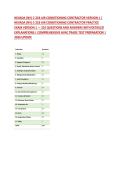
NEVADA (NV) C-21B AIR CONDITIONING CONTRACTOR VERSION 1 |
NEVADA (NV) C-21B AIR CONDITIONING CONTRACTOR PRACTICE
EXAM VERSION 1 — 210 QUESTIONS AND ANSWERS WITH DETAILED
EXPLANATIONS | COMPREHENSIVE HVAC TRADE TEST PREPARATION |
2026 UPDATE
Subsection Questions
1. Piping 14
2. Insulation 4
3. Hangers & Supports 10
4. Sound, Vibration & Seismic Control 4
5. Heating & Cooling Principles 10
6. Refrigerants & Refrigeration 14
7. Load Calculations 21
8. Testing, Adjusting & Balancing 4
9. Controls 10
10. A/C & Heat Pump Equipment 14
11. Furnaces & Heaters 14
12. Chimneys, Flues & Vents 11
13. Combustion Air 7
14. Fuel Systems 28
15. Ducts 28
16. Evaporative Cooling 10
17. Safety 7
TOTAL 210
,SUBSECTION 1 — PIPING
Questions 1–14
1. What is the primary purpose of refrigerant piping in a split air-
conditioning system?
A. To circulate cooling water
B. To transport refrigerant between system components
C. To supply combustion air
D. To drain condensate
Answer: B
Explanation: Refrigerant piping connects components such as the
evaporator, condenser, compressor, and metering device and carries
refrigerant between them.
2. Which line normally carries low-pressure refrigerant vapor from the
evaporator toward the compressor?
A. Liquid line
B. Drain line
C. Suction line
D. Gas vent
Answer: C
Explanation: The suction line transports refrigerant vapor from the
evaporator outlet to the compressor inlet.
3. What is the primary purpose of a liquid-line filter-drier?
,A. Increase compressor speed
B. Remove moisture and contaminants
C. Increase duct velocity
D. Reduce condenser airflow
Answer: B
Explanation: A filter-drier removes moisture, acids, and particulate
contaminants from the refrigerant circuit.
4. Why should refrigerant piping be properly sized?
A. To eliminate the need for insulation
B. To maintain proper refrigerant flow and minimize pressure loss
C. To increase thermostat voltage
D. To reduce electrical resistance
Answer: B
Explanation: Incorrect pipe sizing can cause excessive pressure drop,
poor capacity, oil-return problems, and inefficient operation.
5. What is a major concern when routing a suction line through a hot
space?
A. Excessive refrigerant condensation
B. Excessive superheating of the suction vapor
C. Increased drain flow
D. Reduced electrical voltage
, Answer: B
Explanation: Heat gain can raise suction-gas temperature and reduce
system efficiency.
6. Why is the suction line commonly insulated?
A. To prevent heat gain
B. To increase duct pressure
C. To increase liquid temperature
D. To provide electrical grounding
Answer: A
Explanation: Suction-line insulation reduces unwanted heat gain and
helps maintain appropriate suction conditions.
7. What should be minimized when installing refrigerant piping?
A. Proper supports
B. Unnecessary bends and excessive length
C. Correct insulation
D. Proper fittings
Answer: B
Explanation: Excessive length and unnecessary bends increase pressure
drop and may interfere with oil return.
8. What is the purpose of maintaining proper slope where required in
piping?
NEVADA (NV) C-21B AIR CONDITIONING CONTRACTOR PRACTICE
EXAM VERSION 1 — 210 QUESTIONS AND ANSWERS WITH DETAILED
EXPLANATIONS | COMPREHENSIVE HVAC TRADE TEST PREPARATION |
2026 UPDATE
Subsection Questions
1. Piping 14
2. Insulation 4
3. Hangers & Supports 10
4. Sound, Vibration & Seismic Control 4
5. Heating & Cooling Principles 10
6. Refrigerants & Refrigeration 14
7. Load Calculations 21
8. Testing, Adjusting & Balancing 4
9. Controls 10
10. A/C & Heat Pump Equipment 14
11. Furnaces & Heaters 14
12. Chimneys, Flues & Vents 11
13. Combustion Air 7
14. Fuel Systems 28
15. Ducts 28
16. Evaporative Cooling 10
17. Safety 7
TOTAL 210
,SUBSECTION 1 — PIPING
Questions 1–14
1. What is the primary purpose of refrigerant piping in a split air-
conditioning system?
A. To circulate cooling water
B. To transport refrigerant between system components
C. To supply combustion air
D. To drain condensate
Answer: B
Explanation: Refrigerant piping connects components such as the
evaporator, condenser, compressor, and metering device and carries
refrigerant between them.
2. Which line normally carries low-pressure refrigerant vapor from the
evaporator toward the compressor?
A. Liquid line
B. Drain line
C. Suction line
D. Gas vent
Answer: C
Explanation: The suction line transports refrigerant vapor from the
evaporator outlet to the compressor inlet.
3. What is the primary purpose of a liquid-line filter-drier?
,A. Increase compressor speed
B. Remove moisture and contaminants
C. Increase duct velocity
D. Reduce condenser airflow
Answer: B
Explanation: A filter-drier removes moisture, acids, and particulate
contaminants from the refrigerant circuit.
4. Why should refrigerant piping be properly sized?
A. To eliminate the need for insulation
B. To maintain proper refrigerant flow and minimize pressure loss
C. To increase thermostat voltage
D. To reduce electrical resistance
Answer: B
Explanation: Incorrect pipe sizing can cause excessive pressure drop,
poor capacity, oil-return problems, and inefficient operation.
5. What is a major concern when routing a suction line through a hot
space?
A. Excessive refrigerant condensation
B. Excessive superheating of the suction vapor
C. Increased drain flow
D. Reduced electrical voltage
, Answer: B
Explanation: Heat gain can raise suction-gas temperature and reduce
system efficiency.
6. Why is the suction line commonly insulated?
A. To prevent heat gain
B. To increase duct pressure
C. To increase liquid temperature
D. To provide electrical grounding
Answer: A
Explanation: Suction-line insulation reduces unwanted heat gain and
helps maintain appropriate suction conditions.
7. What should be minimized when installing refrigerant piping?
A. Proper supports
B. Unnecessary bends and excessive length
C. Correct insulation
D. Proper fittings
Answer: B
Explanation: Excessive length and unnecessary bends increase pressure
drop and may interfere with oil return.
8. What is the purpose of maintaining proper slope where required in
piping?


