
SAT READING AND WRITING / PUNCTUATION / INDEPENDENT SUPPLEMENT
START HERE
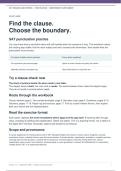
Find the clause.
Choose the boundary.
SAT punctuation practice
You may know what a semicolon does and still hesitate when the sentence is long. This workbook makes
the missing step visible: find the main subject and verb, bracket extra information, then decide what the
punctuation must connect.
24 original multiple-choice questions Every option explained
Four questions per practice page Space to mark clauses and justify the choice
Separate solutions and repair log Short drills before a mixed final set
Try a clause check now
The stack of posters beside the door needs a new label.
The subject head is stack; the main verb is needs. The words between them make the subject longer.
They do not justify a comma before needs.
Route through the workbook
Clause method: page 2. Two worked examples: page 3. Boundary map: page 4. Questions: pages 5-10.
Solutions: pages 11-16. Repair log and sources: page 17. First try a block without the key, then explain
both your choice and one rejected option.
Read the exercise format
Each option replaces the word immediately before [gap] and the gap itself. Everything after the gap
stays, including its spelling and capitalization. Select one option. This is a teaching format, not a replica of
the digital SAT interface. All people, objects and situations are fictional.
Scope and provenance
A narrow supplement for the Boundaries skill in SAT Standard English Conventions. Covers clause recognition, periods,
semicolons, colons, selected comma uses and no punctuation. Excludes dashes, apostrophes, quotations, complete grammar
coverage and real test questions. Created with AI assistance; reviewed against university writing references, without
independent expert review. No enrollment, achieved grade or score guarantee is claimed. Not affiliated with or endorsed by
College Board; SAT is its registered trademark.
Version 1.0 | September 2026 | Original sentence practice 1
,SAT READING AND WRITING / PUNCTUATION / INDEPENDENT SUPPLEMENT
METHOD / APPLY BEFORE READING THE OPTIONS
Underline the main verb.
Find its subject.
1. Find the core statement
Ask who or what performs the main action or has the stated condition. Match that subject to a finite verb:
the door opens, the lamps were flickering. A word ending in -ing does not necessarily supply the main
verb: the lamps flickering beside the window still needs a predicate.
2. Look for a dependent opening
While the lamps were flickering has a subject and a verb, but while makes it depend on a main
statement. Adding the visitors waited outside supplies that statement. In this order, put a comma after the
introductory dependent clause.
3. Bracket descriptions without losing their meaning
In The lamps [that hang above the desk] need new bulbs, the that-clause identifies which lamps. The
main verb is need. Do not insert punctuation before need merely because the subject is long. Descriptions
can contain verbs of their own; find the main clause first.
4. Test the whole material on each side
For a sentence-joining semicolon, each side must form a complete sentence unit. The right side may begin
with an introductory clause and still be complete once its main clause arrives. Do not stop reading at the
first comma.
Segment How to read it
The lamps flickered Independent: subject lamps + finite verb flickered.
Although the lamps flickered Dependent: although leaves an unfinished relationship.
Flickering near the window Phrase: no stated subject or finite main verb.
The lamps flickered and went dark One subject with two predicates; went shares lamps.
Your spoken check
Say: My main subject is ____. Its main verb is ____. The added words do ____. The blank joins or
separates ____. A pause you hear is a clue to investigate, not a punctuation rule.
Version 1.0 | September 2026 | Original sentence practice 2
, SAT READING AND WRITING / PUNCTUATION / INDEPENDENT SUPPLEMENT
TWO WORKED EXAMPLES
Read the structure.
Then eliminate options.
Example 1 / a misleading long subject
The drawer containing spare handles [gap] slides under the workbench.
A handles, B handles C handles; D handles:
Choose B. The drawer is the subject and slides is the main verb. Containing spare handles describes
drawer. It does not finish a clause. A separates the subject from its verb; C ends an unfinished subject with
a semicolon; D places a colon after an unfinished subject. The correct sentence has no mark between
handles and slides.
Example 2 / a connector is not a conjunction
The first ink dried quickly [gap] however, it smudged under pressure.
A quickly, B quickly C quickly; D quickly.
Choose C. The first ink dried quickly is complete. It smudged under pressure is also complete. However
links their meaning but cannot join them with only a comma. A makes a comma splice; B leaves no
boundary; D would require the printed however to begin with a capital. C gives: The first ink dried quickly;
however, it smudged under pressure.
What if both a period and semicolon seem possible?
In ordinary writing both may separate suitable complete statements, with different emphasis. In these
exercises, inspect the exact printed capitalization and words. Never invent a rule that a semicolon is always
better than a period. If two offered answers truly worked without changing the text, the item would need
repair.
Before you turn the page
Cover the explanations. Identify the main subject and verb in each example aloud. Then explain why a
comma works after the printed however but not before it in Example 2: after it the comma marks an
introductory connector; before it a comma alone would have to join two complete clauses.
Version 1.0 | September 2026 | Original sentence practice 3
START HERE
Find the clause.
Choose the boundary.
SAT punctuation practice
You may know what a semicolon does and still hesitate when the sentence is long. This workbook makes
the missing step visible: find the main subject and verb, bracket extra information, then decide what the
punctuation must connect.
24 original multiple-choice questions Every option explained
Four questions per practice page Space to mark clauses and justify the choice
Separate solutions and repair log Short drills before a mixed final set
Try a clause check now
The stack of posters beside the door needs a new label.
The subject head is stack; the main verb is needs. The words between them make the subject longer.
They do not justify a comma before needs.
Route through the workbook
Clause method: page 2. Two worked examples: page 3. Boundary map: page 4. Questions: pages 5-10.
Solutions: pages 11-16. Repair log and sources: page 17. First try a block without the key, then explain
both your choice and one rejected option.
Read the exercise format
Each option replaces the word immediately before [gap] and the gap itself. Everything after the gap
stays, including its spelling and capitalization. Select one option. This is a teaching format, not a replica of
the digital SAT interface. All people, objects and situations are fictional.
Scope and provenance
A narrow supplement for the Boundaries skill in SAT Standard English Conventions. Covers clause recognition, periods,
semicolons, colons, selected comma uses and no punctuation. Excludes dashes, apostrophes, quotations, complete grammar
coverage and real test questions. Created with AI assistance; reviewed against university writing references, without
independent expert review. No enrollment, achieved grade or score guarantee is claimed. Not affiliated with or endorsed by
College Board; SAT is its registered trademark.
Version 1.0 | September 2026 | Original sentence practice 1
,SAT READING AND WRITING / PUNCTUATION / INDEPENDENT SUPPLEMENT
METHOD / APPLY BEFORE READING THE OPTIONS
Underline the main verb.
Find its subject.
1. Find the core statement
Ask who or what performs the main action or has the stated condition. Match that subject to a finite verb:
the door opens, the lamps were flickering. A word ending in -ing does not necessarily supply the main
verb: the lamps flickering beside the window still needs a predicate.
2. Look for a dependent opening
While the lamps were flickering has a subject and a verb, but while makes it depend on a main
statement. Adding the visitors waited outside supplies that statement. In this order, put a comma after the
introductory dependent clause.
3. Bracket descriptions without losing their meaning
In The lamps [that hang above the desk] need new bulbs, the that-clause identifies which lamps. The
main verb is need. Do not insert punctuation before need merely because the subject is long. Descriptions
can contain verbs of their own; find the main clause first.
4. Test the whole material on each side
For a sentence-joining semicolon, each side must form a complete sentence unit. The right side may begin
with an introductory clause and still be complete once its main clause arrives. Do not stop reading at the
first comma.
Segment How to read it
The lamps flickered Independent: subject lamps + finite verb flickered.
Although the lamps flickered Dependent: although leaves an unfinished relationship.
Flickering near the window Phrase: no stated subject or finite main verb.
The lamps flickered and went dark One subject with two predicates; went shares lamps.
Your spoken check
Say: My main subject is ____. Its main verb is ____. The added words do ____. The blank joins or
separates ____. A pause you hear is a clue to investigate, not a punctuation rule.
Version 1.0 | September 2026 | Original sentence practice 2
, SAT READING AND WRITING / PUNCTUATION / INDEPENDENT SUPPLEMENT
TWO WORKED EXAMPLES
Read the structure.
Then eliminate options.
Example 1 / a misleading long subject
The drawer containing spare handles [gap] slides under the workbench.
A handles, B handles C handles; D handles:
Choose B. The drawer is the subject and slides is the main verb. Containing spare handles describes
drawer. It does not finish a clause. A separates the subject from its verb; C ends an unfinished subject with
a semicolon; D places a colon after an unfinished subject. The correct sentence has no mark between
handles and slides.
Example 2 / a connector is not a conjunction
The first ink dried quickly [gap] however, it smudged under pressure.
A quickly, B quickly C quickly; D quickly.
Choose C. The first ink dried quickly is complete. It smudged under pressure is also complete. However
links their meaning but cannot join them with only a comma. A makes a comma splice; B leaves no
boundary; D would require the printed however to begin with a capital. C gives: The first ink dried quickly;
however, it smudged under pressure.
What if both a period and semicolon seem possible?
In ordinary writing both may separate suitable complete statements, with different emphasis. In these
exercises, inspect the exact printed capitalization and words. Never invent a rule that a semicolon is always
better than a period. If two offered answers truly worked without changing the text, the item would need
repair.
Before you turn the page
Cover the explanations. Identify the main subject and verb in each example aloud. Then explain why a
comma works after the printed however but not before it in Example 2: after it the comma marks an
introductory connector; before it a comma alone would have to join two complete clauses.
Version 1.0 | September 2026 | Original sentence practice 3


