

A level physics notes for easy memorisation to pass your exams
These notes helped me get an A in physics and I hope you will as welll
These notes cover all chapters from AQA A Level Physics Section 1 to 12 + Astrophysics withe the exception of Section 4 as it's better left to written caclulations eg SUVAT equations. Simply going through the questions whilst covering up the answer over time will help reinforce the knowledge in time for your exams
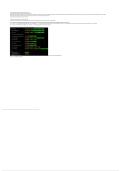
After answering each questions use the colour filter to measure progress over time (or if on pdf use a pencil to mark the question)
These notes are best paired with some practice questions
The good news is you dont need to cover these notes daily
I reccomend covering them once per topic and repeating them after a day and then increasing the review increment to a week or 2 weeks as you like
Here are some common abbreviations used throughout the notes to make things shorter and quicker (they are denoted in brackets when used during the sections to come as well):
"no." = "number", "=" is a filler word for words like "there" "are" "is" etc, where theres a "........." after a letter or by itself its a fill in the word, "^" means increase, "En" = energy, a "." is used if the answer is a number to keep it in view (does not mean a decimal point), "WLs" = Wavelength,
"thru" = "through", "t/f" = therefore, Mag. = magnitude, "cos" = "because", "^" means raising to the power of when used with a number
Template for reviewing periods: (see section "R" (Rotar) to start your template)
Disclaimer - these notes are for support, I'm not affiliated with any exam board and please ask your teacher for verification of any specific formulas and knowldege points
Version 1.0 - last updated June 6th 2026
,Topic list:
Particles:
Atomic Structure
Stable & Unstable Nuclei
Particles & Antiparticles
Force & Exchange Particles
Classification of Particles
Quarks
EM Radiation & Quantam Phenomena:
The Photoelectric Effect
Energy Levels & Photon Emission
Wave-Particle Duality
Waves:
Progressive Waves
Longitudinal & Transverse Waves
Superposition & Coherence
Stationary Waves
Diffraction
Two-Source Interference
Diffraction Gratings
Refractive Index
Mechanics:
Scalars & Vectors
Forces
Moments
Mass, Weight & Centre of Mass
Displacement-Time Graphs
Velocity-Time & Acceleration-TIme Graphs
Motion with Uniform Acceleration
Acceleration Due to Gravity
Projectile Motion
Newtons Laws of Motion
Drag, Lift & Terminal Speed
Momentum & Impulse
Work & Power
Conservation of Energy & Efficiency
Materials
Properties of Materials
Stress & Strain
, The Young Modulus
Stress-Strain & Force-Extension Graphs
Electricity:
Current, Potential Difference & Resistance
I/V Characteristics
Resistivity & Superconductivity
Electrical Energy & Power
Emf & Internal Resistance
Conservation of Energy & Charge
The Potential Divider
Further Mechanics:
Circular Motion
Simple Harmonic Motion
Simple Harmonic Oscillators
Free & Forced Vibrations
Thermal Physics:
Thermal Energy Transfer
Gas Laws
Ideal Gas Equation
The Presure of an Ideal Gas
Kinetic Energy & The Development of Theories
Gravitational & Electric Fields:
Gravitational Fields
Gravitational Potential
Obrits & Gravity
Electric Fields
Electrical Potential & Work Done
Comparing Electric & Gravitational Fields
Capacitors:
Capacitors
Charging & Discharging
More Charging & Discharging
Magnetic Fields:
Magnetic Fields
Charged Particles in a Magnetic Field
Electromagnetic Induction
Induction Laws & Alternators
Alternating Currents
These notes helped me get an A in physics and I hope you will as welll
These notes cover all chapters from AQA A Level Physics Section 1 to 12 + Astrophysics withe the exception of Section 4 as it's better left to written caclulations eg SUVAT equations. Simply going through the questions whilst covering up the answer over time will help reinforce the knowledge in time for your exams
After answering each questions use the colour filter to measure progress over time (or if on pdf use a pencil to mark the question)
These notes are best paired with some practice questions
The good news is you dont need to cover these notes daily
I reccomend covering them once per topic and repeating them after a day and then increasing the review increment to a week or 2 weeks as you like
Here are some common abbreviations used throughout the notes to make things shorter and quicker (they are denoted in brackets when used during the sections to come as well):
"no." = "number", "=" is a filler word for words like "there" "are" "is" etc, where theres a "........." after a letter or by itself its a fill in the word, "^" means increase, "En" = energy, a "." is used if the answer is a number to keep it in view (does not mean a decimal point), "WLs" = Wavelength,
"thru" = "through", "t/f" = therefore, Mag. = magnitude, "cos" = "because", "^" means raising to the power of when used with a number
Template for reviewing periods: (see section "R" (Rotar) to start your template)
Disclaimer - these notes are for support, I'm not affiliated with any exam board and please ask your teacher for verification of any specific formulas and knowldege points
Version 1.0 - last updated June 6th 2026
,Topic list:
Particles:
Atomic Structure
Stable & Unstable Nuclei
Particles & Antiparticles
Force & Exchange Particles
Classification of Particles
Quarks
EM Radiation & Quantam Phenomena:
The Photoelectric Effect
Energy Levels & Photon Emission
Wave-Particle Duality
Waves:
Progressive Waves
Longitudinal & Transverse Waves
Superposition & Coherence
Stationary Waves
Diffraction
Two-Source Interference
Diffraction Gratings
Refractive Index
Mechanics:
Scalars & Vectors
Forces
Moments
Mass, Weight & Centre of Mass
Displacement-Time Graphs
Velocity-Time & Acceleration-TIme Graphs
Motion with Uniform Acceleration
Acceleration Due to Gravity
Projectile Motion
Newtons Laws of Motion
Drag, Lift & Terminal Speed
Momentum & Impulse
Work & Power
Conservation of Energy & Efficiency
Materials
Properties of Materials
Stress & Strain
, The Young Modulus
Stress-Strain & Force-Extension Graphs
Electricity:
Current, Potential Difference & Resistance
I/V Characteristics
Resistivity & Superconductivity
Electrical Energy & Power
Emf & Internal Resistance
Conservation of Energy & Charge
The Potential Divider
Further Mechanics:
Circular Motion
Simple Harmonic Motion
Simple Harmonic Oscillators
Free & Forced Vibrations
Thermal Physics:
Thermal Energy Transfer
Gas Laws
Ideal Gas Equation
The Presure of an Ideal Gas
Kinetic Energy & The Development of Theories
Gravitational & Electric Fields:
Gravitational Fields
Gravitational Potential
Obrits & Gravity
Electric Fields
Electrical Potential & Work Done
Comparing Electric & Gravitational Fields
Capacitors:
Capacitors
Charging & Discharging
More Charging & Discharging
Magnetic Fields:
Magnetic Fields
Charged Particles in a Magnetic Field
Electromagnetic Induction
Induction Laws & Alternators
Alternating Currents


