Chapter 35 Assessment of Neurological Function answer keys
Chapter 35: Assessment of Neurological Function
Study online at https://quizlet.com/_9o0o3r
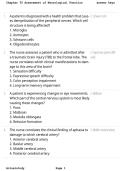
1. A patient is diagnosed with a health problem that caus- 3. Schwann cells
es demyelization of the peripheral nerves. Which cell
structure is being affected?
1. Microglia
2. Astrocytes
3. Schwann cells
4. Oligodendrocytes
2. The nurse assesses a patient who is admitted after 2. Expressive speech diffi-
a traumatic brain injury (TBI) to the frontal lobe. The cultly
nurse correlates which clinical manifestations to dam-
age to this area of the brain?
1. Sensation difficulty
2. Expressive speech difficulty
3. Color perception impairment
4. Long-term memory impairment
3. A patient is experiencing changes in eye movements. 2. Midbrain
Which part of the central nervous system is most likely
causing these changes?
1. Pons
2. Midbrain
3. Medulla oblongata
4. Reticular formation
4. The nurse correlates the clinical finding of aphasia to 3. Middle cerebral artery
damage to which cerebral artery?
1. Anterior cerebral artery
2. Basilar artery
3. Middle cerebral artery
4. Posterior cerebral artery
1/8
Actualstudy Page 1
, Chapter 35 Assessment of Neurological Function answer keys
Chapter 35: Assessment of Neurological Function
Study online at https://quizlet.com/_9o0o3r
5. What is the rationale for the nurse to maintain a pa- 3. Decrease pressure on
tient's neck in good alignment to decrease intracranial internal jugular vein
pressure?
1. Decrease pressure on internal carotid artery
2. Decrease pressure on external carotid artery
3. Decrease pressure on internal jugular vein
4. Decrease pressure on external jugular vein
6. The nurse correlates a change in the taste of food to 2. CN VII Facial
which cranial nerve (CN)?
1. CN V Trigeminal
2. CN VII Facial
3. CN XI Accessory
4. CN XII Hypoglossal
7. A patient's blood pressure increases after hearing that 2. Alpha
diagnostic tests for a health problem have to be re-
peated. Which receptor of the sympathetic nervous
system is responsible for this blood pressure change?
1. Beta
2. Alpha
3. Nicotinic
4. Muscarinic
8. The nurse conducts a neurological assessment for a 1. Pupils that are constrict-
patient. Which finding correlates to a parasympathetic ed
stimulation of the autonomic nervous system (ANS)?
1. Pupils that are constricted
2. Blood glucose is increased
3. A heart rate that is increased
4. A decrease in saliva production
9. 2. Stupor
2/8
Actualstudy Page 2
Chapter 35: Assessment of Neurological Function
Study online at https://quizlet.com/_9o0o3r
1. A patient is diagnosed with a health problem that caus- 3. Schwann cells
es demyelization of the peripheral nerves. Which cell
structure is being affected?
1. Microglia
2. Astrocytes
3. Schwann cells
4. Oligodendrocytes
2. The nurse assesses a patient who is admitted after 2. Expressive speech diffi-
a traumatic brain injury (TBI) to the frontal lobe. The cultly
nurse correlates which clinical manifestations to dam-
age to this area of the brain?
1. Sensation difficulty
2. Expressive speech difficulty
3. Color perception impairment
4. Long-term memory impairment
3. A patient is experiencing changes in eye movements. 2. Midbrain
Which part of the central nervous system is most likely
causing these changes?
1. Pons
2. Midbrain
3. Medulla oblongata
4. Reticular formation
4. The nurse correlates the clinical finding of aphasia to 3. Middle cerebral artery
damage to which cerebral artery?
1. Anterior cerebral artery
2. Basilar artery
3. Middle cerebral artery
4. Posterior cerebral artery
1/8
Actualstudy Page 1
, Chapter 35 Assessment of Neurological Function answer keys
Chapter 35: Assessment of Neurological Function
Study online at https://quizlet.com/_9o0o3r
5. What is the rationale for the nurse to maintain a pa- 3. Decrease pressure on
tient's neck in good alignment to decrease intracranial internal jugular vein
pressure?
1. Decrease pressure on internal carotid artery
2. Decrease pressure on external carotid artery
3. Decrease pressure on internal jugular vein
4. Decrease pressure on external jugular vein
6. The nurse correlates a change in the taste of food to 2. CN VII Facial
which cranial nerve (CN)?
1. CN V Trigeminal
2. CN VII Facial
3. CN XI Accessory
4. CN XII Hypoglossal
7. A patient's blood pressure increases after hearing that 2. Alpha
diagnostic tests for a health problem have to be re-
peated. Which receptor of the sympathetic nervous
system is responsible for this blood pressure change?
1. Beta
2. Alpha
3. Nicotinic
4. Muscarinic
8. The nurse conducts a neurological assessment for a 1. Pupils that are constrict-
patient. Which finding correlates to a parasympathetic ed
stimulation of the autonomic nervous system (ANS)?
1. Pupils that are constricted
2. Blood glucose is increased
3. A heart rate that is increased
4. A decrease in saliva production
9. 2. Stupor
2/8
Actualstudy Page 2