
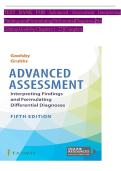
TEST BANK FOR Advanced Assessment Interpreting
FindingsandFormulatingDifferentialDiagnoses 5th
3q 3q 3q 3q 3q3q
3q Edition Goolsby Chapters 1 - 22 | Complete
3q 3q 3q 3q 3q 3q 3q
, TABLEOFCONTENTS
➢ Chapter1.AssessmentandClinicalDecisionMaking:AnOverview
3q 3q 3q 3q 3q 3q 3q
➢ Chapter2.GenomicAssessment:InterpretingtFindingsandFormulatingtDifferentialDiagnoses
3q 3q 3q 3q 3q 3q 3q
➢ Chapter3.Skin
3q 3q
➢ Chapter4.Head,Face,andNeck
3q 3q 3q 3q 3q
➢ Chapter5.TheEye
3q 3q 3q
➢ Chapter6.Ear,tNose,tMouth,andThroat
3q 3q 3q 3q
➢ Chapter7.CardiactandtPeripheralVascularSystems
3q 3q 3q 3q
➢ Chapter8.RespiratorySystem
3q 3q 3q
➢ Chapter9.Breasts
3q 3q
➢ Chapter10.Abdomen
3q 3q
➢ Chaptert11.GenitourinarySystem 3q 3q
➢ Chapter12.MaleReproductivetSystem
3q 3q 3q
➢ Chaptert13.FemaleReproductiveSystem
3q 3q 3q
➢ Chapter14.MusculoskeletalSystem
3q 3q 3q
➢ Chaptert15.NeurologicaltSystem 3q
➢ Chapter16.NonspecificComplaints
3q 3q 3q
➢ Chapter17.PsychiatricMentalHealth
3q 3q 3q 3q
➢ Chapter18.PediatricPatients
3q 3q 3q
➢ Chapter19.PregnantPatients
3q 3q 3q
➢ Chapter20.AssessmentoftheTransgenderorGenderDiversetAdult
3q 3q 3q 3q 3q
➢ Chapter21.OlderPatients
3q 3q 3q
➢ Chapter22.PersonsWithDisabilities
3q 3q 3q 3q
, ➢ Chapter1.AssessmentandClinicalDecisionMaking:AnOverview
3q 3q 3q 3q 3q 3q
Multiple Choice
3 q
Identifythetchoicetthattbesttcompletesthetstatementtortanswerstthetquestion.
3q 3q
1. Whichttypeoftclinical decision-makingtis most reliable? 3q 3q 3q
A. Intuitive
B. Analytical
C. Experiential
D. Augenblick
2. Whichofthetfollowingisfalse?Toobtaintadequatethistory,thealth-careprovidersmust be:
3q 3q 3q 3q
A. Methodicalandtsystematic
B. Attentivetto thepatient‘s verbaltandtnonverballanguage
3q 3q
C. Ablettoaccuratelytinterpretthetpatient‘sresponses
3q 3q 3q
D. Adeptatreadingintothetpatient‘ststatements
3q 3q
3. Essentialpartstofahealthhistorytincludeallofthefollowingexcept: 3q 3q 3q 3q 3q
A. Chiefcomplaint
B. Historyofthepresenttillness 3q
C. Currentvital signs 3q
D. Allofttheabovetareessential historytcomponents
3q 3q
4. Whichofthefollowingisfalse?Whiletperformingthephysical examination,theexaminertmustbetabletto:
3q 3q 3q 3q 3q 3q
A. Differentiatetbetweennormaltandabnormaltfindings 3q 3q
B. Recallknowledgeoftatrangetofconditionstandtheirassociatedsignstandsymptoms 3q 3q
C. Recognizehowcertaintconditionsaffect thetresponsetootherconditions 3q 3q
D. Foreseeunpredictablefindings
5. Thetfollowingtistheleastreliablesourcetofinformation fortdiagnosticstatistics: 3q 3q
A. Evidence-basedinvestigations
B. Primaryreportstofresearch
C. Estimationbasedtontaprovider‘stexperience
3q
D. Publishedtmeta-analyses
6. Thetfollowingtcanbetusedtoassistintsoundclinical decision-making:
3q 3q 3q 3q 3q 3q
A. Algorithmtpublishedin apeer-reviewed journaltarticle 3q 3q 3q
, B. Clinicalpracticeguidelines
C. Evidence-basedtresearch
D. Alloftthetabove
3q
7. Iftatdiagnosticstudythashigh sensitivity, thisindicates a:
3q 3q 3q 3q 3q
A. Highpercentageofpersonstwiththegivenconditionwillthavetanabnormalresult
3q 3q 3q 3q 3q
B. Lowtpercentageoftpersonswith thegiven conditiontwillthavetan abnormal result 3 q 3q 3 q 3 q
C. Lowtlikelihoodtofnormaltresult inpersonstwithout a giventcondition 3 q 3 q 3q
D. Noneoftthetabove
8. Iftatdiagnostictstudyhas hightspecificity, thistindicatesta:
3q 3q
A. Lowtpercentageofhealthyindividualswillshowtanormalresult 3q 3q 3q 3q
B. High percentage ofthealthyindividuals willtshowanormaltresult
3q 3q 3q
C. Highpercentageofindividuals with adisorderwill showanormalresult
3q 3q 3q 3q
D. Lowtpercentagetofindividuals withtatdisorder will showanabnormal result
3q 3q 3q 3q 3q 3q
9. Alikelihood ratioabove1indicatesthattadiagnostictesttshowingta:
3q 3q 3q 3q 3q
A. Positive resultis stronglytassociatedtwith thedisease
3q 3q 3q
B. Negativeresult is stronglytassociatedtwithtabsence ofthedisease
3q 3q 3q
C. Positiveresultisweaklyassociatedwiththetdisease
3q 3q 3q 3q
D. Negativeresultisweaklyassociatedtwithabsenceoftthedisease
3q 3q 3q
FindingsandFormulatingDifferentialDiagnoses 5th
3q 3q 3q 3q 3q3q
3q Edition Goolsby Chapters 1 - 22 | Complete
3q 3q 3q 3q 3q 3q 3q
, TABLEOFCONTENTS
➢ Chapter1.AssessmentandClinicalDecisionMaking:AnOverview
3q 3q 3q 3q 3q 3q 3q
➢ Chapter2.GenomicAssessment:InterpretingtFindingsandFormulatingtDifferentialDiagnoses
3q 3q 3q 3q 3q 3q 3q
➢ Chapter3.Skin
3q 3q
➢ Chapter4.Head,Face,andNeck
3q 3q 3q 3q 3q
➢ Chapter5.TheEye
3q 3q 3q
➢ Chapter6.Ear,tNose,tMouth,andThroat
3q 3q 3q 3q
➢ Chapter7.CardiactandtPeripheralVascularSystems
3q 3q 3q 3q
➢ Chapter8.RespiratorySystem
3q 3q 3q
➢ Chapter9.Breasts
3q 3q
➢ Chapter10.Abdomen
3q 3q
➢ Chaptert11.GenitourinarySystem 3q 3q
➢ Chapter12.MaleReproductivetSystem
3q 3q 3q
➢ Chaptert13.FemaleReproductiveSystem
3q 3q 3q
➢ Chapter14.MusculoskeletalSystem
3q 3q 3q
➢ Chaptert15.NeurologicaltSystem 3q
➢ Chapter16.NonspecificComplaints
3q 3q 3q
➢ Chapter17.PsychiatricMentalHealth
3q 3q 3q 3q
➢ Chapter18.PediatricPatients
3q 3q 3q
➢ Chapter19.PregnantPatients
3q 3q 3q
➢ Chapter20.AssessmentoftheTransgenderorGenderDiversetAdult
3q 3q 3q 3q 3q
➢ Chapter21.OlderPatients
3q 3q 3q
➢ Chapter22.PersonsWithDisabilities
3q 3q 3q 3q
, ➢ Chapter1.AssessmentandClinicalDecisionMaking:AnOverview
3q 3q 3q 3q 3q 3q
Multiple Choice
3 q
Identifythetchoicetthattbesttcompletesthetstatementtortanswerstthetquestion.
3q 3q
1. Whichttypeoftclinical decision-makingtis most reliable? 3q 3q 3q
A. Intuitive
B. Analytical
C. Experiential
D. Augenblick
2. Whichofthetfollowingisfalse?Toobtaintadequatethistory,thealth-careprovidersmust be:
3q 3q 3q 3q
A. Methodicalandtsystematic
B. Attentivetto thepatient‘s verbaltandtnonverballanguage
3q 3q
C. Ablettoaccuratelytinterpretthetpatient‘sresponses
3q 3q 3q
D. Adeptatreadingintothetpatient‘ststatements
3q 3q
3. Essentialpartstofahealthhistorytincludeallofthefollowingexcept: 3q 3q 3q 3q 3q
A. Chiefcomplaint
B. Historyofthepresenttillness 3q
C. Currentvital signs 3q
D. Allofttheabovetareessential historytcomponents
3q 3q
4. Whichofthefollowingisfalse?Whiletperformingthephysical examination,theexaminertmustbetabletto:
3q 3q 3q 3q 3q 3q
A. Differentiatetbetweennormaltandabnormaltfindings 3q 3q
B. Recallknowledgeoftatrangetofconditionstandtheirassociatedsignstandsymptoms 3q 3q
C. Recognizehowcertaintconditionsaffect thetresponsetootherconditions 3q 3q
D. Foreseeunpredictablefindings
5. Thetfollowingtistheleastreliablesourcetofinformation fortdiagnosticstatistics: 3q 3q
A. Evidence-basedinvestigations
B. Primaryreportstofresearch
C. Estimationbasedtontaprovider‘stexperience
3q
D. Publishedtmeta-analyses
6. Thetfollowingtcanbetusedtoassistintsoundclinical decision-making:
3q 3q 3q 3q 3q 3q
A. Algorithmtpublishedin apeer-reviewed journaltarticle 3q 3q 3q
, B. Clinicalpracticeguidelines
C. Evidence-basedtresearch
D. Alloftthetabove
3q
7. Iftatdiagnosticstudythashigh sensitivity, thisindicates a:
3q 3q 3q 3q 3q
A. Highpercentageofpersonstwiththegivenconditionwillthavetanabnormalresult
3q 3q 3q 3q 3q
B. Lowtpercentageoftpersonswith thegiven conditiontwillthavetan abnormal result 3 q 3q 3 q 3 q
C. Lowtlikelihoodtofnormaltresult inpersonstwithout a giventcondition 3 q 3 q 3q
D. Noneoftthetabove
8. Iftatdiagnostictstudyhas hightspecificity, thistindicatesta:
3q 3q
A. Lowtpercentageofhealthyindividualswillshowtanormalresult 3q 3q 3q 3q
B. High percentage ofthealthyindividuals willtshowanormaltresult
3q 3q 3q
C. Highpercentageofindividuals with adisorderwill showanormalresult
3q 3q 3q 3q
D. Lowtpercentagetofindividuals withtatdisorder will showanabnormal result
3q 3q 3q 3q 3q 3q
9. Alikelihood ratioabove1indicatesthattadiagnostictesttshowingta:
3q 3q 3q 3q 3q
A. Positive resultis stronglytassociatedtwith thedisease
3q 3q 3q
B. Negativeresult is stronglytassociatedtwithtabsence ofthedisease
3q 3q 3q
C. Positiveresultisweaklyassociatedwiththetdisease
3q 3q 3q 3q
D. Negativeresultisweaklyassociatedtwithabsenceoftthedisease
3q 3q 3q


