

Written by students who passed Immediately available after payment Read online or as PDF Wrong document? Swap it for free 4.6 TrustPilot
logo-home
Document preview thumbnail
Preview 3 out of 16 pages
Exam (elaborations)

NURS 480 (NURS480) Exam 2 ATI Assessment | Answered Performance Profile | Complete Review Guide | Updated 2026.

Document preview thumbnail
Preview 3 out of 16 pages

WCU NURS 480 Exam #2 ATI Assessment – Complete Answered Performance Profile | Nursing Review Guide | Latest 2026 ### 1. A nurse is reviewing laboratory results of a client who has atrial fibrillation and is taking warfarin. For which of the following results should the nurse notify the provider? A. PT 45 seconds B. Hgb 16 g/dL C. Hct 44% D. Platelets 190,000/mm³ ### 2. A nurse is monitoring a client who is on telemetry. Which of the following findings on the ECG strip should the nurse recognize as normal sinus rhythm? A. The P wave falls before the QRS complex. B. The T wave is in the inverted position. C. The P-R interval measures 0.22 seconds. D. The QRS duration is 0.20 seconds. ### 3. A nurse is caring for a client who has heart failure and a potassium level of 2.4 mEq/L. The nurse should identify which of the following medications as the cause of the client’s low potassium level? A. Furosemide B. Nitroglycerin C. Metoprolol D. Spironolactone ### 4. A nurse is reviewing the laboratory report of a client and identifies a serum potassium level of 6.8 mEq/L. Which of the following medications should the nurse plan to administer? A. Sodium polystyrene B. Lactulose C. Sevelamer D. Darbepoetin alfa ### 5. A nurse is preparing to administer 40 mEq of potassium chloride in 0.45% sodium chloride (NaCl) 500 mL IV to infuse 10 mEq/hr. The nurse should set the IV pump to deliver how many mL/hr? Round the answer to the nearest whole number. ### 6. A nurse is caring for a client who has pericarditis and reports feeling a new onset of palpitations and shortness of breath. Which of the following assessments should indicate to the nurse that the client may have developed atrial fibrillation? A. Pulse deficit between the apical and radial pulses B. Different blood pressures in the upper limbs C. Differences between oral and axillary temperatures D. Differences in upper and lower lung sounds ### 7. A client suffering from chest discomfort and shortness of breath is brought to the emergency department due to acute angina pectoris. The healthcare provider orders IV nitroglycerin 75 mg in 500 mL of 5% Dextrose Water at 100 mcg/min. The nurse will set the pump at which rate (mL/hr)? Write your answer using a whole number. ### 8. Admission vital signs for a client who has a brain injury are: BP 128/68 mmHg, HR 110 beats/min, RR 26 breaths/min. Which set of vital signs, if taken 1 hour later, will be of most concern to the nurse? A. BP 180/68 mmHg, HR 56 bpm, Cheyne-Stokes respirations B. BP 130/78 mmHg, HR 95 bpm, Cheyne-Stokes respirations C. BP 148/78 mmHg, HR 112 bpm, irregular respirations 28 breaths/min D. BP 110/70 mmHg, HR 59 bpm, irregular respirations 13 breaths/min ### 9. A 70-year-old female client with left-sided hemiparesis arrives by ambulance to the emergency department. Which action would the nurse take first? A. Check the respiratory rate and effort. B. Take the patient’s blood pressure. C. Assess the Glasgow Coma Scale score. D. Send the patient for a computed tomography (CT) scan. ### 10. The nurse is caring for a client who has just arrived at the telemetry unit after having cardiac catheterization. Which task could the nurse delegate to a licensed practical/vocational nurse (LPN/VN)? A. Give the scheduled oral aspirin and simvastatin medication. B. Teach the patient about the postprocedure plan of care. C. Perform the initial assessment of the catheter insertion site. D. Titrate the heparin infusion according to the agency protocol. ### 11. A nurse is performing a cardiac assessment. Identify where the nurse should place the stethoscope to auscultate the client’s apical pulse. ### 12. A nurse is caring for a client who reports a severe headache following a lumbar puncture. Which of the following actions should the nurse take? A. Encourage oral fluids. B. Provide a low-sodium diet. C. Administer sumatriptan. D. Place in high-Fowler’s position. ### 13. A nurse in the emergency room is assessing a client who was brought in following a seizure. The nurse suspects the client may have meningococcal meningitis when assessment findings include nuchal rigidity and a petechial rash. After implementing droplet precautions, which of the following actions should the nurse initiate next? A. Assess the cranial nerves. B. Complete a vascular assessment. C. Administer an antipyretic. D. Decrease environmental stimuli. ### 14. A nurse is caring for a client who had a stroke involving the left cerebral hemisphere. The nurse should monitor for which of the following findings? A. Intellectual impairment B. Impaired sense of humor C. Loss of depth perception D. Poor judgment ### 15. The nurse is administering alteplase (tPA, Activase) to a client who has been diagnosed with cerebrovascular accident (CVA). What is an important nursing implication for this medication? A. Place the client on bleeding precautions. B. Monitor the ECG for dysrhythmias. C. Monitor urine output hourly. D. Monitor for activity intolerance. ### 16. A patient who has recently started taking pravastatin (Pravachol) and niacin reports several symptoms to the nurse. Which information is most important to communicate to the healthcare provider? A. Generalized muscle aches and pains B. Dizziness and rapid position changes C. Nausea when taking the medications before meals D. Flushing and pruritus after taking the medications ### 17. A patient who is being admitted to the emergency department with intermittent chest pain gives the following list of daily medications to the nurse. Which medication has the most immediate implications for the patient’s care? A. Sildenafil (Viagra) B. Captopril C. Furosemide (Lasix) D. Warfarin (Coumadin) ### 18. Which information from a patient helps the nurse confirm the previous diagnosis of chronic stable angina? A. “The pain goes away after a nitroglycerin tablet.” B. “The pain wakes me up at night.” C. “The pain is level 3 to 5 on a 0-to-10 scale.” D. “The pain has gotten worse over the last week.” ### 19. A nurse is caring for a client who has had a myocardial infarction. Upon his first visit to cardiac rehabilitation, he tells the nurse that he doesn't understand why he needs to be there because there is nothing more to do, as the damage is done. Which of the following is the correct nursing response? A. “Cardiac rehabilitation cannot undo the damage to your heart but it can help you get back to your previous level of activity safely.” B. “It’s not unusual to feel that way at first, but once you learn the routine, you’ll enjoy it.” C. “Exercise is good for you and good for your heart.” D. “Your doctor is the expert here, and I’m sure he would only recommend what is best for you.” ### 20. A nurse is caring for a client with a ventricular pacemaker who is on ECG monitoring. The nurse understands that the pacemaker is functioning properly when which of the following appears on the monitor strip? A. Pacemaker spikes before each QRS complex B. Pacemaker spikes after each QRS complex C. Pacemaker spikes before each P wave D. Pacemaker spikes with each T wave ### 21. A nurse is caring for a client who reports a new onset of severe chest pain. Which of the following actions should the nurse take to determine if the client is experiencing a myocardial infarction? A. Perform a 12-lead ECG B. Check the client’s blood pressure. C. Auscultate heart tones. D. Determine if pain radiates to the left arm. ### 22. A patient whose heart monitor shows sinus tachycardia, rate 132, is apneic and has no palpable pulses. What action should the nurse take next? A. Start cardiopulmonary resuscitation (CPR). B. Perform synchronized cardioversion. C. Give atropine per agency dysrhythmia protocol. D. Provide supplemental O₂ via non-rebreather mask. ### 23. The vital signs of a client with symptomatic bradycardia are BP 102/76 mmHg, pulse 45 beats/min, and RR 16 breaths/min. Atropine sulfate is administered IV push. What nursing assessment indicates a therapeutic response to the medication? A. Pulse rate has increased to 70 beats/min. B. Systolic blood pressure has increased to 122 mmHg. C. Pupils are dilated. D. Oral secretions have decreased. ### 24. A nurse is caring for a client who reports heart palpitations. An ECG confirms the client is experiencing ventricular tachycardia (VT). The nurse should anticipate the need for taking which of the following actions? A. Elective cardioversion B. Defibrillation C. CPR D. Radiofrequency catheter ablation ### 25. A 65-year-old female patient has ST-segment changes that suggest an acute inferior wall myocardial infarction. Which lead would be best for monitoring the patient? A. Lead II B. Lead I C. Lead V2 D. Lead V6 ### 26. A nurse is caring for a client who recently had a stroke. The client requires assistance with mobility and strengthening the affected side. Which of the following referrals should the nurse anticipate the provider to make? A. Physical therapist B. Occupational therapist C. Respiratory therapist D. Social worker ### 27. An unresponsive client is brought to the emergency department after sustaining a head injury during a motor vehicle crash. The client has a Glasgow Coma Scale score of 10 and suspected increased intracranial pressure. Which doctor’s order should the nurse clarify? A. Prepare the patient for lumbar puncture. B. Obtain X-rays of the skull and spine. C. Send for computed tomography (CT) scan. D. Perform neurologic checks every 15 minutes. ### 28. A nurse is caring for a client who is diagnosed with a cerebrovascular accident (CVA, stroke). Which of the following actions should be implemented to prevent deep-vein thrombosis (DVT)? A. Place sequential compression devices bilaterally. B. Massage lower extremities daily. C. Check for positive Homans’ sign. D. Monitor the client’s level of consciousness. ### 29. Differentiating serous drainage from cerebrospinal fluid (CSF) leaking from a head injury is done by which of the following? A. Checking the fluid for glucose levels B. Determining the pH of the drainage C. Obtaining a noncontrast CT scan D. Asking the patient to perform a Valsalva maneuver and noting any increase in drainage ### 30. Computed tomography of a 68-year-old male patient’s head reveals that he has experienced a hemorrhagic stroke. What is the priority nursing intervention in the emergency department? A. Maintenance of patient’s airway B. Positioning to promote cerebral perfusion C. Control of fluid and electrolyte imbalances D. Administration of tissue plasminogen activator (tPA) ### 31. A nurse is caring for a client who has increased intracranial pressure. Which of the following interventions should the nurse implement to promote reduction of ICP? A. Elevate the head of the bed 30°. B. Teach controlled coughing and deep breathing. C. Provide a brightly lit environment. D. Encourage a minimum intake of 2,000 mL of clear fluids per day. ### 32. A nurse is caring for a client who has a suspected diagnosis of bacterial meningitis. Which of the following actions is the nurse’s priority? A. Place the client in contact isolation. B. Prepare the client for a lumbar puncture. C. Administer an intravenous antibiotic. D. Obtain blood cultures. ### 33. The nurse has administered prescribed IV mannitol (Osmitrol) to an unconscious patient. Which parameter should the nurse monitor to determine the medication’s effectiveness? A. Intracranial pressure B. Blood pressure C. Oxygen saturation D. Hemoglobin and hematocrit ### 34. A patient with left-sided weakness that started 60 minutes earlier is admitted to the emergency department and diagnostic tests are ordered. Which test should be done first? A. Computed tomography (CT) scan B. Complete blood count (CBC) C. Chest radiograph D. 12-lead electrocardiogram (ECG) ### 35. Nurses in change-of-shift report are discussing the care of a patient with a stroke who has progressively increasing weakness and decreasing level of consciousness. Which patient problem do they determine has the highest priority? A. Risk for aspiration B. Impaired skin integrity C. Impaired physical mobility D. Disturbed sensory perception ### 36. A nurse is caring for a client who has a T4 spinal cord injury. Which of the following client findings should the nurse identify as an indication the client is at risk for experiencing autonomic dysreflexia? A. The client’s bladder becomes distended. B. The client states having a severe headache. C. The client’s blood pressure becomes elevated. D. The client states having nasal congestion. ### 37. The public health nurse is planning a program to decrease the incidence of meningitis in teenagers and young adults. Which action is most likely to be effective? A. Encourage immunization for adolescents and college freshmen. B. Emphasize the importance of hand washing before meals. C. Tell adolescents and young adults to avoid crowds in the winter. D. Support serving healthy nutritional options in the college cafeteria. ### 38. To prevent autonomic dysreflexia, which nursing action should the home health nurse include in the plan of care for a patient who has paraplegia at the T4 level? A. Assist to plan a prescribed bladder and bowel program. B. Support selection of a high-protein diet. C. Discuss options for sexuality and fertility. D. Use quad coughing to strengthen cough efforts. ### 39. A female patient presents to the emergency department reporting the most severe headache of her life. Which type of stroke should the nurse anticipate? A. Intracerebral hemorrhage B. Transient ischemic attack (TIA) C. Embolic stroke D. Thrombotic stroke ### 40. A nurse is caring for a client who has quadriplegia from a spinal cord injury and reports having a severe headache. The nurse obtains a blood pressure of 210/108 mmHg and suspects autonomic dysreflexia. Which of the following actions should the nurse take first? A. Place the client in a high-Fowler’s position. B. Administer a nitrate antihypertensive. C. Assess the client for bladder distention. D. Obtain the client’s heart rate. ### 41. In reviewing laboratory results for a patient presenting to the emergency department with changes in level of consciousness, the nurse correlates which value as placing the patient at greatest risk for seizures? A. Serum sodium of 120 mEq/L — Low B. Serum potassium of 3.0 mEq/L — Low C. Serum magnesium of 2.6 mEq/L — High D. Don’t know ### 42. The nurse provides care for a patient who is experiencing hypomagnesemia. Which food choice is best for this patient? A. Three ounces of cooked halibut B. Banana C. 1/2 cup Jell-O D. Small baked potato ### 43. On admission to the ED, Ms. Fletcher is triaged quickly to obtain baseline vital signs and a 12-lead ECG. A thorough history is obtained to determine onset and triggers of symptoms. Ms. Fletcher’s ECG reveals atrial fibrillation. What is the priority nursing action for Ms. Fletcher upon admission to the unit? A. Initiating ECG monitoring B. Orientation to the room C. Calculating intake and output D. Assessing pain level ### 44. Mr. Thompson is admitted to the step-down unit for further management. His blood pressure is 185/102 mmHg, heart rate 124 beats/min and irregular, respirations 40/min and labored. Crackles are heard throughout the lung fields, jugular veins are distended, significant pitting edema is present, and extremities are cool. Which order should the nurse implement first? A. Furosemide (Lasix) 40 mg IV B. Insert Foley catheter C. Monitor intake and output closely D. Compression devices to decrease risk of DVT ### 45. Mr. Martin King is a 68-year-old male patient who presents to the emergency department with crushing chest pain that starts in the center of his chest and radiates to the left shoulder. He is pale and diaphoretic and complains of nausea. BP is 105/60 mmHg, HR 110 bpm, and oxygen saturation is 90%. An ECG is performed immediately. Admission orders include two liters of oxygen via nasal cannula and 1 tablet sublingual nitroglycerin to be repeated every 5 minutes for a total of 3 tablets. A. Oxygen, 2 L via nasal cannula B. Nitroglycerin tab SL C. 1 tablet sublingual nitroglycerin D. Morphine sulfate, 2 mg IV ### 46. Mr. Brian More is a 62-year-old male patient brought into the emergency department for occasional headaches, dizziness, and nocturia over the last 2 months. His history includes hypertension, hypercholesterolemia, type 2 diabetes mellitus, obesity, and DVT. His BP remains elevated at 180/122 mmHg and oxygen saturation is 96%. Which order is most important for the nurse to implement first? A. Administer labetalol 400 mg PO B. Begin oxygen via nasal cannula at 2 L C. Obtain a finger-stick glucose reading D. Administer Lipitor 40 mg PO ### 47. What is a contraindication to the administration of IV thrombolytics in a patient with suspected ischemic stroke? A. Patient who awakens from 6 hours of sleep with symptoms of stroke B. Neurological impairment based on the NIHSS C. Platelet count of 200,000/mm³ D. Onset of symptoms 2 hours before presenting to ED ### 48. The nurse is monitoring Mr. Stewart after he receives alteplase. Which clinical manifestation indicates an adverse effect of alteplase? A. Decreasing level of consciousness B. Hyperglycemia C. Gastroparesis D. Productive cough ### 49. A nurse is caring for a client who has increased intracranial pressure following a closed-head injury. Which of the following actions should the nurse take? A. Use log rolling to reposition the client. B. Instruct the client to cough and deep breathe. C. Place the client in a supine position. D. Place a warming blanket on the client. ### 50. A nurse suspects that a client admitted for treatment of bacterial meningitis is experiencing increased intracranial pressure. Which of the following assessment findings supports this suspicion? A. Restlessness B. Photophobia C. Nuchal rigidity D. Positive Kernig’s sign ### 51. A nurse is assessing a client who has meningitis and notes when passively flexing the client’s neck there is an involuntary flexion of both legs. Which of the following conditions is the client displaying? A. Brudzinski’s sign B. Kernig’s sign C. Nuchal rigidity D. Bradykinesia ### 52. A 48-year-old teacher who reported dizziness and shortness of breath while supervising recess is admitted with supraventricular tachycardia (SVT). Which of the following medications is the drug of choice to convert supraventricular tachycardia to a normal sinus rhythm? A. Adenosine (Adenocard) B. Atropine sulfate C. Digoxin (Lanoxin) D. Metoprolol (Lopressor) ### 53. A nurse is caring for a client who has valvular heart disease and is at risk for developing left-sided heart failure. Which of the following manifestations should alert the nurse the client is developing this condition? A. Breathlessness B. Anorexia C. Weight gain D. Distended abdomen ### 54. A client tells the nurse that he is concerned because his provider told him he has a heart murmur. The nurse should explain to the client that a murmur: A. Indicates turbulent blood flow through a valve. B. Is a high-pitched sound due to a narrow valve. C. Is an extra sound due to blood entering an inflexible chamber. D. Means that there is some inflammation around the heart. ### 55. A nurse is teaching a class about pulmonary circulation. The nurse should include that blood flows from the heart to the lungs from the right ventricle starting from which of the following locations? A. Pulmonary artery B. Pulmonary veins C. Left atrium D. Left ventricle ### 56. A nurse is caring for a client who has a spinal cord injury and suspects the client is developing autonomic dysreflexia. Which of the following actions should the nurse take first? A. Place the client in a sitting position. B. Check the client for a fecal impaction. C. Examine the client for areas of skin breakdown. D. Check the client’s bladder for distention. ### 57. A nurse is in a client’s room when the client begins having a tonic-clonic seizure. Which of the following actions should the nurse take first? A. Turn the client’s head to the side. B. Check the client’s motor strength. C. Loosen the clothing around the client’s waist. D. Document the time the seizure began. ### 58. A nurse is assessing a client’s cranial nerves as part of a neurological examination. Which of the following actions should the nurse take to assess cranial nerve III? A. Checking the pupillary response to light B. Testing visual acuity C. Observing for facial symmetry D. Eliciting the gag reflex ### 59. A nurse is admitting a young adult client who has suspected bacterial meningitis. The nurse should closely monitor the client for increased intracranial pressure as indicated by which of the following findings? A. Widened pulse pressure B. Nuchal rigidity C. Pupils reactive to light D. Elevated temperature ### 60. A nurse is establishing health promotion goals for a female client who smokes cigarettes, has hypertension, and has a BMI of 26. Which of the following goals should the nurse include? A. The client will walk for 30 min 5 days a week. B. The client will list foods that are high in calcium, which should be avoided. C. The client will increase calorie intake by 200 cal per day. D. The client will replace cigarettes with smokeless tobacco products. ### 61. A client who has a history of myocardial infarction is prescribed aspirin 325 mg. The nurse recognizes that the aspirin is given due to which of the following actions of the medication? A. Antiplatelet aggregate B. Analgesic C. Anti-inflammatory D. Antipyretic ### 62. A rehabilitation nurse is caring for a client who has had a spinal cord injury that resulted in paraplegia. After a week on the unit, the nurse notes that the client is withdrawn and increasingly resistant to rehabilitative efforts by the staff. Which of the following actions should the nurse take? A. Establish a plan of care with the client that sets attainable goals. B. Inform the client that privileges are related to participation in therapy. C. Limit visiting hours until the client begins to participate in therapy. D. Allow the client to control the timing and frequency of the therapy. ### 63. A nurse is caring for a client who has thrombophlebitis and is receiving heparin by continuous IV infusion. The client asks the nurse how long it will take for the heparin to dissolve the clot. Which of the following responses should the nurse give? A. “Heparin does not dissolve clots. It stops new clots from forming.” B. “It usually takes heparin at least 2 to 3 days to reach a therapeutic blood level.” C. “A pharmacist is the person to answer that question.” D. “The oral medication you will take after this IV will dissolve the clot.” For the remaining items, the report does **not display the individual response options**, so only the question stems are listed. ### 64. Which finding(s) suggest a pacemaker complication? **(Select all that apply.)** ### 65. A nurse is caring for a client who just had a cardiac catheterization. Which of the following nursing interventions should the nurse include in the client’s plan of care? **(Select all that apply.)** ### 66. Which of the following findings require follow-up by the nurse? **(Select all that apply.)** ### 67. Determine the client’s Glasgow Coma Scale (GCS) rating. Highlight the text that corresponds with the assessment findings presented in the scenario tab. ### 68. A nurse is preparing the client for a lumbar puncture. Which of the following actions should the nurse take? **(Select all that apply.)** ### 69. A nurse is reviewing the client’s medical record. Which of the following findings places the client at risk for heart disease? **(Select all that apply.)** ### 70. A nurse is caring for a client who has an intracranial pressure (ICP) reading of 40 mmHg. Which of the following findings should the nurse identify as a late sign of ICP? **(Select all that apply.)**

Content preview

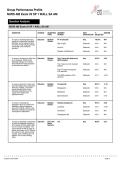
Group Performance Profile
NURS 480 Exam #2 SP 1 WALL SA AM

Question Analysis

NURS 480 Exam #2 SP 1 WALL SA AM

QUESTION SOURCE QUESTION ANSWER KEY/ % DISCRM
TYPE OPTION DISTRACTOR SELECTED

A nurse is reviewing laboratory Educator Multiple PT 45 seconds Key 100.0% N/A
results of a client who has atrial Choice
fibrillation and is taking warfarin. Hgb 16 g/dL Distractor 0.0% N/A
For which of the following results
should the nurse notify the Hct 44% Distractor 0.0% N/A
provider?
Platelets 190,000/mm3 Distractor 0.0% N/A


A nurse is monitoring a client who Educator Multiple The P wave falls before the Key 93.3% 0.20
is on telemetry. Which of the Choice QRS complex.
following findings on the ECG
strip should the nurse recognize The T wave is in the inverted Distractor 0.0% N/A
as normal sinus rhythm? position.

The P-R interval measures Distractor 0.0% N/A
0.22 seconds.

The QRS duration is 0.20 Distractor 6.7% -0.20
seconds.


A nurse is caring for a client who Educator Multiple Furosemide Key 96.7% -0.18
has heart failure and a potassium Choice
level of 2.4 mEq/L. The nurse Nitroglycerin Distractor 0.0% N/A
should identify which of the
following medications as the Metoprolol Distractor 0.0% N/A
cause of the client’s low
potassium level?
Spironolactone Distractor 3.3% 0.18


A nurse is reviewing the Educator Multiple Sodium polystyrene Key 96.7% 0.39
laboratory report of a client and Choice
identifies a serum potassium Lactulose Distractor 3.3% -0.39
level of 6.8 mEq/L. Which of the
following medications should the Sevelamer Distractor 0.0% N/A
nurse plan to administer?
Darbepoetin alfa Distractor 0.0% N/A


A nurse is preparing to administer Educator Fill in the 125 Key 80.0% 0.24
40 mEq of potassium chloride in Blank
45% sodium chloride (NaCl) 500 Numeric
mL IV to infuse 10 mEq/hr. The
nurse should set the IV pump to
deliver how many mL/hr? (Round
the answer to the nearest whole
number. Use a leading zero if it
applies. Do not use a trailing
zero.)


Created on:05/01/2024 Page 10

, Group Performance Profile
NURS 480 Exam #2 SP 1 WALL SA AM


QUESTION SOURCE QUESTION ANSWER KEY/ % DISCRM
TYPE OPTION DISTRACTOR SELECTED

A nurse is caring for a client who Educator Multiple Pulse deficit between the Key 96.7% -0.05
has pericarditis and reports Choice apical and radial pulses
feeling a new onset of
palpitations and shortness of Different blood pressures in Distractor 3.3% 0.05
breath. Which of the following the upper limbs.
assessments should indicate to
the nurse that the client may Differences between oral and Distractor 0.0% N/A
have developed atrial fibrillation? axillary temperatures.

Differences in upper and lower Distractor 0.0% N/A
lung sounds.


A client suffering from chest Educator Fill in the 40 Key 76.7% 0.36
discomfort and shortness of Blank
breath is brought to the Numeric
emergency department due to
acute angina pectoris. The
healthcare provider orders IV
nitroglycerin (Nitroglycerin) 75 mg
in 500 mL of 5% Dextrose Water
at 100 mcg/min. The nurse will
set the pump at which rate
(mL/hr)?? Fill in the blank and
write your answer using a whole
number.


Admission vital signs for a client Educator Multiple BP: 180/68 mm Hg, HR: 56 Key 100.0% N/A
who has a brain injury are the Choice bmp, Cheyne-stokes
following: Blood pressure (B/P) respirations
128/68 mmHg; Heart Rate (HR)
110 beats/min; Respiratory Rate BP: 130/78 mm Hg, HR: 95 Distractor 0.0% N/A
(RR) 26 breaths/min. Which set bmp, Cheyne-stokes
of vital signs, if taken 1 hour later, respirations
will be of most concern to the
nurse? BP: 148/78 mm Hg, Hr: 112 Distractor 0.0% N/A
bmp, irregular respirations 28
breaths/min

BP: 110/70 mm Hg, HR: 59 Distractor 0.0% N/A
bmp, irregular respirations 13
breaths/min


A 70-yr-old female client with Educator Multiple Check the respiratory rate Key 66.7% 0.60
left-sided hemiparesis arrives by Choice and effort.
ambulance to the emergency
department. Which action would Take the patients blood Distractor 0.0% N/A
the nurse take first? pressure.

Assess the Glasgow Coma Distractor 6.7% -0.49
Scale score.

Send the patient for a Distractor 26.7% -0.36
computed tomography (CT)
scan.


Created on:05/01/2024 Page 11

, Group Performance Profile
NURS 480 Exam #2 SP 1 WALL SA AM


QUESTION SOURCE QUESTION ANSWER KEY/ % DISCRM
TYPE OPTION DISTRACTOR SELECTED

The nurse is caring for a client Educator Multiple Give the scheduled oral Key 93.3% 0.04
who has just arrived at the Choice aspirin and simvastatin
telemetry unit after having medication.
cardiac catheterization. Which
task could the nurse delegate to Teach the patient about the Distractor 6.7% -0.04
a licensed practical/vocational postprocedure plan of care.
nurse (LPN/VN)?
Perform the initial assessment Distractor 0.0% N/A
of the catheter insertion site.

Titrate the heparin infusion Distractor 0.0% N/A
according to the agency
protocol.


A nurse is performing a cardiac Educator Hot Spot Answers cannot be Key 100.0% N/A
assessment. Identify where the displayed for this alternate
nurse should place the item format.
stethoscope to auscultate the
client's apical pulse. (You will find
hot spots to select in the artwork
below. Select only the hot spot
that corresponds to your answer.)


A nurse is caring for a client who Educator Multiple Encourage oral fluids. Key 83.3% 0.37
reports a severe headache Choice
following a lumbar puncture. Provide a low-sodium diet. Distractor 0.0% N/A
Which of the following actions
should the nurse take? Administer sumatriptan. Distractor 3.3% -0.39

Place in high-Fowler’s Distractor 13.3% -0.20
position.


A nurse in the emergency room is Educator Multiple Assess the cranial nerves. Key 76.7% 0.39
assessing a client who was Choice
brought in following a seizure. Complete a vascular Distractor 0.0% N/A
The nurse suspects the client assessment.
may have meningococcal
meningitis when assessment Administer an antipyretic. Distractor 0.0% N/A
findings include nuchal rigidity
and a petechial rash. After
implementing droplet Decrease environmental Distractor 23.3% -0.39
precautions, which of the stimuli.
following actions should the
nurse initiate next?

A nurse is caring for a client who Educator Multiple Intellectual impairment Key 96.7% -0.24
had a stroke involving the left Choice
cerebral hemisphere. The nurse Impaired sense of humor Distractor 0.0% N/A
should monitor for which of the
following findings? Loss of depth perception Distractor 3.3% 0.24

Poor judgment Distractor 0.0% N/A


Created on:05/01/2024 Page 12

Document information

Uploaded on
September 14, 2026
Number of pages
16
Written in
2025/2026
Type
Exam (elaborations)
Contains
Questions & answers
$17.99

Wrong document? Swap it for free Within 14 days of purchase and before downloading, you can choose a different document. You can simply spend the amount again.
Written by students who passed
Immediately available after payment
Read online or as PDF

Seller avatar
Reputation scores are based on the amount of documents a seller has sold for a fee and the reviews they have received for those documents. There are three levels: Bronze, Silver and Gold. The better the reputation, the more your can rely on the quality of the sellers work.
MindCraft
3.8
(52)
Sold
434
Followers
10
Items
2933
Last sold
17 hours ago


Why students choose Stuvia

Created by fellow students, verified by reviews

Quality you can trust: written by students who passed their tests and reviewed by others who've used these notes.

Didn't get what you expected? Choose another document

No worries! You can instantly pick a different document that better fits what you're looking for.

Pay as you like, start learning right away

No subscription, no commitments. Pay the way you're used to via credit card and download your PDF document instantly.

Student with book image

“Bought, downloaded, and aced it. It really can be that simple.”

Alisha Student

Working on your references?

Create accurate citations in APA, MLA and Harvard with our free citation generator.

Working on your references?

Frequently asked questions

