

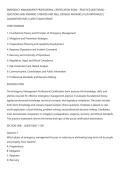
EMERGENCY MANAGEMENT PROFESSIONAL CERTIFICATION EXAM – PRACTICE QUESTIONS] –
QUESTIONS AND ANSWERS | VERIFIED AND WELL DETAILED ANSWERS | PLUS RATIONALES |
GUARANTEED PASS | LATEST EXAM UPDATE
CORE DOMAINS
1. Foundational Theory and Principles of Emergency Management
2. Mitigation and Prevention Strategies
3. Preparedness Planning and Capability Development
4. Response Operations and Incident Command
5. Recovery and Continuity of Operations
6. Regulatory, Legal, and Ethical Compliance
7. Risk Assessment and Hazard Analysis
8. Communication, Coordination, and Public Information
9. Professional Standards and Decision-Making
INTRODUCTION
The Emergency Management Professional Certification Exam assesses the knowledge, skills, and
abilities required for effective emergency management practice. It evaluates foundational theory,
applied professional knowledge, technical concepts, and regulatory compliance. The exam includes
both direct knowledge and scenario-based multiple-choice questions. Emphasis is placed on real-
world application, critical thinking, problem-solving, and professional decision-making. Candidates
must demonstrate competency in mitigation, preparedness, response, recovery, and ethical standards.
This practice assessment mirrors the format and rigor of the actual certification examination.
SECTION ONE – QUESTIONS 1–100
Question 1
Which phase of emergency management focuses on reducing or eliminating long-term risk to people
and property from hazards?
A. Preparedness
B. Mitigation
C. Response
D. Recovery
,🟢 B. Mitigation
🔴 Explanation: Mitigation involves sustained actions to reduce or eliminate risk to people and
property from hazards and their effects. Preparedness focuses on planning and training; response
addresses immediate actions; recovery involves restoring services and rebuilding.
Question 2
In the Incident Command System (ICS), who is responsible for the overall management of the incident?
A. Operations Section Chief
B. Planning Section Chief
C. Incident Commander
D. Logistics Section Chief
🟢 C. Incident Commander
🔴 Explanation: The Incident Commander has overall responsibility for managing the incident and
establishing incident objectives. Section Chiefs report to the IC.
Question 3
A community’s hazard mitigation plan must be updated every how many years to remain eligible for
certain federal funding?
A. 2 years
B. 3 years
C. 5 years
D. 10 years
🟢 C. 5 years
🔴 Explanation: The Disaster Mitigation Act of 2000 requires local hazard mitigation plans to be
updated every five years to maintain eligibility for FEMA mitigation grant funding.
Question 4
Which of the following is a key component of the National Incident Management System (NIMS)?
A. Command and Coordination
B. Financial Management
C. Public Relations
D. Human Resources
🟢 A. Command and Coordination
🔴 Explanation: NIMS consists of three major components: Resource Management, Command and
,Coordination, and Communications and Information Management. Command and Coordination
includes ICS, Multiagency Coordination Groups, and the Joint Information System.
Question 5
Scenario: A hurricane is forecast to make landfall in 48 hours. The emergency manager activates the
Emergency Operations Center (EOC). What is the primary function of the EOC during this phase?
A. Directing on-scene tactical operations
B. Providing interagency coordination and resource support
C. Performing search and rescue
D. Issuing evacuation orders
🟢 B. Providing interagency coordination and resource support
🔴 Explanation: The EOC supports the Incident Command by coordinating resources, information, and
policy decisions. On-scene tactical operations are managed by the Incident Commander through ICS.
Question 6
Which legal authority provides the foundation for federal disaster assistance in the United States?
A. Homeland Security Act
B. Stafford Act
C. Posse Comitatus Act
D. Hatch Act
🟢 B. Stafford Act
🔴 Explanation: The Robert T. Stafford Disaster Relief and Emergency Assistance Act (Stafford Act)
authorizes federal assistance to state and local governments during presidentially declared disasters.
Question 7
What is the purpose of a Continuity of Operations Plan (COOP)?
A. To ensure essential functions continue during disruptions
B. To provide disaster relief to citizens
C. To coordinate media relations
D. To manage volunteer organizations
🟢 A. To ensure essential functions continue during disruptions
🔴 Explanation: COOP ensures that essential functions can continue during a wide range of
emergencies, including localized acts of nature, accidents, and technological or attack-related
emergencies.
, Question 8
Which of the following best describes the “Whole Community” approach to emergency management?
A. A focus solely on government response
B. Involving all sectors of society in preparedness and response
C. Relying exclusively on federal assets
D. Limiting planning to emergency managers
🟢 B. Involving all sectors of society in preparedness and response
🔴 Explanation: The Whole Community approach engages all parts of society—including individuals,
businesses, faith-based organizations, and government—to collaboratively prepare for, respond to,
and recover from disasters.
Question 9
Scenario: During a pandemic, a hospital reports a surge in patients and requests additional ventilators.
The request goes through the county EOC to the state. What is this process an example of?
A. Mutual aid
B. Resource management
C. Direct federal assistance
D. Volunteer management
🟢 B. Resource management
🔴 Explanation: Resource management involves the identification, ordering, and tracking of resources
to support incident operations. The request follows the established resource management process
from local to state to federal.
Question 10
What is the primary goal of the Recovery phase?
A. To reduce future risk
B. To restore normal operations and rebuild
C. To provide immediate life-saving services
D. To conduct hazard identification
🟢 B. To restore normal operations and rebuild
🔴 Explanation: Recovery focuses on restoring infrastructure, services, and normalcy to the community
after a disaster. Mitigation reduces future risk; response provides immediate life-saving services.
QUESTIONS AND ANSWERS | VERIFIED AND WELL DETAILED ANSWERS | PLUS RATIONALES |
GUARANTEED PASS | LATEST EXAM UPDATE
CORE DOMAINS
1. Foundational Theory and Principles of Emergency Management
2. Mitigation and Prevention Strategies
3. Preparedness Planning and Capability Development
4. Response Operations and Incident Command
5. Recovery and Continuity of Operations
6. Regulatory, Legal, and Ethical Compliance
7. Risk Assessment and Hazard Analysis
8. Communication, Coordination, and Public Information
9. Professional Standards and Decision-Making
INTRODUCTION
The Emergency Management Professional Certification Exam assesses the knowledge, skills, and
abilities required for effective emergency management practice. It evaluates foundational theory,
applied professional knowledge, technical concepts, and regulatory compliance. The exam includes
both direct knowledge and scenario-based multiple-choice questions. Emphasis is placed on real-
world application, critical thinking, problem-solving, and professional decision-making. Candidates
must demonstrate competency in mitigation, preparedness, response, recovery, and ethical standards.
This practice assessment mirrors the format and rigor of the actual certification examination.
SECTION ONE – QUESTIONS 1–100
Question 1
Which phase of emergency management focuses on reducing or eliminating long-term risk to people
and property from hazards?
A. Preparedness
B. Mitigation
C. Response
D. Recovery
,🟢 B. Mitigation
🔴 Explanation: Mitigation involves sustained actions to reduce or eliminate risk to people and
property from hazards and their effects. Preparedness focuses on planning and training; response
addresses immediate actions; recovery involves restoring services and rebuilding.
Question 2
In the Incident Command System (ICS), who is responsible for the overall management of the incident?
A. Operations Section Chief
B. Planning Section Chief
C. Incident Commander
D. Logistics Section Chief
🟢 C. Incident Commander
🔴 Explanation: The Incident Commander has overall responsibility for managing the incident and
establishing incident objectives. Section Chiefs report to the IC.
Question 3
A community’s hazard mitigation plan must be updated every how many years to remain eligible for
certain federal funding?
A. 2 years
B. 3 years
C. 5 years
D. 10 years
🟢 C. 5 years
🔴 Explanation: The Disaster Mitigation Act of 2000 requires local hazard mitigation plans to be
updated every five years to maintain eligibility for FEMA mitigation grant funding.
Question 4
Which of the following is a key component of the National Incident Management System (NIMS)?
A. Command and Coordination
B. Financial Management
C. Public Relations
D. Human Resources
🟢 A. Command and Coordination
🔴 Explanation: NIMS consists of three major components: Resource Management, Command and
,Coordination, and Communications and Information Management. Command and Coordination
includes ICS, Multiagency Coordination Groups, and the Joint Information System.
Question 5
Scenario: A hurricane is forecast to make landfall in 48 hours. The emergency manager activates the
Emergency Operations Center (EOC). What is the primary function of the EOC during this phase?
A. Directing on-scene tactical operations
B. Providing interagency coordination and resource support
C. Performing search and rescue
D. Issuing evacuation orders
🟢 B. Providing interagency coordination and resource support
🔴 Explanation: The EOC supports the Incident Command by coordinating resources, information, and
policy decisions. On-scene tactical operations are managed by the Incident Commander through ICS.
Question 6
Which legal authority provides the foundation for federal disaster assistance in the United States?
A. Homeland Security Act
B. Stafford Act
C. Posse Comitatus Act
D. Hatch Act
🟢 B. Stafford Act
🔴 Explanation: The Robert T. Stafford Disaster Relief and Emergency Assistance Act (Stafford Act)
authorizes federal assistance to state and local governments during presidentially declared disasters.
Question 7
What is the purpose of a Continuity of Operations Plan (COOP)?
A. To ensure essential functions continue during disruptions
B. To provide disaster relief to citizens
C. To coordinate media relations
D. To manage volunteer organizations
🟢 A. To ensure essential functions continue during disruptions
🔴 Explanation: COOP ensures that essential functions can continue during a wide range of
emergencies, including localized acts of nature, accidents, and technological or attack-related
emergencies.
, Question 8
Which of the following best describes the “Whole Community” approach to emergency management?
A. A focus solely on government response
B. Involving all sectors of society in preparedness and response
C. Relying exclusively on federal assets
D. Limiting planning to emergency managers
🟢 B. Involving all sectors of society in preparedness and response
🔴 Explanation: The Whole Community approach engages all parts of society—including individuals,
businesses, faith-based organizations, and government—to collaboratively prepare for, respond to,
and recover from disasters.
Question 9
Scenario: During a pandemic, a hospital reports a surge in patients and requests additional ventilators.
The request goes through the county EOC to the state. What is this process an example of?
A. Mutual aid
B. Resource management
C. Direct federal assistance
D. Volunteer management
🟢 B. Resource management
🔴 Explanation: Resource management involves the identification, ordering, and tracking of resources
to support incident operations. The request follows the established resource management process
from local to state to federal.
Question 10
What is the primary goal of the Recovery phase?
A. To reduce future risk
B. To restore normal operations and rebuild
C. To provide immediate life-saving services
D. To conduct hazard identification
🟢 B. To restore normal operations and rebuild
🔴 Explanation: Recovery focuses on restoring infrastructure, services, and normalcy to the community
after a disaster. Mitigation reduces future risk; response provides immediate life-saving services.


