

https://www.stuvia.com/user/filwe1099salminhttps://www.stuvia.com/user/filwe1099salmin
https://www.stuvia.com/user/filwe1099salminhttps://www.stuvia.com/user/filwe1099salmin
HESI RN 2024 EXIT EXAMhttps://www.stuvia.com/user/filwe1099salminhttps://www.stuvia.com
HESI RN 2024 EXIT EXAM
Save
Terms in this set (130)
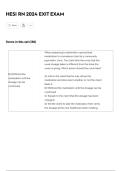
When preparing to administer a prescribed
medication to a homeless client at a community
psychiatric clinic. The client tells the nurse that the
usual dosage taken is different from the dose the
nurse is giving. Which action should the nurse take?
B) Withhold the
A) Inform the client that he may refuse the
medication until the
medication and document whether or not the client
dosage can be
takes it.
confirmed.
B) Withhold the medication until the dosage can be
confirmed.
C) Explain to the client that the dosage has been
changed.
D) Tell the client to take the medication then verify
the dosage at the next healthcare team meeting.
https://www.stuvia.com/user/filwe1099salminhttps://www.stuvia.com/user/filwe1099salmin
https://www.stuvia.com/user/filwe1099salmin
https://www.stuvia.com/user/filwe1099salmin
,https://www.stuvia.com/user/filwe1099salminhttps://www.stuvia.com/user/filwe1099salmin
https://www.stuvia.com/user/filwe1099salminhttps://www.stuvia.com/user/filwe1099salmin
HESI RN 2024 EXIT EXAMhttps://www.stuvia.com/user/filwe1099salminhttps://www.stuvia.com
The charge nurse is making assignments for one
practical nurse and three registered nurses who are
caring for neurologically compromised clients.
Which client with which change in status is best to
assign to the PN?
B) Viral meningitis whose
A) Subdural hematoma whose blood pressure
temperature change from
changed from 150/80 to 170/60.
101 S to 102F.
B) Viral meningitis whose temperature change from
101 S to 102F.
C) Diabetic keto acidosis who is Glasgow coma
scale score changed from 10 to 7.
D) Myxedema, whose blood pressure change from
80/50 to 70/40.
The nurse is caring for a client with pneumonia who
now develops initial signs of septic shock and multi
organ failure. The healthcare provider prescribes a
sepsis protocol. Which intervention is most
important for the nurse to include in the plan of
A) Maintain strict intake
care?
and output.
A) Maintain strict intake and output.
B) Keep head of bed raised 45°.
C) Excess warmth of extremities.
D) Monitor blood glucose level.
And adolescent client is admitted to the hospital
because of writing a suicide note to a teacher at
school. On the second day of hospitalization, the
nurse asked the client to meet with the treatment
team. After the team meeting, the client leaves in
tears and goes to their room. Which nursing
D) Go to the clients room
intervention is best?
and ask what happened.
A) Let the client rest quietly in their room for a while.
B) Explore the clients goals and desire for treatment.
C) Ask the treatment team about the clients
behavior.
D) Go to the clients room and ask what happened.
https://www.stuvia.com/user/filwe1099salminhttps://www.stuvia.com/user/filwe1099salmin
https://www.stuvia.com/user/filwe1099salmin
https://www.stuvia.com/user/filwe1099salmin
,https://www.stuvia.com/user/filwe1099salminhttps://www.stuvia.com/user/filwe1099salmin
https://www.stuvia.com/user/filwe1099salminhttps://www.stuvia.com/user/filwe1099salmin
HESI RN 2024 EXIT EXAMhttps://www.stuvia.com/user/filwe1099salminhttps://www.stuvia.com
The healthcare provider prescribes dalteparin 200
units per kilogram subcutaneous once a day for a
client who weighs 154 pounds. The medication is
0.6 available and 25,000 units per milliliter vial. How
many milliliters should the nurse administer? (Enter
numerical value only. If rounding is required, round
to the nearest 10th.)
NGN: The client is a 49-year-old male who reports
flu like symptoms including fever and chest
congestion for four days. He came to the
emergency department last night when he was
having more difficulty breathing he has a history of
1/2 pack a day cigarette smoking for 20 years. He
has no significant medical or surgical history.
B) Start oxygen 3 L per Which two orders should the nurse complete first?
minute via nasal cannula.
C) Place the client on a A) Sputum culture.
cardio respiratory B) Start oxygen 3 L per minute via nasal cannula.
monitor. C) Place the client on a cardio respiratory monitor.
D) Chest x-ray.
E) Acetominophen 350 mg PO every six hours for
temperature control.
F) Run 0.9% sodium chloride IV infusion at 150 mL
per hour.
G) Start peripheral IV.
H) NPO.
https://www.stuvia.com/user/filwe1099salminhttps://www.stuvia.com/user/filwe1099salmin
https://www.stuvia.com/user/filwe1099salmin
https://www.stuvia.com/user/filwe1099salmin
, https://www.stuvia.com/user/filwe1099salminhttps://www.stuvia.com/user/filwe1099salmin
https://www.stuvia.com/user/filwe1099salminhttps://www.stuvia.com/user/filwe1099salmin
HESI RN 2024 EXIT EXAMhttps://www.stuvia.com/user/filwe1099salminhttps://www.stuvia.com
NGN: 0330: place the client on a cardio respiratory
monitor, NPO, sputum culture, start a peripheral IV
infusion, start oxygen 3 L per minute via nasal
cannula, begin 0.9% sodium chloride IV infusion at
150 mL per hour, acetaminophen 350 mg PO every
six hours for temperature.
To start the client on oxygen as ordered which items
D) Nasal cannula. should the nurse collects from the supply room?
E) Flow meter. SATA
A) humidifier bottle.
B)Suction canister.
C)Sterile water.
D) Nasal cannula.
E) Flow meter.
F) Lambs wool.
G) Tape.
NGN: states, I am feeling extremely anxious right
now. The client has decreased breath sounds in the
left lower low. His mucus membranes are dry. He
has a productive cough with thick, yellow
Cardiovascular: capillary secretions. His capillary refill is four seconds. Vital
refill for seconds, blood signs, temperature 100.2. Heart rate 101 bpm,
pressure 145/89. respiratory rate 28 breaths per minute, blood
Neurological: anxious, pressure 145/89, oxygen saturation 90% on room air.
restless.
Respiratory: oxygen (for each body system click to specify the
saturation 90% on room assessment findings that indicates hypoxia)
air, respiratory rate 28
bpm. Cardiovascular: heart rate 100 bpm, capillary refill
for seconds, blood pressure 145/89.
Neurological: anxious, awake and alert, restless.
Respiratory: oxygen saturation 90% on room air,
respiratory rate 28 bpm, productive cough.
https://www.stuvia.com/user/filwe1099salminhttps://www.stuvia.com/user/filwe1099salmin
https://www.stuvia.com/user/filwe1099salmin
https://www.stuvia.com/user/filwe1099salmin
https://www.stuvia.com/user/filwe1099salminhttps://www.stuvia.com/user/filwe1099salmin
HESI RN 2024 EXIT EXAMhttps://www.stuvia.com/user/filwe1099salminhttps://www.stuvia.com
HESI RN 2024 EXIT EXAM
Save
Terms in this set (130)
When preparing to administer a prescribed
medication to a homeless client at a community
psychiatric clinic. The client tells the nurse that the
usual dosage taken is different from the dose the
nurse is giving. Which action should the nurse take?
B) Withhold the
A) Inform the client that he may refuse the
medication until the
medication and document whether or not the client
dosage can be
takes it.
confirmed.
B) Withhold the medication until the dosage can be
confirmed.
C) Explain to the client that the dosage has been
changed.
D) Tell the client to take the medication then verify
the dosage at the next healthcare team meeting.
https://www.stuvia.com/user/filwe1099salminhttps://www.stuvia.com/user/filwe1099salmin
https://www.stuvia.com/user/filwe1099salmin
https://www.stuvia.com/user/filwe1099salmin
,https://www.stuvia.com/user/filwe1099salminhttps://www.stuvia.com/user/filwe1099salmin
https://www.stuvia.com/user/filwe1099salminhttps://www.stuvia.com/user/filwe1099salmin
HESI RN 2024 EXIT EXAMhttps://www.stuvia.com/user/filwe1099salminhttps://www.stuvia.com
The charge nurse is making assignments for one
practical nurse and three registered nurses who are
caring for neurologically compromised clients.
Which client with which change in status is best to
assign to the PN?
B) Viral meningitis whose
A) Subdural hematoma whose blood pressure
temperature change from
changed from 150/80 to 170/60.
101 S to 102F.
B) Viral meningitis whose temperature change from
101 S to 102F.
C) Diabetic keto acidosis who is Glasgow coma
scale score changed from 10 to 7.
D) Myxedema, whose blood pressure change from
80/50 to 70/40.
The nurse is caring for a client with pneumonia who
now develops initial signs of septic shock and multi
organ failure. The healthcare provider prescribes a
sepsis protocol. Which intervention is most
important for the nurse to include in the plan of
A) Maintain strict intake
care?
and output.
A) Maintain strict intake and output.
B) Keep head of bed raised 45°.
C) Excess warmth of extremities.
D) Monitor blood glucose level.
And adolescent client is admitted to the hospital
because of writing a suicide note to a teacher at
school. On the second day of hospitalization, the
nurse asked the client to meet with the treatment
team. After the team meeting, the client leaves in
tears and goes to their room. Which nursing
D) Go to the clients room
intervention is best?
and ask what happened.
A) Let the client rest quietly in their room for a while.
B) Explore the clients goals and desire for treatment.
C) Ask the treatment team about the clients
behavior.
D) Go to the clients room and ask what happened.
https://www.stuvia.com/user/filwe1099salminhttps://www.stuvia.com/user/filwe1099salmin
https://www.stuvia.com/user/filwe1099salmin
https://www.stuvia.com/user/filwe1099salmin
,https://www.stuvia.com/user/filwe1099salminhttps://www.stuvia.com/user/filwe1099salmin
https://www.stuvia.com/user/filwe1099salminhttps://www.stuvia.com/user/filwe1099salmin
HESI RN 2024 EXIT EXAMhttps://www.stuvia.com/user/filwe1099salminhttps://www.stuvia.com
The healthcare provider prescribes dalteparin 200
units per kilogram subcutaneous once a day for a
client who weighs 154 pounds. The medication is
0.6 available and 25,000 units per milliliter vial. How
many milliliters should the nurse administer? (Enter
numerical value only. If rounding is required, round
to the nearest 10th.)
NGN: The client is a 49-year-old male who reports
flu like symptoms including fever and chest
congestion for four days. He came to the
emergency department last night when he was
having more difficulty breathing he has a history of
1/2 pack a day cigarette smoking for 20 years. He
has no significant medical or surgical history.
B) Start oxygen 3 L per Which two orders should the nurse complete first?
minute via nasal cannula.
C) Place the client on a A) Sputum culture.
cardio respiratory B) Start oxygen 3 L per minute via nasal cannula.
monitor. C) Place the client on a cardio respiratory monitor.
D) Chest x-ray.
E) Acetominophen 350 mg PO every six hours for
temperature control.
F) Run 0.9% sodium chloride IV infusion at 150 mL
per hour.
G) Start peripheral IV.
H) NPO.
https://www.stuvia.com/user/filwe1099salminhttps://www.stuvia.com/user/filwe1099salmin
https://www.stuvia.com/user/filwe1099salmin
https://www.stuvia.com/user/filwe1099salmin
, https://www.stuvia.com/user/filwe1099salminhttps://www.stuvia.com/user/filwe1099salmin
https://www.stuvia.com/user/filwe1099salminhttps://www.stuvia.com/user/filwe1099salmin
HESI RN 2024 EXIT EXAMhttps://www.stuvia.com/user/filwe1099salminhttps://www.stuvia.com
NGN: 0330: place the client on a cardio respiratory
monitor, NPO, sputum culture, start a peripheral IV
infusion, start oxygen 3 L per minute via nasal
cannula, begin 0.9% sodium chloride IV infusion at
150 mL per hour, acetaminophen 350 mg PO every
six hours for temperature.
To start the client on oxygen as ordered which items
D) Nasal cannula. should the nurse collects from the supply room?
E) Flow meter. SATA
A) humidifier bottle.
B)Suction canister.
C)Sterile water.
D) Nasal cannula.
E) Flow meter.
F) Lambs wool.
G) Tape.
NGN: states, I am feeling extremely anxious right
now. The client has decreased breath sounds in the
left lower low. His mucus membranes are dry. He
has a productive cough with thick, yellow
Cardiovascular: capillary secretions. His capillary refill is four seconds. Vital
refill for seconds, blood signs, temperature 100.2. Heart rate 101 bpm,
pressure 145/89. respiratory rate 28 breaths per minute, blood
Neurological: anxious, pressure 145/89, oxygen saturation 90% on room air.
restless.
Respiratory: oxygen (for each body system click to specify the
saturation 90% on room assessment findings that indicates hypoxia)
air, respiratory rate 28
bpm. Cardiovascular: heart rate 100 bpm, capillary refill
for seconds, blood pressure 145/89.
Neurological: anxious, awake and alert, restless.
Respiratory: oxygen saturation 90% on room air,
respiratory rate 28 bpm, productive cough.
https://www.stuvia.com/user/filwe1099salminhttps://www.stuvia.com/user/filwe1099salmin
https://www.stuvia.com/user/filwe1099salmin
https://www.stuvia.com/user/filwe1099salmin


