Example Full-Mark Response (Grade 9)
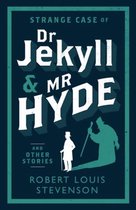
The Strange Case of Dr Jekyll and Mr Hyde was written by Robert Louis Stevenson in
1886 and set in the late 19th century[a]. Through his presentation of the character of Hyde
as an atavistic creature, Stevenson plays upon the fears in Victorian society at the
time[b] of the regression and de-evolution of mankind, evoking fear in readers through the
criminal acts Hyde commits with utter indifference towards the pain and suffering he
inflicts. Not only does Stevenson dehumanise Hyde through animalistic descriptions, but
he also employs a religious motif[c] throughout the novella[d] which consists of various
characters connecting Hyde with hellish connotations and relations with Satan,
emphasising the threat posed by Hyde.[e]
In the extract, Stevenson presents Hyde as a dangerous and threatening character
through his vicious crime against the young girl.[f] Hyde’s act of having “trampled calmly
over the child’s body” when Enfield describes what he witnessed[g] highlights how brutal
and dangerous he is as he shows complete indifference towards his actions, underscored
with the contradictory juxtaposition[h] of “trampled calmly”. The violent verb[i] “trampled”
connotes the infliction of pain, yet paired with the adverb “calmly”, this emphasises Hyde’s
evil actions,[j] further reinforced through how the youth of the victim is conveyed in the
descriptions of her as a “child” and being “maybe eight or ten”. Stevenson here portrays
the vulnerability of Hyde’s victim to make Enfield’s account of Hyde’s brutality all the more
harrowing, which is aided in the fact that the victim is not only young, but also a “girl”[k],
which would have evoked sympathy and shock in a Victorian reader due to perceptions of
female frailty at the time rooted in gender inequalities.[l] In Chapter 4[m], Stevenson
similarly[n] presents Hyde’s victim as vulnerable through his portrayal of Carew as “an
aged and beautiful gentleman with white hair” who embodies “old-world kindness”, not
only again underscoring the frailty of the victim (this time due to his old age), but also
portraying Hyde as a destroyer of “kindness” and what is “beautiful” in the world.
[o] Therefore, Stevenson presents Hyde as a dangerous and threatening character in
highlighting the vulnerability and beauty of his victims, portraying him as an animal who
preys on the weak in society, thus feeding into the Victorian fear of atavism and the
regression of man.[p]
Stevenson also presents Hyde as a threatening and dangerous character[q] through the
motif of religion throughout Jekyll and Hyde which connects him with sinful connotations
and Satanic depictions.[r] This is shown in the simile[s] of Hyde being “like some damned
Juggernaut” from the extract[t] which has religious links through the attributive
adjective[u] “damned”, which not only conveys Enfield’s distressed tone where he, a
gentleman, has been driven to swear,[v] but when read as a verb,[w] presents Hyde as
destined to Hell. Stevenson further conveys Hyde as a threatening force given that a
“Juggernaut” is a massive, unstoppable force, thus enabling the reader to infer that
Stevenson is implying that once repressed emotions and dangerous desires are free, they
run rampant with drastic and relentless force[x]. Additionally, the historical origin of the
noun “juggernaut” is rooted in the accounts which early European travellers provided of
devotees of the Hindu god Vishnu being crushed under the wheels of the god’s massive
The Strange Case of Dr Jekyll and Mr Hyde was written by Robert Louis Stevenson in
1886 and set in the late 19th century[a]. Through his presentation of the character of Hyde
as an atavistic creature, Stevenson plays upon the fears in Victorian society at the
time[b] of the regression and de-evolution of mankind, evoking fear in readers through the
criminal acts Hyde commits with utter indifference towards the pain and suffering he
inflicts. Not only does Stevenson dehumanise Hyde through animalistic descriptions, but
he also employs a religious motif[c] throughout the novella[d] which consists of various
characters connecting Hyde with hellish connotations and relations with Satan,
emphasising the threat posed by Hyde.[e]
In the extract, Stevenson presents Hyde as a dangerous and threatening character
through his vicious crime against the young girl.[f] Hyde’s act of having “trampled calmly
over the child’s body” when Enfield describes what he witnessed[g] highlights how brutal
and dangerous he is as he shows complete indifference towards his actions, underscored
with the contradictory juxtaposition[h] of “trampled calmly”. The violent verb[i] “trampled”
connotes the infliction of pain, yet paired with the adverb “calmly”, this emphasises Hyde’s
evil actions,[j] further reinforced through how the youth of the victim is conveyed in the
descriptions of her as a “child” and being “maybe eight or ten”. Stevenson here portrays
the vulnerability of Hyde’s victim to make Enfield’s account of Hyde’s brutality all the more
harrowing, which is aided in the fact that the victim is not only young, but also a “girl”[k],
which would have evoked sympathy and shock in a Victorian reader due to perceptions of
female frailty at the time rooted in gender inequalities.[l] In Chapter 4[m], Stevenson
similarly[n] presents Hyde’s victim as vulnerable through his portrayal of Carew as “an
aged and beautiful gentleman with white hair” who embodies “old-world kindness”, not
only again underscoring the frailty of the victim (this time due to his old age), but also
portraying Hyde as a destroyer of “kindness” and what is “beautiful” in the world.
[o] Therefore, Stevenson presents Hyde as a dangerous and threatening character in
highlighting the vulnerability and beauty of his victims, portraying him as an animal who
preys on the weak in society, thus feeding into the Victorian fear of atavism and the
regression of man.[p]
Stevenson also presents Hyde as a threatening and dangerous character[q] through the
motif of religion throughout Jekyll and Hyde which connects him with sinful connotations
and Satanic depictions.[r] This is shown in the simile[s] of Hyde being “like some damned
Juggernaut” from the extract[t] which has religious links through the attributive
adjective[u] “damned”, which not only conveys Enfield’s distressed tone where he, a
gentleman, has been driven to swear,[v] but when read as a verb,[w] presents Hyde as
destined to Hell. Stevenson further conveys Hyde as a threatening force given that a
“Juggernaut” is a massive, unstoppable force, thus enabling the reader to infer that
Stevenson is implying that once repressed emotions and dangerous desires are free, they
run rampant with drastic and relentless force[x]. Additionally, the historical origin of the
noun “juggernaut” is rooted in the accounts which early European travellers provided of
devotees of the Hindu god Vishnu being crushed under the wheels of the god’s massive