

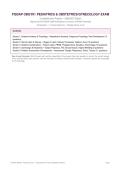
FISDAP OBGYN / PEDIATRICS & OBSTETRICS/GYNECOLOGY EXAM
Comprehensive Practice – 2026/2027 Edition
Aligned with the FISDAP OBGYN/Pediatrics Curriculum & NREMT Standards
49 Questions | 5 Content Domains | Multiple Choice (A–D)
Contents
Section 1: Obstetric Anatomy & Physiology – Reproductive Anatomy, Pregnancy Physiology, Fetal Development (10
questions)
Section 2: Normal Labor & Delivery – Stages of Labor, Delivery Procedures, Newborn Care (10 questions)
Section 3: Obstetric Complications – Preterm Labor, PROM, Prolapsed Cord, Abruption, Hemorrhage (10 questions)
Section 4: Gynecologic Emergencies – Ectopic Pregnancy, PID, Sexual Assault, Vaginal Bleeding (8 questions)
Section 5: Pediatric Assessment & Emergencies – Assessment Triangle, Respiratory, Shock, Trauma (11 questions)
How to use this exam: Work through each section sequentially. One answer choice per question is correct; the correct answer
and a rationale follow each question. Use the rationales to reinforce maternal-child concepts. A reference answer key is provided
on the final page.
FISDAP OBGYN / Pediatrics Exam – Comprehensive Practice (2026/2027 Edition) Page 1
, Section 1: Obstetric Anatomy & Physiology – Reproductive Anatomy, Pregnancy
Section 1
Physiology, Fetal Development (10 questions)
Q1: Where does fertilization of the ovum normally occur?
A. In the fallopian tube [CORRECT]
B. In the uterus
C. In the ovary
D. In the cervix
Correct Answer: A
Rationale: Fertilization normally occurs in the fallopian tube, after which the zygote travels to the uterus for implantation.
Q2: Which structure is the organ of pregnancy that provides oxygen and nutrients to the fetus and
removes waste?
A. The placenta [CORRECT]
B. The amniotic sac
C. The cervix
D. The endometrium
Correct Answer: A
Rationale: The placenta is the exchange organ between mother and fetus, providing nutrients and gas exchange and
removing fetal waste.
Q3: Which structure contains amniotic fluid and surrounds the fetus?
A. The amniotic sac [CORRECT]
B. The placenta
C. The umbilical cord
D. The cervix
Correct Answer: A
Rationale: The amniotic sac (membranes) encloses the fetus in amniotic fluid, cushioning it and maintaining
temperature.
Q4: Which vessel(s) carry oxygenated blood from the placenta to the fetus?
A. The umbilical vein [CORRECT]
B. The two umbilical arteries
C. The ductus arteriosus
D. The foramen ovale
Correct Answer: A
Rationale: The umbilical vein carries oxygenated blood from the placenta to the fetus; the two umbilical arteries return
deoxygenated blood to the placenta.
Q5: How many arteries and veins are normally present in the umbilical cord?
A. Two arteries and one vein [CORRECT]
B. One artery and two veins
C. Two arteries and two veins
D. One artery and one vein
Correct Answer: A
Rationale: The umbilical cord normally contains two arteries and one vein.
FISDAP OBGYN / Pediatrics Exam – Comprehensive Practice (2026/2027 Edition) Page 2
Comprehensive Practice – 2026/2027 Edition
Aligned with the FISDAP OBGYN/Pediatrics Curriculum & NREMT Standards
49 Questions | 5 Content Domains | Multiple Choice (A–D)
Contents
Section 1: Obstetric Anatomy & Physiology – Reproductive Anatomy, Pregnancy Physiology, Fetal Development (10
questions)
Section 2: Normal Labor & Delivery – Stages of Labor, Delivery Procedures, Newborn Care (10 questions)
Section 3: Obstetric Complications – Preterm Labor, PROM, Prolapsed Cord, Abruption, Hemorrhage (10 questions)
Section 4: Gynecologic Emergencies – Ectopic Pregnancy, PID, Sexual Assault, Vaginal Bleeding (8 questions)
Section 5: Pediatric Assessment & Emergencies – Assessment Triangle, Respiratory, Shock, Trauma (11 questions)
How to use this exam: Work through each section sequentially. One answer choice per question is correct; the correct answer
and a rationale follow each question. Use the rationales to reinforce maternal-child concepts. A reference answer key is provided
on the final page.
FISDAP OBGYN / Pediatrics Exam – Comprehensive Practice (2026/2027 Edition) Page 1
, Section 1: Obstetric Anatomy & Physiology – Reproductive Anatomy, Pregnancy
Section 1
Physiology, Fetal Development (10 questions)
Q1: Where does fertilization of the ovum normally occur?
A. In the fallopian tube [CORRECT]
B. In the uterus
C. In the ovary
D. In the cervix
Correct Answer: A
Rationale: Fertilization normally occurs in the fallopian tube, after which the zygote travels to the uterus for implantation.
Q2: Which structure is the organ of pregnancy that provides oxygen and nutrients to the fetus and
removes waste?
A. The placenta [CORRECT]
B. The amniotic sac
C. The cervix
D. The endometrium
Correct Answer: A
Rationale: The placenta is the exchange organ between mother and fetus, providing nutrients and gas exchange and
removing fetal waste.
Q3: Which structure contains amniotic fluid and surrounds the fetus?
A. The amniotic sac [CORRECT]
B. The placenta
C. The umbilical cord
D. The cervix
Correct Answer: A
Rationale: The amniotic sac (membranes) encloses the fetus in amniotic fluid, cushioning it and maintaining
temperature.
Q4: Which vessel(s) carry oxygenated blood from the placenta to the fetus?
A. The umbilical vein [CORRECT]
B. The two umbilical arteries
C. The ductus arteriosus
D. The foramen ovale
Correct Answer: A
Rationale: The umbilical vein carries oxygenated blood from the placenta to the fetus; the two umbilical arteries return
deoxygenated blood to the placenta.
Q5: How many arteries and veins are normally present in the umbilical cord?
A. Two arteries and one vein [CORRECT]
B. One artery and two veins
C. Two arteries and two veins
D. One artery and one vein
Correct Answer: A
Rationale: The umbilical cord normally contains two arteries and one vein.
FISDAP OBGYN / Pediatrics Exam – Comprehensive Practice (2026/2027 Edition) Page 2


