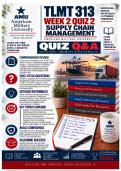
,TLMT 313 Week 2 Quiz 2 | Supply Chain Management (2026)
Q&A | AMU
1. Which of the following best defines the requirements process in supply chain
management?
A) The process of identifying and documenting what the customer needs and wants
B) The process of selecting suppliers based on lowest price
C) The process of forecasting demand for finished goods
D) The process of transporting goods from supplier to customer
Correct Answer: A) The process of identifying and documenting what the customer needs
and wants
Rationale: The requirements process is the critical first step in supply chain management. It
involves gathering and defining all the specifications and expectations a customer has for a
product or service. This process forms the basis for sourcing, production, and delivery
decisions.
2. What is the primary outcome of a well-executed requirements process?
A) A finalized contract with a supplier
B) A clear and actionable statement of work or specification
C) A completed purchase order
D) A detailed logistics plan
Correct Answer: B) A clear and actionable statement of work or specification
Rationale: The requirements process culminates in a formal document, such as a statement
of work (SOW) or specification, that clearly outlines the customer's needs. This document is
then used to communicate with potential suppliers and to develop the sourcing strategy.
,3. In the context of supply chain management, what does the term "requirements" refer to?
A) The legal terms and conditions of a contract
B) The necessary attributes and performance criteria of a good or service
C) The financial budget allocated for procurement
D) The number of employees needed to produce a product
Correct Answer: B) The necessary attributes and performance criteria of a good or service
Rationale: Requirements define the specific attributes, performance criteria, and quality
standards that a purchased good or service must meet. They provide the necessary detail to
understand what is required and to develop a solution to meet the need.
4. Which of the following is a key category of requirements that must be defined during the
requirements process?
A) Marketing requirements
B) Quality requirements
C) Advertising requirements
D) Social media requirements
Correct Answer: B) Quality requirements
Rationale: Quality requirements are a critical category of requirements that specify the
standards and specifications a product or service must meet. Other key categories include
delivery, process, pricing, and volume requirements.
5. A company is defining the requirements for a new component. Which type of requirement
specifies when and where the product must be delivered?
, A) Quality requirement
B) Delivery requirement
C) Pricing requirement
D) Process requirement
Correct Answer: B) Delivery requirement
Rationale: Delivery requirements specify the timing, location, and conditions for the
delivery of goods or services. They are essential for ensuring that materials arrive when
needed to support production schedules.
6. What is the primary purpose of defining process requirements during the requirements
process?
A) To specify the manufacturing process the supplier must use
B) To outline the steps the buyer will take to evaluate the supplier
C) To define how the product will be marketed
D) To determine the final price of the product
Correct Answer: A) To specify the manufacturing process the supplier must use
Rationale: Process requirements define the specific methods, procedures, or technologies a
supplier must use in producing or delivering a good or service. These are often critical when
the production process directly impacts the quality or performance of the final product.
7. Which of the following is an example of a pricing requirement?
A) The supplier must use a specific type of packaging
B) The product must be delivered within 30 days
C) The price must be fixed for the duration of the contract
D) The product must meet ISO 9001 standards
Q&A | AMU
1. Which of the following best defines the requirements process in supply chain
management?
A) The process of identifying and documenting what the customer needs and wants
B) The process of selecting suppliers based on lowest price
C) The process of forecasting demand for finished goods
D) The process of transporting goods from supplier to customer
Correct Answer: A) The process of identifying and documenting what the customer needs
and wants
Rationale: The requirements process is the critical first step in supply chain management. It
involves gathering and defining all the specifications and expectations a customer has for a
product or service. This process forms the basis for sourcing, production, and delivery
decisions.
2. What is the primary outcome of a well-executed requirements process?
A) A finalized contract with a supplier
B) A clear and actionable statement of work or specification
C) A completed purchase order
D) A detailed logistics plan
Correct Answer: B) A clear and actionable statement of work or specification
Rationale: The requirements process culminates in a formal document, such as a statement
of work (SOW) or specification, that clearly outlines the customer's needs. This document is
then used to communicate with potential suppliers and to develop the sourcing strategy.
,3. In the context of supply chain management, what does the term "requirements" refer to?
A) The legal terms and conditions of a contract
B) The necessary attributes and performance criteria of a good or service
C) The financial budget allocated for procurement
D) The number of employees needed to produce a product
Correct Answer: B) The necessary attributes and performance criteria of a good or service
Rationale: Requirements define the specific attributes, performance criteria, and quality
standards that a purchased good or service must meet. They provide the necessary detail to
understand what is required and to develop a solution to meet the need.
4. Which of the following is a key category of requirements that must be defined during the
requirements process?
A) Marketing requirements
B) Quality requirements
C) Advertising requirements
D) Social media requirements
Correct Answer: B) Quality requirements
Rationale: Quality requirements are a critical category of requirements that specify the
standards and specifications a product or service must meet. Other key categories include
delivery, process, pricing, and volume requirements.
5. A company is defining the requirements for a new component. Which type of requirement
specifies when and where the product must be delivered?
, A) Quality requirement
B) Delivery requirement
C) Pricing requirement
D) Process requirement
Correct Answer: B) Delivery requirement
Rationale: Delivery requirements specify the timing, location, and conditions for the
delivery of goods or services. They are essential for ensuring that materials arrive when
needed to support production schedules.
6. What is the primary purpose of defining process requirements during the requirements
process?
A) To specify the manufacturing process the supplier must use
B) To outline the steps the buyer will take to evaluate the supplier
C) To define how the product will be marketed
D) To determine the final price of the product
Correct Answer: A) To specify the manufacturing process the supplier must use
Rationale: Process requirements define the specific methods, procedures, or technologies a
supplier must use in producing or delivering a good or service. These are often critical when
the production process directly impacts the quality or performance of the final product.
7. Which of the following is an example of a pricing requirement?
A) The supplier must use a specific type of packaging
B) The product must be delivered within 30 days
C) The price must be fixed for the duration of the contract
D) The product must meet ISO 9001 standards