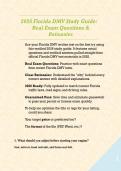
2026 Florida DMV Study Guide:
Real Exam Questions &
Rationales
Ace your Florida DMV written test on the first try using
this verified 2026 study guide. It features actual
questions and verified answers pulled straight from
official Florida DMV test materials in 2025.
Real Exam Questions: Practice with exact questions
from recent Florida DMV tests.
Clear Rationales: Understand the "why" behind every
correct answer with detailed explanations.
2026 Ready: Fully updated to match current Florida
traffic laws, road signs, and driving rules.
Guaranteed Pass: Save time and eliminate guesswork
to pass your permit or license exam quickly.
To help me optimize the title or tags for your listing,
could you share:
Your target price or preferred tier?
The format of the file (PDF, Word, etc.)?
1. What should you adjust before starting your engine?
Seat, mirrors, head restraint, and fasten seat belt.
1
, • Rationale: Proper physical adjustments maximize visibility, ensure full
reach of the vehicle pedals and controls, and optimize the effectiveness of
safety restraint systems in a crash.
2. Equipment requirements for windshields and side windows
Must be safety glass; windshield required; no excessive tint or obstructions.
• Rationale: Safety glass prevents shattering into sharp shards during an
impact. Maintaining unobstructed windows ensures a clear line of sight to
hazards, pedestrians, and surrounding traffic.
3. What are bumper height requirements?
They vary by vehicle weight; not the same for every vehicle.
• Rationale: Bumper heights are standardized by weight classes to ensure that
in a collision, the bumpers align properly to absorb the impact energy
instead of causing overriding or underriding damage.
4. What must you do when hauling material that could fall or blow
off?
Secure the load so nothing can fall or blow onto the roadway.
• Rationale: Unsecured debris creates immediate road hazards, blocks traffic
flow, and can strike other vehicles, causing severe accidents or injuries.
5. How do you mark a load extending more than 4 feet?
Daytime: red flag | Night: red lights or reflectors.
2
, • Rationale: Extended loads alter the vehicle's footprint. Clear visual
indicators warn drivers behind you to keep a safer following distance and
prevent rear-end collisions.
6. Why is drowsy driving dangerous?
It slows reaction time, affects judgment, and can cause falling asleep.
• Rationale: Sleep deprivation mimics alcohol impairment, severely delaying
your ability to brake or steer clear of an impending hazard.
7. What should you do if another driver threatens you?
Do not engage; stay in vehicle, call emergency services, go to a safe public
place.
•
• Rationale: Escalating road rage situations increases the likelihood of
violence or reckless accidents. Seeking public visibility or police
intervention defuses the immediate threat.
•
8. Three categories of distracted driving
Visual, Manual, Cognitive.
•
• Rationale:
o Visual taking your eyes off the road.
o Manual taking your hands off the wheel.
o Cognitive taking your mind off the task of driving.
•
3
Real Exam Questions &
Rationales
Ace your Florida DMV written test on the first try using
this verified 2026 study guide. It features actual
questions and verified answers pulled straight from
official Florida DMV test materials in 2025.
Real Exam Questions: Practice with exact questions
from recent Florida DMV tests.
Clear Rationales: Understand the "why" behind every
correct answer with detailed explanations.
2026 Ready: Fully updated to match current Florida
traffic laws, road signs, and driving rules.
Guaranteed Pass: Save time and eliminate guesswork
to pass your permit or license exam quickly.
To help me optimize the title or tags for your listing,
could you share:
Your target price or preferred tier?
The format of the file (PDF, Word, etc.)?
1. What should you adjust before starting your engine?
Seat, mirrors, head restraint, and fasten seat belt.
1
, • Rationale: Proper physical adjustments maximize visibility, ensure full
reach of the vehicle pedals and controls, and optimize the effectiveness of
safety restraint systems in a crash.
2. Equipment requirements for windshields and side windows
Must be safety glass; windshield required; no excessive tint or obstructions.
• Rationale: Safety glass prevents shattering into sharp shards during an
impact. Maintaining unobstructed windows ensures a clear line of sight to
hazards, pedestrians, and surrounding traffic.
3. What are bumper height requirements?
They vary by vehicle weight; not the same for every vehicle.
• Rationale: Bumper heights are standardized by weight classes to ensure that
in a collision, the bumpers align properly to absorb the impact energy
instead of causing overriding or underriding damage.
4. What must you do when hauling material that could fall or blow
off?
Secure the load so nothing can fall or blow onto the roadway.
• Rationale: Unsecured debris creates immediate road hazards, blocks traffic
flow, and can strike other vehicles, causing severe accidents or injuries.
5. How do you mark a load extending more than 4 feet?
Daytime: red flag | Night: red lights or reflectors.
2
, • Rationale: Extended loads alter the vehicle's footprint. Clear visual
indicators warn drivers behind you to keep a safer following distance and
prevent rear-end collisions.
6. Why is drowsy driving dangerous?
It slows reaction time, affects judgment, and can cause falling asleep.
• Rationale: Sleep deprivation mimics alcohol impairment, severely delaying
your ability to brake or steer clear of an impending hazard.
7. What should you do if another driver threatens you?
Do not engage; stay in vehicle, call emergency services, go to a safe public
place.
•
• Rationale: Escalating road rage situations increases the likelihood of
violence or reckless accidents. Seeking public visibility or police
intervention defuses the immediate threat.
•
8. Three categories of distracted driving
Visual, Manual, Cognitive.
•
• Rationale:
o Visual taking your eyes off the road.
o Manual taking your hands off the wheel.
o Cognitive taking your mind off the task of driving.
•
3